
Salespeople today are drowning in new software. It’s a strange paradox—they’re spoiled for choice but starved for results. Reps have access to more sales engagement software than ever, yet the data suggests they’re no more effective than their counterparts from the 90s. Here’s what’s a stark warning for the industry: we’re optimizing for the wrong things. Clicks and opens don’t start conversations. Instead of just adding another tool, what if we shifted our focus? The goal shouldn’t be more activity; it should be more conversations. This is the core of a true reply sales engagement strategy.
So what gives? The sales engagement revolution got co-opted. Platforms that appeared to save people time accidentally created more work. At the heart the problem is software masquerading as “sales engagement” that appears to make life easier while in fact making it harder—creating notifications and tasks, but not more meetings.
The best way to combat this trend? Notice it, and free yourself from the tangle of too much software by practicing what the Mixmax team and I are calling “lean sales.” It is the only way we’re finding that we can still engage people.
What is Sales Engagement, Really?
The term “sales engagement” gets thrown around so much that it’s easy to lose sight of what it actually means. It’s not just another buzzword for sending more emails or making more calls. At its core, sales engagement is about quality over quantity. It’s the practice of having valuable, two-way interactions with prospects and customers across every channel. This approach moves beyond simply pushing a product and focuses on building a relationship. It’s about understanding the buyer’s needs and guiding them through their journey with relevant, timely, and personalized communication. When done right, it feels less like a sales pitch and more like a helpful conversation.
True sales engagement is also measurable. It involves tracking every touchpoint—from email opens and link clicks to meeting attendance—to gather insights into what resonates with your audience. This data-driven approach allows you to refine your strategy and focus your energy on the activities that actually lead to closed deals. Instead of guessing what buyers want, you’re using their own actions to inform your next move. This creates a more efficient and effective sales process where every interaction has a purpose and contributes to moving the deal forward, turning cold outreach into warm, productive conversations.
Defining Sales Engagement
Let’s get specific. Sales engagement encompasses all the interactions between a salesperson and a buyer. According to Bigtincan, the focus is on improving these interactions and tracking them to create a better buyer experience. It’s not a single action but a continuous, thoughtful process. Think of it as the entire sequence of touchpoints you use to connect with a potential customer, from the first cold email to the final follow-up after a demo. The goal is to make every one of those touchpoints count, ensuring they are personalized, relevant, and add value for the buyer, making it easier for them to engage with you.
Sales Engagement vs. Sales Enablement
It’s common to confuse sales engagement with sales enablement, but they serve two distinct functions. Sales enablement is about equipping your sales team with the resources they need to sell effectively. This is an internal-facing process that includes providing content like case studies and one-pagers, offering training, and supplying the right tools. Essentially, enablement prepares your sellers for the conversation. Sales engagement, on the other hand, is the conversation itself. It’s the external-facing execution of your sales strategy—how you actually interact with prospects and customers to build relationships and guide them through the sales cycle.
Here’s a simple way to think about it: Sales enablement stocks the kitchen with ingredients and recipes (the resources), while sales engagement is the act of cooking the meal and serving it to your guest (the interaction). Both are critical for success, but they address different parts of the sales process. You need great resources from your enablement team to have effective conversations, and you need a strong engagement strategy to put those resources to good use. Modern tools can help bridge this gap, using AI-powered workflows to deliver the right content at the right time, turning enablement assets into engaging conversations.
The Problem with Most Sales Engagement Software
Drop in on a team of sales development reps (SDRs) talking about outreach today and you could be forgiven for thinking they were a bunch of email marketers. Their conversations are riddled with talk of open rates, clicks, and, most worrying, volume. Software has allowed them to send thousands of emails at a time. It’s blurred the line between them and email marketing and it’s part of why prospects receive an average of 140 emails and 72 other messages every day.
But “scale” should be an anathema to those seeking true engagement from their prospects. The origin of that word “engagement” means “to pledge one’s self to a cause”—to say, “I’m all in. You have my attention.” In the medieval sense, it was someone joining an army. Today, it’s someone joining an evaluation.
The origin of that word “engagement” means “to pledge one’s self to a cause
As most of us well know, poorly personalized mass emails are very unlikely to elicit anything like a pledge. Yet we fall into the trap of doing more and more of it because sales engagement software allows it.
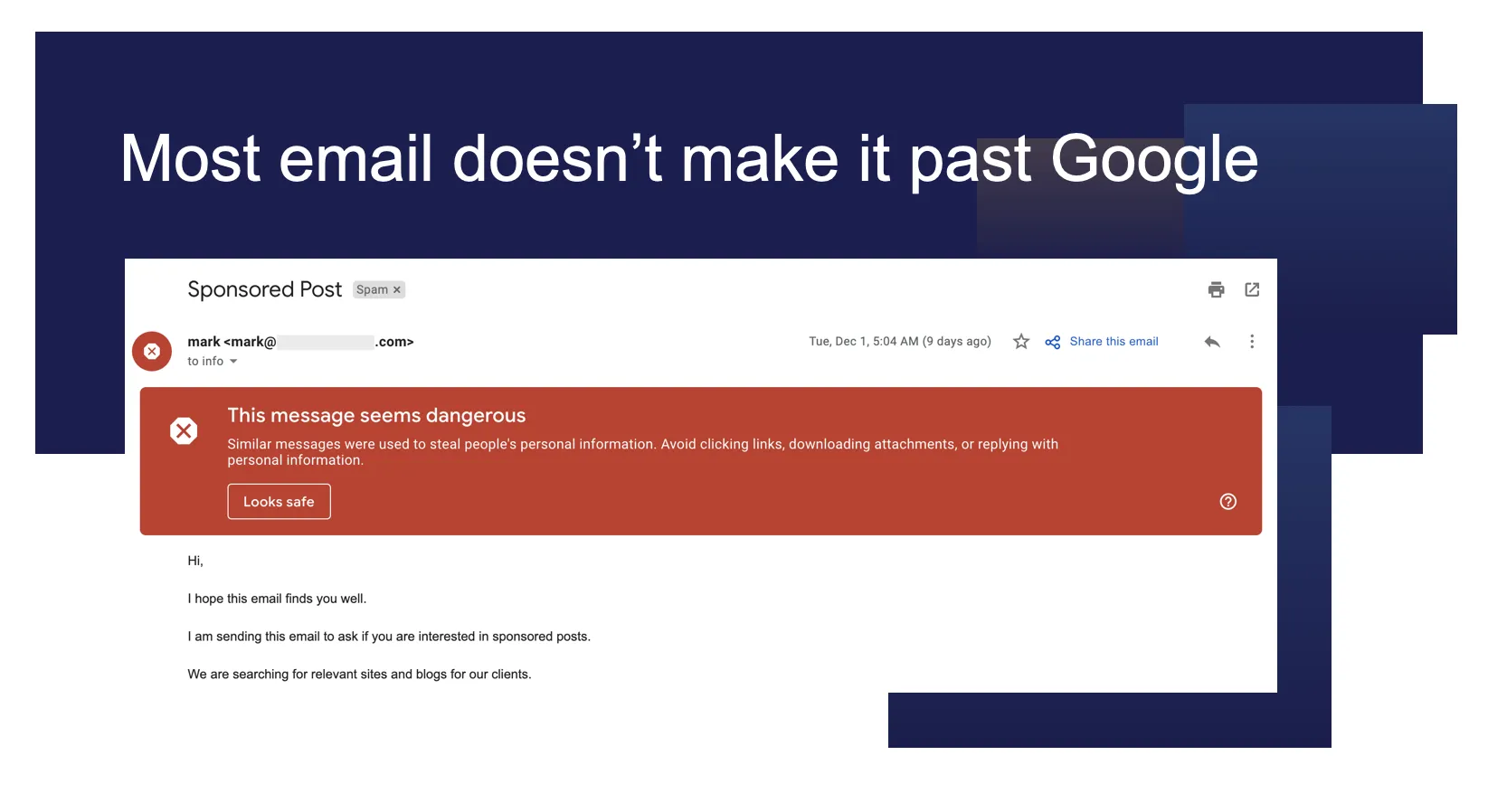
Press button, send email.
Related Post: Your Essential Sales Glossary—The 99 Terms You Need to Know
But once you realize that most of what’s sold as sales “engagement” software is actually sales “automation” software—designed to increase your activity, not the quality of interactions—your thinking changes. You start to understand that all the old-school sales leaders who bark at new reps to ‘hit the phones’ actually have a point.
If outreach is easy—if it can be “scaled” with the push of a button and requires no thought—it’s been stripped of the thoughtfulness that helps you stand out in a sea of sameness. Prospects can tell, and they delete it without reading.
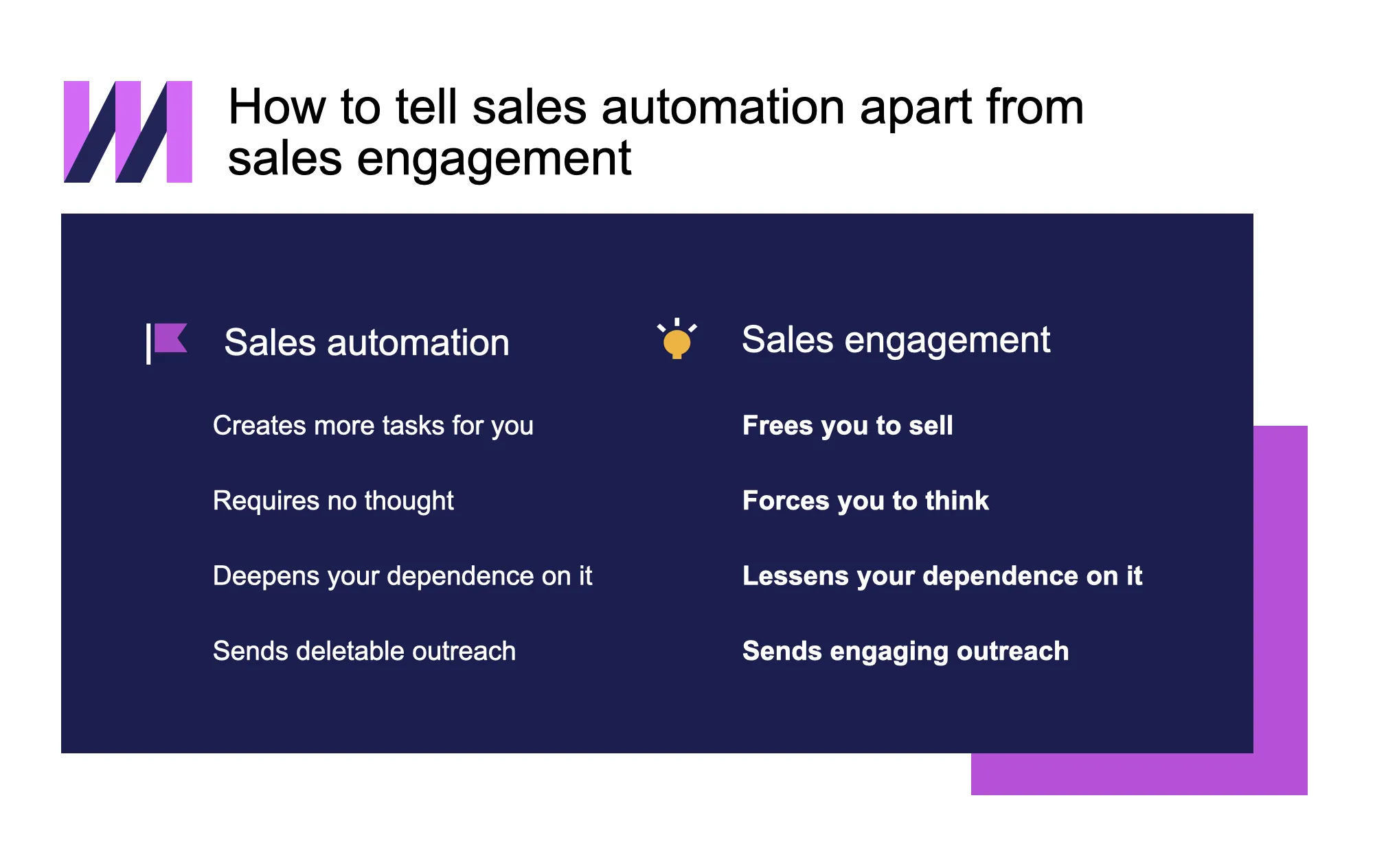
True sales engagement software is a rarity. It’s because that software isn’t designed to keep reps within its interface managing workflows, but to keep you out of it—managing the real deal. Fake sales engagement software creates a job for itself. Because, when you aren’t closing deals, you think what you need is a bigger email cannon and more meetings. And the more mass emails you send, the more people ignore you, and the cycle perpetuates.
As I explain next, it’s time to ditch all the heavy firepower and practice lean sales.
Related Post: 7 Best Sales Engagement Platforms: Reviews, Features & Pricing
Why Traditional Outreach Falls Short
The Challenge of Connecting with Buyers
The core issue with traditional outreach is that it prioritizes quantity over quality, which is the exact opposite of what buyers want. When your primary goal is hitting a daily send limit, personalization becomes an afterthought. We’ve all received those “Hi {first_name}” emails that are so generic they feel like spam. As the research points out, these “poorly personalized mass emails are very unlikely to elicit anything like a pledge” from a prospect. Buyers are looking for partners who understand their specific challenges, not just another vendor blasting out a generic message. This volume-first approach creates a huge amount of noise, making it even harder for thoughtful, relevant messages to cut through and actually start a meaningful conversation.
The Risk of Inaccurate Data
Relying on traditional outreach also means you’re often working with misleading data. Many platforms sold as “engagement” tools are really just automation engines designed to increase activity. They generate impressive-looking reports filled with open and click rates, but these metrics don’t tell the whole story. A high open rate doesn’t equal genuine interest; it just means your subject line worked. This focus on vanity metrics can send your entire team down the wrong path, optimizing for activity instead of outcomes. True engagement software should help you manage the deal, not just the workflow. By using AI-powered workflows, you can automate the repetitive tasks while focusing your energy on interpreting real buying signals and having the quality interactions that actually move a deal forward.
The Role of AI in Modern Sales Engagement
So, if most sales engagement software just creates more noise, where do we go from here? The answer isn’t to abandon technology and go back to rolodexes. It’s about using the right kind of technology—specifically, artificial intelligence. AI is changing the game by shifting the focus from mindless, high-volume activity to thoughtful, high-impact interactions. Instead of just helping you do more things, AI helps you do the right things. It can handle the tedious, repetitive parts of the job, freeing you up to focus on what actually builds relationships and closes deals: genuine, human-to-human connection. This is the core of lean sales—using technology to become more human, not less.
Automating Repetitive Tasks with AI
Let’s be honest, a huge chunk of a sales rep’s day is spent on tasks that don’t actually involve selling. Think about the time you spend writing follow-up emails, logging activities, or trying to find the perfect time to schedule a meeting. This is where AI becomes your most valuable assistant. By taking over these administrative duties, AI gives you back your most precious resource: time. This isn’t about replacing the salesperson; it’s about empowering them. With the right AI-powered workflows, you can automate entire sequences of tasks, ensuring no lead falls through the cracks while you concentrate on strategic conversations and building rapport with key accounts.
AI-Powered Content Creation
Staring at a blank screen trying to craft the perfect outreach email is a familiar struggle. AI can act as a creative partner, helping you overcome writer’s block and scale personalization without sacrificing quality. Instead of relying on stale, overused templates, AI tools can generate unique email drafts based on a simple prompt or key information about your prospect. This allows you to start with a strong, relevant foundation that you can then refine with your personal touch. It’s the perfect blend of machine efficiency and human empathy, helping you create compelling messages that stand out in a crowded inbox and get the conversation started.
Intelligent Inbox Management
An overflowing inbox can feel like a constant battle, making it easy to miss important signals from interested prospects. AI can bring order to the chaos by intelligently sorting and prioritizing your emails. By analyzing the content and intent of incoming messages, it can identify which leads are showing strong buying signals, which have questions that need immediate answers, and which are just noise. This intelligent filtering helps you focus your attention where it matters most, ensuring you respond quickly to hot leads and engage with the most promising opportunities before they go cold. It’s like having an assistant who pre-reads your email for you.
Using AI to Generate Smarter Conversations
Beyond just managing your internal workload, AI is becoming a powerful tool for improving the quality of your external conversations. It can provide data-driven insights and real-time assistance that help you engage with prospects more effectively. Think of it as a co-pilot for your sales calls and email threads. By analyzing past interactions and engagement data, AI can suggest talking points, identify potential objections, and even recommend the best next step to move a deal forward. This level of intelligence helps ensure every interaction is as productive and impactful as possible, turning good reps into great ones.
Automated Responses and AI Chatbots
Not every interaction requires a sales rep’s immediate, personal attention. AI-powered chatbots and automated response systems can handle initial inquiries from website visitors, answer frequently asked questions, and even schedule meetings on your behalf. This creates a seamless experience for the prospect, giving them instant answers while simultaneously qualifying them for your sales team. By the time a lead is handed over to you, they’ve already been warmed up and vetted, meaning you can skip the basic discovery questions and dive straight into a meaningful, solution-focused conversation that actually moves the needle.
How We Improved Sales Engagement by Ditching Our Tools
Do your sales tools make people want to pledge themselves to an evaluation? In almost all cases, the answer is no. Tools can’t really do that. Only clever people can, and only when they aren’t sending outreach that’s obviously templated, or managing so many workflows that they’re slow to reply. (The average response time is 12 hours, yet 88% of prospects expect a response within 60 minutes.)
Shedding unnecessary platforms and plug-ins is what we call “lean sales.” Lean means getting back to basics. It means doing less, but doing it better. If you’re practicing lean sales, you:
- Don’t build a big tech stack—you build a minimum viable one that keeps your outreach human
- Only adopt sales engagement tools when they solve a specific problem
- Prefer systems that are multi-purpose
- Eliminate all unnecessary notifications
- Reduce the number of interfaces you have to switch between
- Only automate tasks that a human (like you) can’t do better
In the lean sales method, tools are measured not by how much outreach they help you send, but by how they increase the quality of your outreach.
It may go without saying, but with this approach, you should measure your tools not by how much outreach they help you send, but by how much they increase the quality of your outreach. The right tools might do that by:
- Providing a highly relevant reason to reach out
- Telling you exactly who opened an email on an email chain
- Helping you always get the person’s name right
- Automating routine follow-ups, like meeting reminders
- Cleaning up links in emails so they display as clickable cards
- Sending more engaging messages via GIFs or video
- Freeing you up to think more by updating the CRM automatically
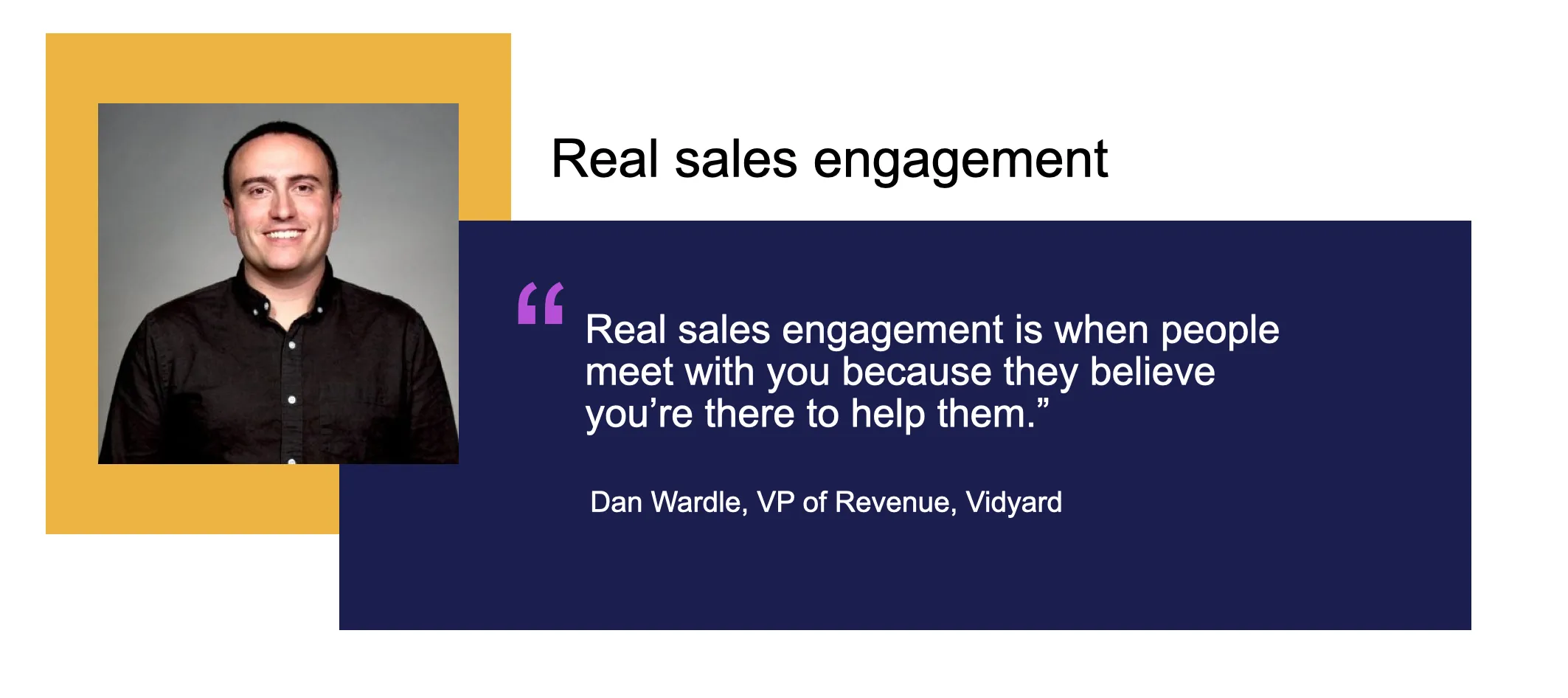
Sales engagement is about sending more delightful, tactful, and effective outreach that actually earns a response. “The pinnacle of engagement means that your salesperson gets a response to EVERY outreach they send to that buyer,” says Dan Wardle, VP of Revenue at the video sales platform Vidyard. “The prospect is willing to meet with you regularly because they believe in your product and the value it will bring to their business, but most importantly, they believe that your salesperson is there to help them.”
Real sales engagement software doesn’t look or feel like software at all.
How to Simplify Your Sales Engagement Process
So what can you do differently? Rather than build a “stack” of sales software that helps you hit every channel, instead ask, “What would help me have better interactions?” True sales engagement software should free you from routine things like sending follow-up emails so you can spend more time researching each prospect before you hit send.
Take our software Mixmax, for example. It’s designed to be lightweight and non-intrusive—rather than giving you a whole new window with which to switch back and forth between, it operates out of Gmail. Each feature is designed to save time, and reduce the number of workflows you have to manage, not increase them.

Here are ways our team uses Mixmax’s sales engagement software to achieve higher engagement:
- Automate follow-ups: Sales reps spend 12% of their time following up with prospects. Often, it’s not the prospect’s fault. They’re busy. And on second and third touches, it’s not what you say. It’s the fact that you reached out. With a good sales engagement software, you should be able to send one outreach email and know that if they don’t reply, there’ll be 1-5 follow up emails until they do.
- Eliminate scheduling back and forth: Figuring out what time someone is free is neither fun nor necessary. Sales engagement software can give you a link that lets them book on your calendar in one-click. Or, you can insert open times directly into an email.
- Make your emails easier to reply to: Rather than force prospects to draft a response, put buttons in your email so you can ask, “Are you interested? Yes / No.”
- Track engagement: Know when people open your email, share it, or open attachments, in real-time. (And know who on a thread opened the email, so you don’t have to guess.) And ideally, get those notifications where you need them, in Slack.
- Get insights: Which of your emails get the most opens? At what times? With what subject lines? Like a good manager, sales engagement software can tell you what to keep doing and what to stop doing.
When your emails are richer, more thoughtful, and easier to reply to, more people respond. The recruiting startup Hiretual earned a 70% open rate on its emails. Trendalytics saved 65 hours each month with simple calendaring, and Rainforest found it earned 50% reply rates. If that’s not a clear “pledge” of interest, I don’t know what is.
Related Post: Personalization vs. Automation: Finding the Right Balance in Sales
The Best Sales Engagement Software (That Actually Works)
I think of these tools as the essential three of our outreach—the trifecta of sales engagement.
Send less, but more thoughtful and convenient, emails
Mixmax lets you send cadences that don’t feel like cadences, where you spend lots of time writing the first email for maximum effect, but trust that the automated follow-ups will cover you if needed. Mixmax has over 24 tools for engagement, built right within Gmail so you don’t have to leave the interface, to send GIFs, polls, PDFs, and ask multiple choice questions where the prospect only has to click a button to respond.
Related Post: 18 Open-Ended Sales Engagement Questions That Help Close Deals Faster
Build connections at a distance with video messages
Vidyard gives you a Chrome extension with which you can record and send quick videos. You can also save and reuse videos, and insert them into your Mixmax sequences.
Call faster with better intel
Dialpad puts your dialing on autopilot so you can ignore all the distractions of looking up and dialing numbers and instead, focus on the quality of the call. Dialpad records your calls, and can give you insights. For instance, if you talked for too long, or mentioned something that disinterested them, it can give you alerts.
If you have Mixmax, you can use the Dialpad + Mixmax integration to make one-click dials from within Gmail.
Key Features to Look For
When you’re practicing lean sales, every tool has to earn its place. The goal isn’t to find software with the longest feature list, but one with the *right* features that genuinely make your outreach more human and effective. As you evaluate platforms, keep an eye out for these core capabilities. They’re the difference between a tool that creates more work and one that actually helps you connect with people and close deals.
Multichannel Outreach Capabilities
Your prospects don’t live exclusively in their email inboxes, so your outreach shouldn’t either. A truly effective sales engagement platform allows you to connect with buyers on the channels they actually use, whether that’s email, LinkedIn, SMS, or even WhatsApp. This isn’t about spamming people everywhere; it’s about meeting them where they are and starting a conversation in a context that feels natural. The ability to orchestrate these touchpoints within a single sequence is crucial for maintaining a consistent and personal-feeling conversation across different platforms.
Seamless CRM Integrations
Your CRM is your team’s source of truth. Any sales engagement tool you adopt must integrate flawlessly with it, especially with major players like Salesforce and HubSpot. A deep, bi-directional sync is non-negotiable. This ensures that all your outreach activities, from sent emails to booked meetings, are automatically logged in the correct contact record. This eliminates mind-numbing manual data entry and keeps your CRM data clean and reliable. A great integration means less time switching between tabs and more time focusing on the actual conversation with your prospect.
Built-in Prospecting Tools
Finding the right people to contact is just as important as what you say to them. Some sales engagement platforms come with their own prospecting databases, which can be a huge time-saver. Instead of juggling a separate tool to build lead lists, you can identify and enroll target contacts into outreach sequences from one place. Having access to a large, searchable database of contacts directly within your engagement tool streamlines the top of your funnel and helps you maintain momentum without getting bogged down in administrative tasks.
Email Health and Deliverability
It doesn’t matter how brilliant your email is if it lands in the spam folder. Top-tier sales engagement platforms have built-in features to protect your sender reputation and maximize deliverability. This includes things like email validation, customizable tracking domains, and adherence to email sending regulations. The software should help you warm up your email account and provide clear analytics on your email health. This ensures your carefully crafted messages actually reach your prospects’ inboxes, giving you a fair shot at starting a meaningful conversation.
Practical Considerations Before You Commit
Beyond the feature list, you need to think about what it will actually be like to use the software day in and day out. A powerful tool is useless if your team finds it clunky, confusing, or difficult to get help when they need it. Before you sign a contract, consider the practical side of adopting a new platform. These factors often have a bigger impact on your team’s success than any single feature.
User Experience and Support
The best sales tools feel like a natural extension of your workflow, not another cumbersome system to manage. Look for a platform with a clean, intuitive interface that’s easy for your team to adopt. Ideally, it should live where your reps work—like right inside their inbox—to reduce friction. Just as important is the quality of customer support. When questions or issues arise, you need access to fast and helpful assistance. Check for options like 24/7 chat or email support and a comprehensive knowledge base to ensure your team never feels stuck.
The Future of Sales Engagement
As we streamline our tech stacks and adopt a “lean sales” mindset, it’s also smart to keep an eye on what’s next. The future of sales engagement isn’t about finding another app to add to your browser; it’s about leveraging technology that deepens human connection and provides sharper insights. The goal remains the same: to earn a prospect’s attention and trust. But the tools we’ll use to get there are becoming more intelligent and immersive. These advancements are designed to enhance a seller’s skills and make interactions more meaningful, moving far beyond simple automation. The most promising innovations are those that help us understand our buyers better and communicate our value in more compelling ways, transforming how we build relationships and close deals.
This evolution is driven by a simple truth: as buyers become more informed and their time more scarce, generic outreach becomes less effective. The next wave of technology aims to solve this by equipping sellers with tools that are less about volume and more about value. Think of it as moving from a megaphone to a finely tuned instrument. Instead of just sending more messages, we’ll be crafting better ones, having smarter conversations, and creating experiences that truly resonate. This shift requires us to be strategic, focusing on technologies that augment our abilities rather than just automating our to-do lists. It’s about using innovation to become better listeners, communicators, and partners to our customers.
Emerging Technologies to Watch
Looking ahead, a few key technologies are poised to reshape the sales landscape. These aren’t just shiny new objects; they represent a fundamental shift in how we can interact with prospects and refine our own skills. While some might seem like they belong in a sci-fi movie, they are quickly becoming practical tools for forward-thinking sales teams. The two areas generating the most excitement are conversation analysis, which uses AI to dissect sales calls for powerful insights, and augmented reality, which offers a new way to create immersive product demos from anywhere. These tools promise to make our interactions more intelligent and our presentations more impactful, giving us new ways to capture a buyer’s imagination.
Video Coaching and Conversation Analysis
For years, sales coaching has relied on manager ride-alongs and subjective feedback. That’s all changing with conversation intelligence. These platforms record and analyze sales calls, using AI to pinpoint exactly what’s working and what’s not. Instead of guessing, managers can see which talking points lead to conversions and where reps might be losing a prospect’s interest. This technology transforms raw conversations into actionable insights, allowing for highly specific, data-driven coaching. It helps teams identify deal risks in real-time and replicate the behaviors of top performers across the entire team, making everyone more effective with every call they make.
Augmented Reality (AR) in Sales
Augmented reality is stepping out of the world of gaming and into B2B sales, especially for companies with complex or physical products. Imagine being able to demo a large piece of equipment right in your prospect’s office, using just a tablet. AR makes this possible by overlaying digital models onto the real world. As hybrid sales models become the norm, top organizations are exploring how to use augmented reality experiences to make virtual presentations more engaging. This technology creates a “wow” factor that a slide deck or video call simply can’t match, allowing prospects to interact with a product in their own environment and helping them visualize its value more clearly.
So, What’s Your Next Move?
Practice lean sales. Use less software, and evaluate it based not on how it helps you achieve volume or “scale,” but on how it helps in ratchet up the quality of your interactions. People are inundated with poorly personalized messages. The best thing you can do to earn true sales engagement—a pledge that someone is willing to evaluate—is to do less, but do it better.
Want to talk the talk? Grab our glossary of 99 sales teams you should know.
Frequently Asked Questions
What’s the real difference between sales engagement and sales enablement? Think of it this way: sales enablement is what happens internally to prepare you for a sale. It’s your company giving you the right ingredients, like case studies, training, and product one-pagers. Sales engagement is the actual act of cooking the meal and serving it to your prospect. It’s every external interaction you have—the emails, the calls, the meetings—where you use those ingredients to build a relationship and guide the conversation.
My boss wants me to hit high activity numbers. How can a “lean sales” approach work for me? This is a common pressure, but it’s worth reframing the goal. The point isn’t to send fewer emails, but to make every email count for more. A “lean sales” approach focuses on the quality of your interactions to get higher reply rates, which leads to more meetings booked. Instead of sending 200 generic emails that get ignored, you might send 50 highly personalized ones that start real conversations. The end result is better for your pipeline and proves that smarter work, not just more work, is what closes deals.
You criticize sales software but then recommend it. How do I know if a tool is helping or hurting my engagement? The key is to ask what the software is designed to do. Does it simply give you a bigger email cannon to blast out mass messages, creating more administrative work for you to manage? Or does it handle the tedious, non-selling tasks so you have more time to research your prospect and write a thoughtful message? A helpful tool automates things like follow-up reminders or CRM updates, freeing up your brainpower for the human connection that actually earns a reply.
Will using AI to help write my emails make them sound generic and robotic? Not if you use it correctly. Think of AI as a creative partner, not a replacement for your own voice. It’s fantastic for overcoming writer’s block by generating a solid first draft or suggesting different angles for a follow-up. The final message, however, should always have your personal touch. The goal is to let AI handle the repetitive parts of communication so you can spend your energy infusing your outreach with genuine personality and insight.
I’m overwhelmed by my tech stack. What’s the first step to practicing “lean sales?” Start with a simple audit. Look at every sales tool you use daily and ask one question: “Does this tool help me have better conversations?” If a tool is just adding notifications, encouraging you to focus on vanity metrics like opens, or forcing you to switch between multiple windows, it might be creating more noise than value. The first step is to identify and eliminate the platforms that don’t directly contribute to higher-quality, human-to-human interactions.
Key Takeaways
- Prioritize Conversations Over Clicks: Stop measuring success by open rates and volume. True sales engagement is about earning a reply, which requires thoughtful, personalized outreach that most automation-focused software discourages.
- Build a Minimalist Tech Stack: Ditch the clunky platforms that create more work. The best tools are lightweight, live inside your inbox, and solve specific problems, giving you more time to focus on the quality of your interactions.
- Use AI to Automate Tasks, Not Relationships: Let AI-powered workflows manage your scheduling, follow-ups, and inbox sorting. This allows you to dedicate your energy to the critical, human parts of selling—building rapport and solving problems for your prospects.