.CN0l4Zaj_NKpoW.webp?dpl=dpl_2v5dWcPK7CWc3S8WthfLf2LzpUFf)
You just nailed the product demo. The prospect was engaged, you answered every question, and things are looking good. But don’t celebrate just yet. The moments after the call are just as critical as the demo itself. A weak or generic demo follow up email can stop a promising deal right in its tracks. This is your chance to reinforce your value and outline the next steps clearly. We’ll show you how to craft the perfect demo email for every stage, complete with a reliable post demo email template you can use immediately.
Just like in dating, the follow-up after a demo is a critical step in the sales cycle. It’s the time to build on the momentum, deepen the relationship, and move closer to closing the deal.

But let’s face it, writing follow-up emails can be daunting, especially when you don’t want to come off as pushy or desperate.
So how do you go about it?
In this post, we offer tips on how (and when) to send demo follow-up emails, plus we share our own sales team’s follow-up templates that you can customize and recycle in your own email sequences.
- Why follow-ups are essential
- When to send follow-ups after demos
- Interview with Nick Cegelski on how to end a sales demo
- How to create demo follow-up templates
- Best practices for using email templates
- 7 product demo follow-up template examples
- Measuring the success of your follow-ups
- **Key takeaways
How to Write a Demo Request Email That Converts
Before you can send a killer follow-up, you need to get the prospect on a demo in the first place. But asking a busy stranger for 30 minutes of their time is a tall order. A successful demo request isn’t just about what you write in the email; it’s about the thoughtful strategy you build around it. It starts with doing your homework, personalizing your approach, and making it incredibly simple for them to say “yes.” Think of it less as a cold ask and more as a warm invitation to solve a problem they’re actively facing. When you frame it that way, you’re not just another email in their inbox—you’re a potential partner with a solution.
Strategy: What to Do Before You Hit Send
Jumping straight into an email without any prep work is like trying to build a house without a blueprint. The most effective demo requests are the result of smart planning. Before you even think about your subject line, you need to lay the groundwork. This means getting on your prospect’s radar in a low-pressure way and confirming you’re even talking to the right person. Taking these two simple steps can dramatically increase your chances of getting a positive response instead of being sent straight to the trash folder. It’s all about working smarter, not just harder, to make a genuine connection.
Warm up your prospects
No one likes getting a request from a complete stranger. Before you ask for a demo, take a few minutes to warm up your prospect. This doesn’t have to be complicated. Find them on LinkedIn, engage with a recent post they shared, or comment on a company announcement. This simple act of interaction transforms you from a random name into a familiar one. When your email finally lands in their inbox, they’re more likely to recognize you and give your message a second look. It shows you’ve done your homework and are genuinely interested in them, not just in making a sale.
Identify the right decision-maker
You could write the most compelling email in the world, but if you send it to the wrong person, it’s a wasted effort. Before you reach out, do your due diligence to identify the person who actually feels the pain your product solves and has the authority to make a purchasing decision. Use tools like LinkedIn Sales Navigator to research company structures and job titles. Sending your request to the right contact ensures your message is relevant and lands with someone who can take action. It respects everyone’s time and positions you as a thoughtful, strategic seller.
Crafting Your Message: Keep It Short and Personal
Once you’re ready to write, remember that clarity and brevity are your best friends. Your prospect is busy, so get straight to the point. Your email should be easy to scan and immediately answer the question, “What’s in it for me?” Focus on a specific pain point you discovered during your research and briefly explain how your solution can help. Personalization is key here—mention a recent company achievement, a shared connection, or a specific challenge relevant to their industry. Using AI-powered workflows can help you scale this personalization without sacrificing authenticity, ensuring every message feels like it was written just for them.
Writing a Subject Line That Gets Opened
Your subject line is the gatekeeper to your email. If it doesn’t grab their attention, the rest of your message doesn’t stand a chance. Aim for something that is clear, concise, and intriguing. Personalizing it with their name or company name can make a big difference. Keep it short—around 36-50 characters is a good rule of thumb to ensure it doesn’t get cut off on mobile devices. Avoid generic or salesy phrases like “Quick question” or “Checking in.” Instead, try something that hints at the value inside, like “Idea for [Their Company Name]” or “A new approach to [Their Pain Point].”
Make It Easy for Them to Say Yes
When you’ve successfully captured their interest, the last thing you want is to create friction around scheduling. The back-and-forth of finding a mutually available time is a common deal-killer. Remove this obstacle entirely by making your call-to-action a single, simple step. Instead of asking, “When are you free to chat?” provide a direct link for them to book a time on your calendar. Tools that offer one-click scheduling put the prospect in control and make booking a demo effortless. This small change shows you value their time and makes it incredibly easy for them to say yes.
3 Ready-to-Use Demo Request Email Templates
While every email should be personalized, you don’t have to start from scratch every time. Having a few solid templates in your arsenal can save you time and provide a proven structure for your outreach. Think of them as a starting point to be customized, not a script to be copied and pasted. The best email templates are built around a clear value proposition and a frictionless call-to-action. They give you a framework so you can focus your energy on the personalization that truly makes a difference and gets you that meeting.
Why a Post-Demo Email Can Make or Break the Deal
It shouldn’t be a surprise that follow-up emails are a natural next step in the sales cycle. They’re what help you move deals forward and ensure that your prospect is interested in what you’re offering.
Follow-ups are especially important if you’re working in a competitive environment where the prospect has many options available. You want to make sure that your prospects know how much you care about them and their business.
Plus, it doesn’t hurt to remind them about what they learned during your demo!
It’s also a time to deepen your relationship with your prospect and establish trust. If they see that your demo follow-up email is personalized (and not spammy), they’re bound to feel all nice and gooey inside—which could make it easier to finally seal that deal.
And no, you can’t skip the follow-up entirely and still hope for a positive outcome. When only 2% of sales occur within the first cycle of contact, you’re gonna have to put your all into these emails.
(You got this.)
When Should You Send a Demo Follow-Up Email?
So we know that follow-up emails keep you in contact with prospects and convince them to sign that contract. But how do you know when to send them?
In general, the best time frame is within 24 working hours of your first sales demo meeting.
Sounds like a pretty tight turnaround, right? The reality is that we’re in a competitive market, and you don’t want to lose a prospect before they’ve even had time to think about your offer.
If you’re quick to act after the demo, then prospects will see that as a sign of urgency and commitment: It shows that you’re willing to work hard for them and won’t let them slip through your fingers.
Of course, you’re gonna need some effective strategies and tools at your side to prevent chaos. A sales email template, paired with your pick of sales automation solutions, can give you the edge that you need to keep your sales cycle chugging at full speed.
How to end a demo call with Nick Cegelski from 30 Minutes to President’s Club
How to Write a Demo Follow-Up Email That Gets a Reply
Before you even think about creating templates for your follow-up strategy, you’re gonna need to know who your audience is.
For instance, are you targeting SMBs? If so, you should probably focus on creating a more personal, customer-centric approach. However, if your target audience consists of large corporations and other businesses with high-volume sales cycles, consider using a more professional tone.
Chances are, you’ve already covered these bases when designing your lead engagement strategy—but it’s never a bad idea to double and triple-check. Similarly, your templates should match the tone you’re trying to project, while still allowing room for personalization.
Okay, that’s a bit of a tall order, but you don’t have to stare at that blank canvas without any help. Mixmax email templates are designed to be as flexible as they are streamlined, so it’s up to you to decide how far you want to take them.
Mixmax email templates feature
We got you.
How to Get the Most Out of Your Demo Email Templates
As tempting as it might be, you don’t want to send out the same sales email template over and over again—that’s just lazy.
…understandable, but lazy. And ineffective.
See, customizing your follow-up emails will help you get more conversions from prospects who might’ve overlooked your initial, cookie-cutter message. Better yet, it’s as easy as adding a few details about the prospect and their needs, like their name (duh) or the specific issue they’re facing.
A/B testing is another way to trim the fat from your follow-up strategy and optimize your email templates so they convert better. For example, you can test different subject lines, call-to-action sentences, and even the length of your email. All these things can help you find out what works best for your audience.
Finally, don’t let the ease of an email template convince you to start spamming prospects. With Mixmax, you can create email sequences that automatically send your follow-ups at the right time without being too pushy, too late, or too frequent.
Related post: SaaS Demo Best Practices: Checklist & Tips for Success
7 Ready-to-Use Demo Email Templates for Any Situation
1. Follow-up to confirm next steps
Subject: Your team rocks! Next steps ⬇️
Hi {Name},
Thanks so much for meeting with me yesterday! You and your team are fantastic and it was great to learn more about your initiatives around [X and Y].
Key takeaways:
- Initiative + value prop 1
- Initiative + value prop 2
As promised, here are two customer examples with similar use cases, plus a video explaining [specific feature that helps with their challenges].
- Case study 1
- Case study 2
- Video link
As a next step, here’s my availability for next week so we can take 20 minutes to dig a little deeper and discuss implementation.
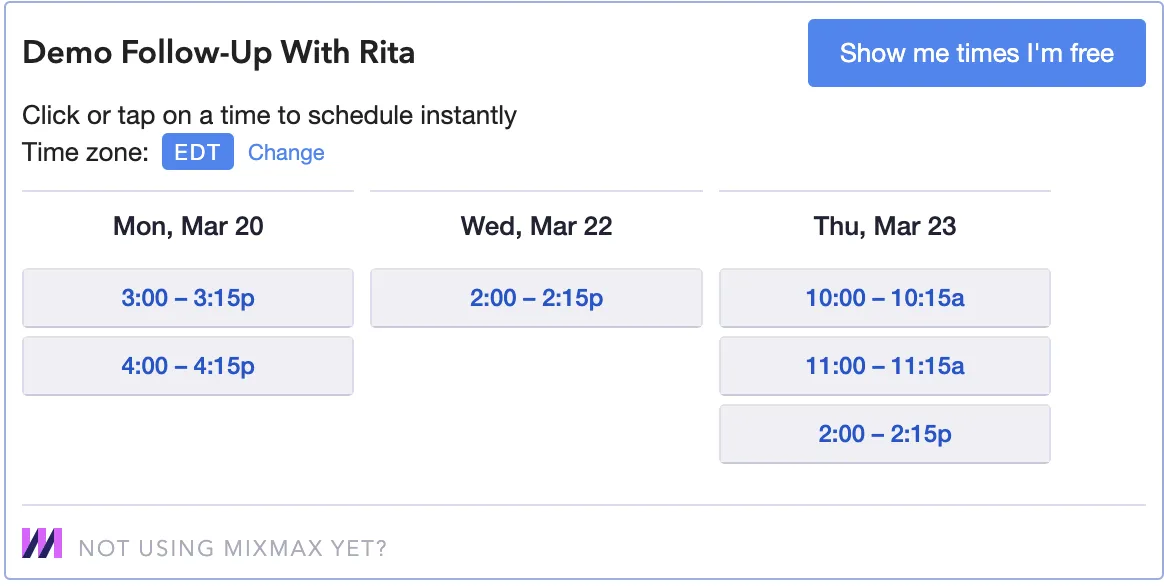
Can’t wait to chat again!
{Signature}
2. Free trial follow-up
Subject: Trial setup + next steps
Hey {first name},
Thank you and [the respective team] so much for your time and for sharing your challenges with [X and Y]. I could see how motivated you all are to tackle these issues asap.
Based on our conversation, here’s how [product name] can help you get there:
- Challenge and solution #1
- Challenge and solution #2
So what’s next?
I will set you and your team up with a trial account so you can play around with all the functionality we discussed. If you run into any issues or have questions, our product experts are at your service 🫡.
You’ll get a separate email with all the details to get started.
Let’s also set up a call next week to discuss how things went with the trial.

Excited to chat again!
{Signature}
3. Unanswered question follow-up
Subject: Got your answer!
Hey {Name},
It was a pleasure reviewing [Product name] with you today and discussing how it can best be leveraged for [Prospect’s company]. Thanks again for sharing your challenges surrounding [X and Y].
As promised, I discussed [their question(s)/concerns] with my team and here’s what we came up with:
- Question/concern + answer #1
- Question/concern + answer #2
I think it might be best for you and your team to experience [your product] first-hand to get a feel for it.
Are you ok with a [date] trial start date?
You’ll have two weeks to test drive it after that, and our team will be on standby if you need help with anything.
Cheers,
{Signature}
4. Technical difficulties follow-up
Subject: Take two 🎬
Hello {Name},
First of all, it was a real pleasure meeting you and your team today. Again, SO sorry for the unexpected technical issues!
But judging from our chat and having heard your challenges with [X and Y], I know we can help you conquer them ⚔️.
If you’re open to a do-over for the demo, it would be my pleasure to set it up. Dropping my availability below so you can choose whichever time works best for you.
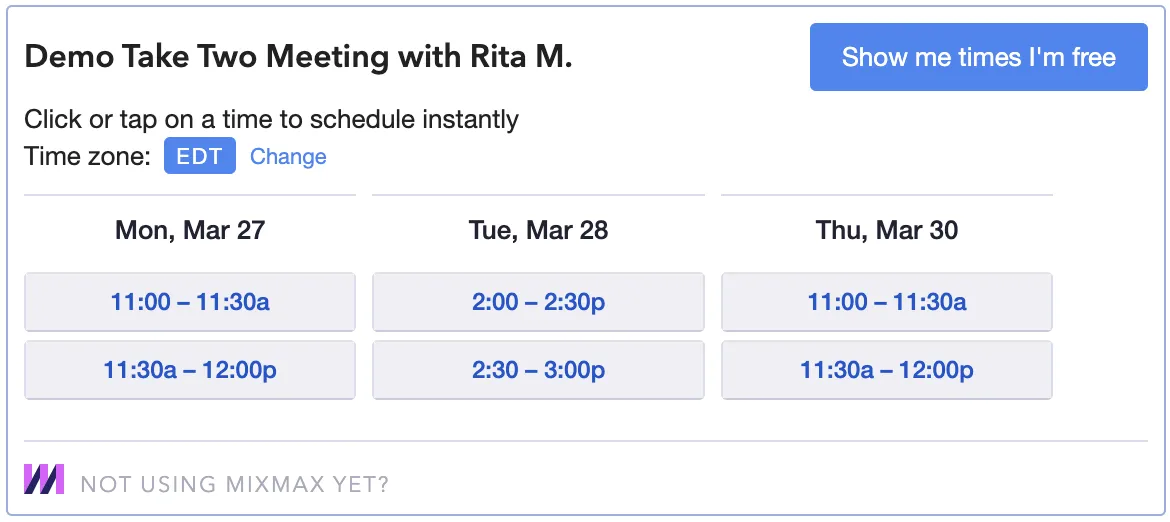
I’ve also attached a slide deck and custom report for your use case. Feel free to share with the rest of the team.
On standby if you have any questions!
{Signature}
5. Proposal follow-up
Subject: Incredible meeting! Here’s what’s next…
Hey {Name},
Yesterday’s meeting was awesome–thanks so much for letting us walk you through [product name] and for sharing your team’s challenges around [X and Y].
As discussed, here’s how [product name] meets your requirements:
- Challenge + solution #1
- Challenge + solution #2
As a next step, I can set up custom onboarding for you and your team so you can explore features and functionality that are most beneficial to you asap.
I will draft the proposal and send it your way by [date].
Does that work for you?
Best,
{Signature}
6. Feedback request follow-up
Subject: Be honest, how’d it go?
Hey {Name},
Meeting you and your team was fantastic–thanks so much for taking the time to explore [your product] and share your challenges around [X and Y].
As demonstrated, here’s how we can help make [year] your best one yet:
- Challenge + solution #1
- Challenge + solution #2
As a next step, I’m going to send over some materials that will help guide you in your decision-making like customer testimonials and explainer videos.
In the meantime, it would be SUPER helpful if you could let me know how the presentation went. Be as honest as possible (I can take it!).
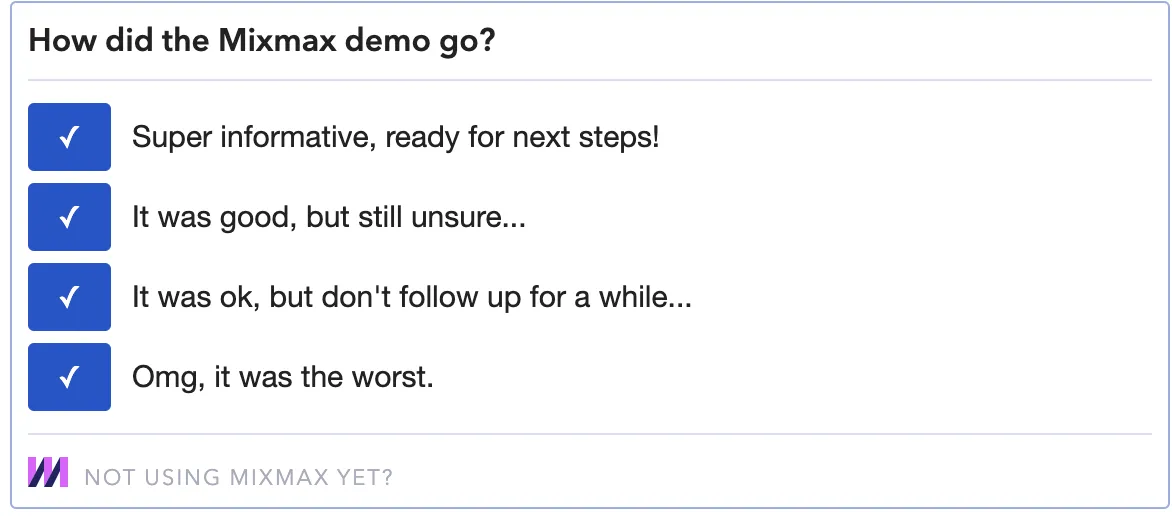
Keep an eye out for my next email and so psyched to chat again!
{Signature}
7. No-show follow-up
Subject: Missed you 💔
Hi {Name},
Sorry you couldn’t make our meeting earlier! No hard feelings–I know how crazy work/life can get and I’ve missed a meeting (or three) myself.
I’m dropping my availability below if you want to reschedule. And I’m sharing a case study with [hyperlinked customer name] that I think aligns with your particular use case. They were able to [positive outcome] in just under [timeframe]!
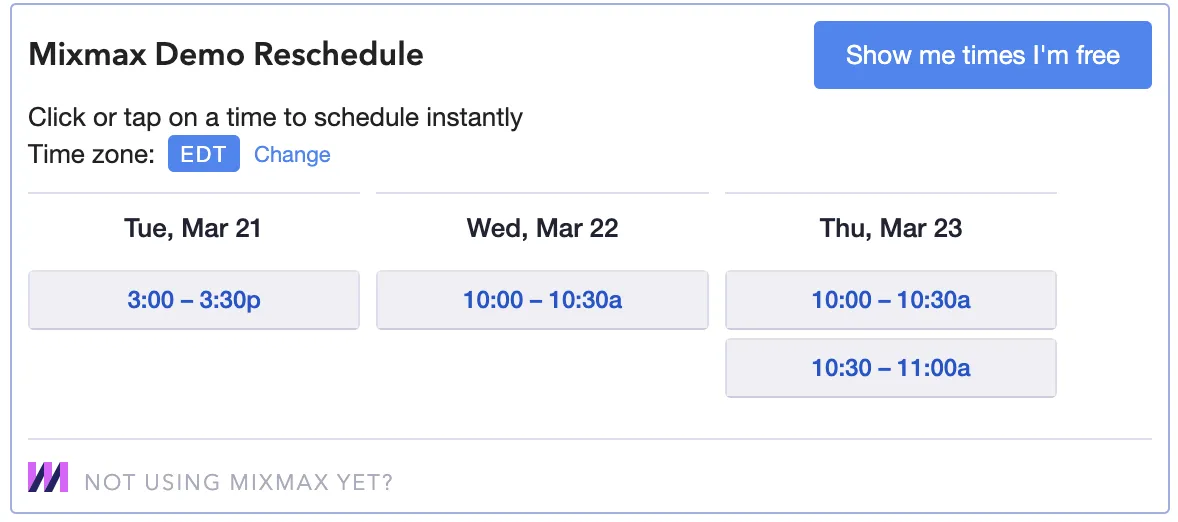
Hope to chat soon!
{Signature}
How to Know if Your Demo Emails Are Working
Now that you’ve got a great demo follow-up email template, it’s time to put it to work.
To measure the success of your follow-up strategy, there are a few metrics Mixmax can help you track:
- Open rate: Open rate isn’t everything per se—it doesn’t tell you anything about how people felt after they read your email or whether they took action. But it’s still an important metric to track because it shows that people are reading what you’re sending them, and could keep you from wasting time on prospects who’ve ghosted you.
- Click-through/download rate: CTR gives you a little more info to work with. It tells you how many people clicked on a link in your email, which can give you an idea of how well your message resonated with them.
- Reply rate: This is another measure of engagement, and it’s especially important in the early stages of building a relationship with prospects. If they took the time to read your email and respond to it—even if they don’t agree to a deal right away—then they’re probably a good prospect for future opportunities.
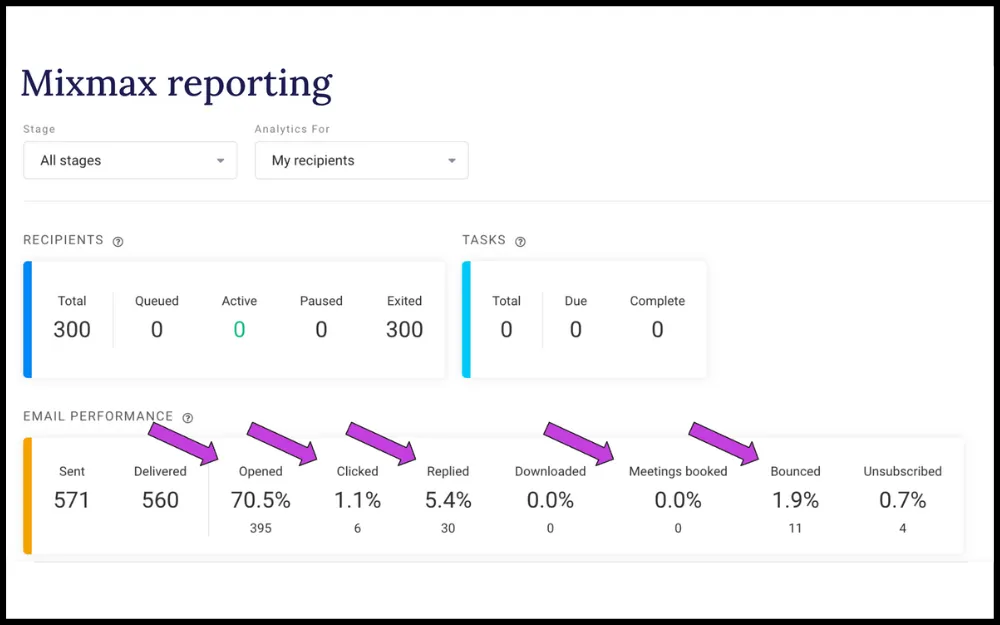 Mixmax reporting
You should analyze this data to figure out what wording and format got the most responses, downloads, etc. Then, apply changes to your next demo follow-up email, and continue the pattern until you’ve perfected a follow-up strategy.
Key takeaways
Here are the key takeaways from this post:
- Importance of post-demo follow-ups: Post-demo follow-up emails are critical for building relationships and keeping the momentum with prospects, especially in competitive markets.
- Timing: Send follow-ups within 24 working hours after the demo to show urgency and commitment.
- Template usage: Customize email templates to fit the audience, using tools like Mixmax for flexibility and automation.
- Best practices: Personalization and A/B testing are key for effective follow-ups to avoid a generic approach.
Understanding Temporary Emails in Your Sales Process
Before you roll out a new sales sequence or workflow, you want to be sure it works perfectly. That means testing everything from email formatting to link tracking. But you can’t exactly use a real prospect’s email for your tests. This is where temporary, or “dummy,” emails come in handy. They’re a great tool for quality assurance, but you need to know how to use them correctly to avoid any security headaches.
What Are Temporary or “Dummy” Emails?
Think of a temporary email as a short-term, disposable inbox. You might have also heard them called “burner” or “throwaway” emails. According to the experts at Mailslurp, “Dummy email addresses are real inboxes used for short-lived tasks such as signup verification, OTP checks, or automation tests.” You can use them to see exactly what your prospects will see when your email lands in their inbox, without cluttering up your own or using a real customer’s address. It’s the perfect way to test your outreach from an outside perspective.
Security, Privacy, and Expiration Concerns
Here’s the catch: many temporary email services are public, meaning anyone could potentially see the emails sent to that address. That’s a huge privacy risk if you’re sending anything sensitive. The key thing to remember is that the reliability of your process matters more than the email address itself. You should never, ever use a public dummy email for tests involving real customer data. Also, these email addresses expire. They’re designed to self-destruct after a certain period, so don’t use them for anything you might need to access later.
How to Use Dummy Emails for Testing Your Outreach
The primary and best use for dummy emails in a sales context is testing. Before you launch your beautiful, multi-stage sequence, you can run it through a test with a temporary email address. This allows you to check for personalization errors, broken links, or awkward formatting. It’s an essential step to ensure your automated outreach, like the kind you can build with AI-powered workflows, runs smoothly and looks professional every single time. Just be sure you’re sticking to safe practices.
Safe uses for testing your sales process
When used correctly, dummy emails are a great asset. Here are a few safe ways to use them to test your sales process:
- Testing sign-up forms: Check that your lead capture forms on your website are working and that the initial welcome email triggers correctly.
- Verifying email sequences: Run a full test of a new outreach sequence to ensure the timing, personalization tokens, and content appear as intended.
- Checking marketing emails: Test promotional or newsletter-style emails separately to confirm that images render correctly and links are tracked properly.
Unsafe practices to avoid
To keep your data and your company’s reputation safe, there are a few things you should never do with temporary emails. Avoid these practices at all costs:
- Using real customer data: Never input any private or personal customer information into a test involving a public temporary email inbox.
- Reusing the same inbox: Don’t use the same dummy email for multiple, unrelated tests at the same time. This can lead to confusing or contaminated results.
- Forgetting to clean up: If you’re using a service that allows you to create accounts, have a process for deleting them after your test is complete to minimize any lingering security risks.
Frequently Asked Questions
What’s the single most important thing to include in my follow-up email? Your email should always contain two key things: a recap of the value you discussed and a clear, simple next step. Don’t just list features; remind them of their specific challenges and connect those directly to the solutions you presented during the demo. Then, make it incredibly easy for them to know what to do next, whether that’s booking a 20-minute implementation call or reviewing a proposal you’ve attached.
The 24-hour window feels fast. Is it really that important to follow up so quickly? Yes, it’s crucial. Think of it as capitalizing on the momentum you just built on the call. The value of your solution and the connection you made are freshest in their mind right after you hang up. Waiting longer gives them time to get distracted by other priorities or even hear from a competitor. A prompt follow-up shows you’re organized, enthusiastic, and respect their time.
What if the prospect doesn’t reply to my first follow-up? First, don’t panic, this is a normal part of the process. This is where having a thoughtful email sequence is so important. Your next email, sent a few days later, can offer a different piece of value, like a relevant case study or a short video explaining a feature they seemed interested in. The goal is to be persistent without being a pest, and you do that by always leading with value instead of just “checking in.”
How much personalization is actually necessary for these emails? Personalization is everything. A template should only be your starting point, never the final product. You absolutely must include specific details from your conversation to show you were listening. Mention the names of their team members who were on the call, reference a specific challenge they brought up, and tailor your proposed solutions to their unique goals. This transforms a generic email into a personal and compelling message.
My demo had technical glitches and felt like a disaster. How do I recover? Take a deep breath and own it, because technical issues happen to everyone. Send a follow-up that acknowledges the problem with a bit of grace and maybe even some lightheartedness. Reiterate the value you know you can provide based on the conversation you did manage to have, and confidently offer a do-over. Including a slide deck or a custom report also shows you’re proactive and prepared, turning a potential negative into a professional recovery.