
If you’re wondering what it takes to keep customers coming back, it’s not some big secret. It’s about turning one-time buyers into loyal fans who feel genuinely connected to your brand. The difference often comes down to one thing: making them feel seen, not just like another number. This is where a solid customer engagement strategy becomes your most powerful tool. Think of it as your playbook for building real relationships. We’ll show you how to build a simple customer engagement plan and share real-world customer strategy examples you can use today.
A customer engagement strategy is something every customer success team needs to make sure things are running smoothly—and to avoid churn (duh).
And a winning strategy isn’t rocket science; it’s about making real connections and genuinely caring about your customers’ goals and needs.
Yes, it’s shockingly simple.
Because if you don’t care, we promise you that it’ll show. And it’ll hurt your business—both future and current.
So if you don’t want people to sh*t-talk your brand and be disappointed by a crappy customer experience, read on for some easy-to-implement customer engagement strategy examples.
- What is a customer engagement strategy?
- Why you need a solid customer engagement strategy
- 15 customer engagement strategy examples
- How to implement a customer engagement plan with Mixmax
So, What Exactly Is a Customer Engagement Strategy?
A customer engagement strategy is all about laying out interactions that deliver a top-notch experience from before the sale to long after closing it. It’s a blueprint for connecting across different communication channels, making sure every chat counts, and keeping your customers keen on staying in touch. It’s a plan where you keep an eye on how things are going with your customers, gathering their opinions, and using their responses to make your approach even better.
Understanding the Customer Lifecycle
Before you can engage customers, you need to know their story with your brand. This is where understanding the customer lifecycle comes in. It’s a map of their entire journey, from the moment they first hear about you to long after they’ve become a loyal advocate. Engagement isn’t just a post-sale activity; it’s a continuous conversation that happens at every touchpoint. By mapping out their journey, you can pinpoint where and when to connect, making sure your interactions are timely and genuinely helpful instead of just another notification they ignore.
Knowing these key moments is what separates a generic experience from one that builds real loyalty. When you understand the stages your customers go through, you can tailor your communication to meet their specific needs at that time. This proactive approach shows you’re invested in their success. For sales teams, this is where you can shine by using tools to create personalized touchpoints. For instance, setting up AI-powered workflows can help you automatically send the right message at the right time, whether it’s a welcome email, a check-in after a month, or a heads-up about a new feature.
Why Your Business Needs a Customer Engagement Strategy
Engaging with your customers isn’t just a nice-to-have; it’s a must for any thriving business. Here’s how a strong customer engagement strategy can benefit your company:
Encourage Upsells and Higher Spending
When customers are engaged, they tend to be more open to suggestions on additional products or services. This isn’t about pushing sales; it’s about providing value that customers may not even know they need. As trust grows, so does the likelihood they’ll say “yes” to more of what you offer.
Turn Happy Customers into Advocates
Happy customers are your best advocates. They talk to friends, family, and colleagues. Each referral can potentially bring in new business without the additional marketing costs. It’s word-of-mouth marketing at its finest, powered by genuine customer satisfaction.
Some fun facts about customer referrals from Annex Cloud:
- A referred customer is 18% more loyal than a customer acquired by other means.
- Referred customers are 4X more likely to refer more customers to your brand.
- Customers referred by other customers have a 37% higher customer retention rate.
- Customer acquisitions through referrals spend 200% more than the average customer.
Reduce Customer Churn and Improve Retention
Customers who feel connected to your brand are less likely to leave for a competitor. This retention is crucial because keeping an existing customer is often easier and cheaper than finding a new one. A strategy that prioritizes customer engagement is like a good maintenance plan—it keeps everything running smoothly and prevents breakdowns.
Related post: Reduce Churn With Customer Success and Sales Collaboration
Brand loyalty
Engaged customers develop a strong connection to your brand. They’re not just shopping based on price or convenience; they believe in your brand’s message and values. This loyalty transforms one-time buyers into lifelong fans, giving your business a stable and reliable customer base.
Look Beyond Purchases for Customer Value
It’s easy to measure a customer’s worth by their last invoice, but that’s a pretty limited view. The most valuable customers are the ones who are truly engaged with your brand, and their contributions go way beyond their purchase history. Think about it: an engaged customer is more likely to stay loyal, provide honest feedback, and be open to upsells because they trust you’re adding value, not just making a sale. They become your best advocates, talking to their friends and colleagues about their positive experience. This word-of-mouth marketing is priceless and turns one happy customer into a source of new, high-quality leads. Shifting your perspective to include referral and influence value helps you see the full picture and build a stronger, more resilient business.
How to Create a Four-Stage Customer Engagement Plan
A great customer engagement strategy doesn’t just happen by accident. It’s a deliberate plan built on understanding your customers and consistently delivering value. Winging it might work for a little while, but a structured approach is what separates fleeting interactions from long-term loyalty. Breaking it down into four distinct stages—Preparation, Planning, Implementation, and Tracking—makes the process manageable and ensures you cover all your bases. This framework will help you build a strategy that’s not only effective but also sustainable as your business grows.
Stage 1: Preparation
Before you can engage with customers, you need to do your homework. This foundational stage is all about understanding who your customers are and how they interact with your brand. Start by mapping the customer journey to identify every single touchpoint, from their first Google search to their tenth purchase. This map will show you exactly where and when you have opportunities to connect. At the same time, you need to define what success looks like. Set clear, measurable goals for your engagement efforts and create detailed customer profiles or personas. Knowing who you’re talking to and what you want to achieve will guide every decision you make moving forward.
Stage 2: Planning
With your research complete, it’s time to build your strategic plan. Take a look at what your competitors are doing to engage their customers—what seems to be working for them, and where are the gaps you can fill? Use this insight to choose the engagement strategies that best align with your brand and the customer journey you’ve mapped out. Just as importantly, you need to get your internal teams on the same page. Customer engagement is a team sport, and a disjointed experience can be jarring for customers. Make sure your sales, marketing, and customer success teams are aligned on the plan, ensuring a smooth and consistent experience for every customer, no matter who they’re talking to.
Stage 3: Implementation
This is where the rubber meets the road. The implementation stage is all about putting your plan into action. This involves launching your chosen strategies and setting up the right technology to support your efforts. Whether it’s a CRM, an email marketing platform, or a social media management tool, your tech stack should make it easier to execute your plan, not harder. The right tools can help you automate routine communications, track interactions, and personalize experiences at scale. This allows your team to focus on what they do best: building genuine relationships with customers.
Stage 4: Tracking
Launching your plan isn’t the final step; it’s the beginning of a continuous cycle of improvement. The tracking stage is crucial for understanding what’s working and what isn’t. Regularly measure your results against the key performance indicators (KPIs) you established during the preparation phase. But don’t just rely on data—actively gather feedback directly from your customers through surveys, reviews, and conversations. Use this combination of quantitative data and qualitative feedback to refine your approach, test new ideas, and ensure your customer engagement strategy evolves right along with your customers’ needs.
Tailoring Strategies by Business Size
Customer engagement isn’t a one-size-fits-all puzzle. The strategies that work for a brand-new startup will look very different from those of a global enterprise. The size and stage of your business will influence your resources, your goals, and the ways you can effectively connect with your audience. Acknowledging these differences is key to choosing tactics that are not only impactful but also realistic for your team to execute. Whether you’re a team of two or two thousand, there’s an engagement approach that’s right for you.
For Startups: Share your mission and build community
When you’re just starting out, you have a unique advantage: your story. Startups can build incredibly strong connections by being transparent and sharing their mission with their earliest customers. Don’t just sell a product; sell a vision. Invite customers to be part of your journey and create a community around your brand. This approach fosters a deep sense of loyalty and can turn your first few customers into passionate advocates who are genuinely invested in your success. It’s an authentic way to build a foundation that can support your growth for years to come.
For Small- to Mid-Sized Businesses: Leverage social media and reward loyalty
As your business grows, you need to find scalable ways to maintain personal connections. Social media is a powerful tool for this, allowing you to engage in real-time conversations, share valuable content, and show off your brand’s personality. It’s a direct line to your customers. This is also the perfect stage to implement a loyalty program. Rewarding repeat customers for their business shows that you appreciate them and gives them a compelling reason to stick around. It’s a simple yet effective way to thank your customer base and encourage continued engagement.
For Large Enterprises: Use AI and automation
For large enterprises, the biggest challenge is often delivering personalized experiences at a massive scale. This is where technology, particularly AI and automation, becomes essential. AI can help you analyze vast amounts of customer data to predict needs and personalize communications, ensuring no customer feels like just another number. For sales teams, using AI-powered workflows can automate everything from follow-up sequences to scheduling, freeing up reps to focus on high-value conversations. This blend of technology and human touch allows large organizations to engage customers effectively and efficiently.
The Human Element of Customer Engagement
In the rush to adopt new technologies and track metrics, it’s easy to forget what customer engagement is really about: human connection. Technology is a powerful enabler, but it’s not a replacement for genuine empathy and understanding. The most successful engagement strategies are the ones that prioritize people—both the customers you serve and the team members who serve them. At the end of the day, loyalty is built on trust and emotional connection, not just clever marketing or a slick user interface.
Support your internal team
It’s a simple truth: happy employees create happy customers. Your customer-facing teams are the heart of your engagement strategy. If they feel overworked, undervalued, or ill-equipped, it will inevitably show in their interactions with customers. Investing in your team’s training, providing them with the right tools to succeed, and fostering a positive work environment is one of the most important things you can do for your customer relationships. When your team feels supported, they’ll be empowered and motivated to go the extra mile for your customers.
Build an emotional connection
Customers stick with brands they feel connected to on an emotional level. This goes far beyond simply being satisfied with a product. It’s about making them feel seen, heard, and valued. You can build this connection through personalization, showing empathy in your communications, and aligning your brand with values that resonate with your audience. When a customer feels an emotional connection to your company, they move from being a simple consumer to a loyal advocate. This is the kind of relationship that withstands price changes and competitive offers.
Encourage cross-functional collaboration
Customer engagement isn’t the sole responsibility of the customer success department. It’s a company-wide effort. From the product developers who build the features to the marketers who craft the messaging, every employee plays a role in shaping the customer experience. Breaking down internal silos and encouraging collaboration between departments is critical. When everyone in the organization understands the customer journey and their part in it, you can deliver a truly seamless and consistent experience that strengthens customer relationships at every touchpoint.
15 Customer Engagement Strategies You Can Use Today
Personalize Your Email Outreach
Personalized emails go beyond using a customer’s name. It’s about crafting content that resonates with their past purchases, interests, goals, and behaviors. The more you personalize your emails, the more likely your customers will interact with you because they will know that you’ve taken the time to really understand their needs and preferences.
This isn’t just about selling; it’s about building a relationship where customers feel like part of your brand’s story. Personalized emails can lead to deeper engagement, more fruitful conversations, and ultimately, a loyal customer base that sees your brand as a partner in their success.
Add Interactive Widgets to Your Emails
If you have no idea what an interactive email widget is, buckle up.
Mixmax has neat email engagement tools you can use to boost reply rates like one-click Polls and Surveys. You can add polls and surveys directly in your email so your prospects and customers can easily click their answers instead of having to manually reply to your emails.
This not only increases engagement rates by simplifying the feedback process but also provides valuable insights into customer preferences and behaviors.

Mixmax’s in-email poll feature for quick replies
Use interactive content like quizzes and calculators
Let’s be real, getting someone’s attention online is tough. Static content is useful, but sometimes you need a little more spark to get a conversation started. This is where interactive tools like quizzes and calculators come in. Instead of just telling your audience something, you’re inviting them to participate. A well-designed quiz can help a potential customer identify their biggest challenge, or a calculator can show them the potential ROI of your solution. It’s a simple, effective way to capture attention and make your brand memorable by offering immediate, personalized results.
Beyond just being fun, these tools are a goldmine for gathering customer insights. Think about it: every answer a person gives in a quiz or every number they plug into a calculator tells you something about their needs, goals, and pain points. This isn’t just random data; it’s information you can use to tailor your follow-up and make your outreach incredibly relevant. You’re essentially getting customers to qualify themselves, which makes the subsequent sales conversation much more focused and productive. This rich data can then be used to trigger specific AI-powered workflows, ensuring a timely and perfectly tailored follow-up without any manual effort.
Connect with Customers on Multiple Channels
Don’t limit your conversations to just one platform. Customers are everywhere – on email, social media, phone, and even SMS. Multichannel outreach means meeting them on their turf.
If you’re using Mixmax, you can set up multi-channel sequences that automate your outreach via different channels. Click here to learn more.
Related post: How to Master Multi Channel Prospecting in Outbound Sales
Data analysis
Dive into your data on customer interactions, sales, and feedback. Analyze patterns to understand preferences and customize your engagement strategies to match customer expectations and improve satisfaction.
Here are a few examples of metrics you can track and analyze to boost customer engagement:
- Email tracking: Monitor and track email opens, clicks, and response rates to assess the effectiveness of communication and follow-up strategies.
- Engagement score: See which one of your prospects or customers is the most (or least) engaged and plan your next action accordingly (e.g., if a prospect or customer is _highly engaged—_has opened your emails several times—pick up the phone and call them or check in with them by sending a well-timed email).

Mixmax’s Contact engagement scoring feature
- Sales conversion rates: Analyze the ratio of leads that turn into actual sales to determine the effectiveness of sales tactics and customer interactions.
- Customer retention rates: Track how many customers continue to use your product or service over time, which can indicate the success of customer success initiatives.
- Upsell and cross-sell success: Evaluate which strategies are most effective at encouraging customers to purchase additional features or products.
- Outbound sequence analysis: Evaluate which sequences of outbound communication (calls, emails, follow-ups) yield the best customer engagement and conversions.
- Renewal rates: Track the frequency and consistency of subscription or service renewals to gauge long-term customer commitment.
- Customer feedback analysis: Systematically analyze feedback from customer interactions to identify common themes or issues that need addressing.
Adopt an omnichannel approach
Think of an omnichannel approach as creating one continuous conversation with your customer, no matter where you’re talking. Your customers are active on email, social media, and the phone, so it’s crucial to meet them where they are. The key is to ensure that every interaction feels connected. A customer shouldn’t have to repeat their story when they switch from a chat with support to a call with their account manager. By linking your tools and customer information, you create a complete history of every touchpoint, which helps your team provide smarter, more contextual support. Using AI-powered workflows can help you manage these cross-channel conversations, ensuring no one ever falls through the cracks.
Create Helpful Educational Content
Share insightful and relevant content that educates customers revolving around pain points, industry trends, or other related topics. This approach is nurture-based and establishes your brand as a valuable resource, helping build trust and authority.
Educational and engaging customer content can be in the form of:
- Customer success articles
- Tutorial videos
- Product newsletters
- Product usage reports
- Blog posts
- Webinars (more on this later)
- Podcasts
- Industry guides and reports
- Infographics
Once you’ve decided what forms of content make the most sense for your customers, you can create an email nurture sequence for them, which in turn increases your content’s visibility and can significantly expand your brand’s reach.
Build a self-service customer help center
Give your customers the power to find answers on their own schedule by creating a comprehensive help center. Think of it as a library of resources—FAQs, how-to articles, and video tutorials—that they can access anytime. This approach shows you respect their time and are invested in their success. When customers can quickly resolve minor issues themselves, they feel more capable and in control of their experience. Plus, it frees up your customer success team to tackle more complex problems, making your support more efficient overall. It’s a straightforward strategy that builds trust and helps customers get the most value from your product, which is key to long-term retention.
You can take this a step further by using AI-powered workflows to automatically reply to common support questions with links to the right help articles. This gets customers the information they need instantly and reduces the manual load on your team, allowing them to focus on building stronger relationships instead of answering the same questions over and over.
Send the Right Email at the Right Time
Determine the best time to send emails by analyzing customer behavior patterns and preferences. Ensuring that your emails arrive when customers are most receptive can greatly increase the chances of engagement.
You can use tools like Mixmax’s AI Smart Send feature that recommends the best times to send an email based on past interactions with your prospects and customers.
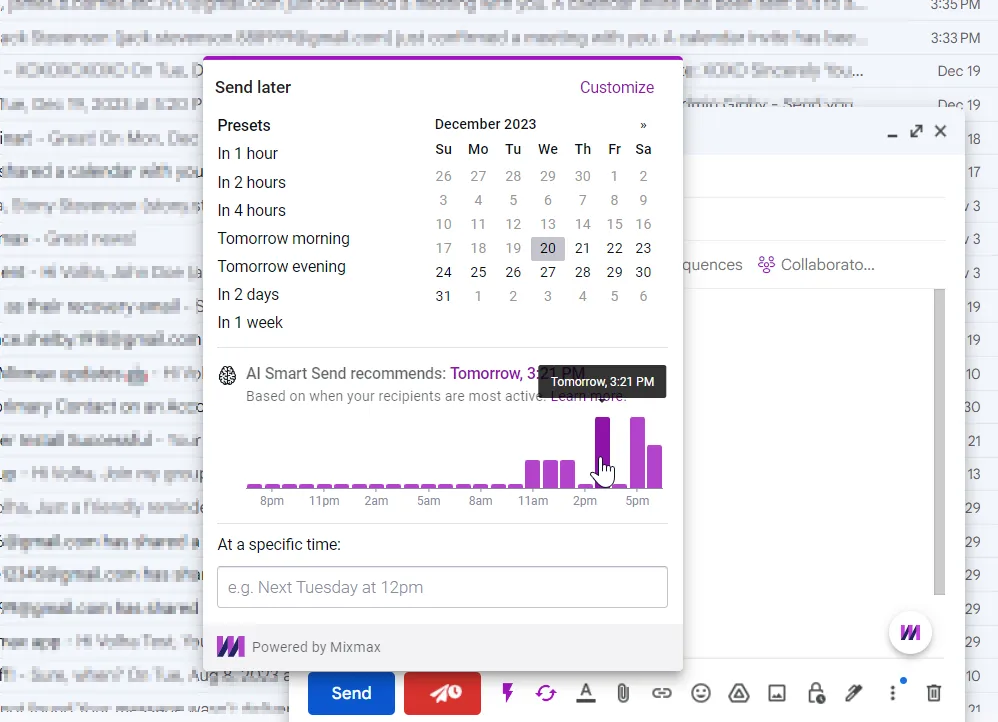
Mixmax’s AI Smart Send feature
Use AI-powered workflows to automate outreach
Let’s be real: automation can sound a bit cold and robotic. But when you use it correctly, it’s actually the key to providing consistent, timely, and personalized experiences. By setting up AI-powered workflows, you can handle routine communications automatically, like sending a welcome email or a follow-up after a demo. This ensures no one falls through the cracks and frees you up to focus on the more complex, human conversations where you’re needed most. It’s about working smarter, not harder, to keep customers engaged at every step.
Think of it as having a super-efficient assistant who never misses a beat. You can create rules that trigger specific actions based on customer behavior—for instance, if a customer visits the pricing page twice in one week, a workflow can automatically schedule a task for you to check in. This approach allows you to interact with customers at just the right moment, making them feel seen and understood. It transforms your outreach from a manual checklist into a responsive, intelligent system that builds stronger relationships.
Hold Regular Quarterly Business Reviews (QBRs)
Hold structured reviews with clients to discuss their use of your product or service, challenges faced, and plans for the future. These reviews can strengthen the relationship and identify upsell or cross-sell opportunities.
Keep in mind that quarterly business reviews don’t actually have to occur every quarter. But checking in with your customers a couple of times a year (or however many times makes sense to you) is important for a healthy relationship.
You can schedule automated emails to check in with your customers at different intervals. But make sure you personalize them, even if they’re part of a sequence (Mixmax lets you do this easily for each individual recipient within a sequence) ⬇️
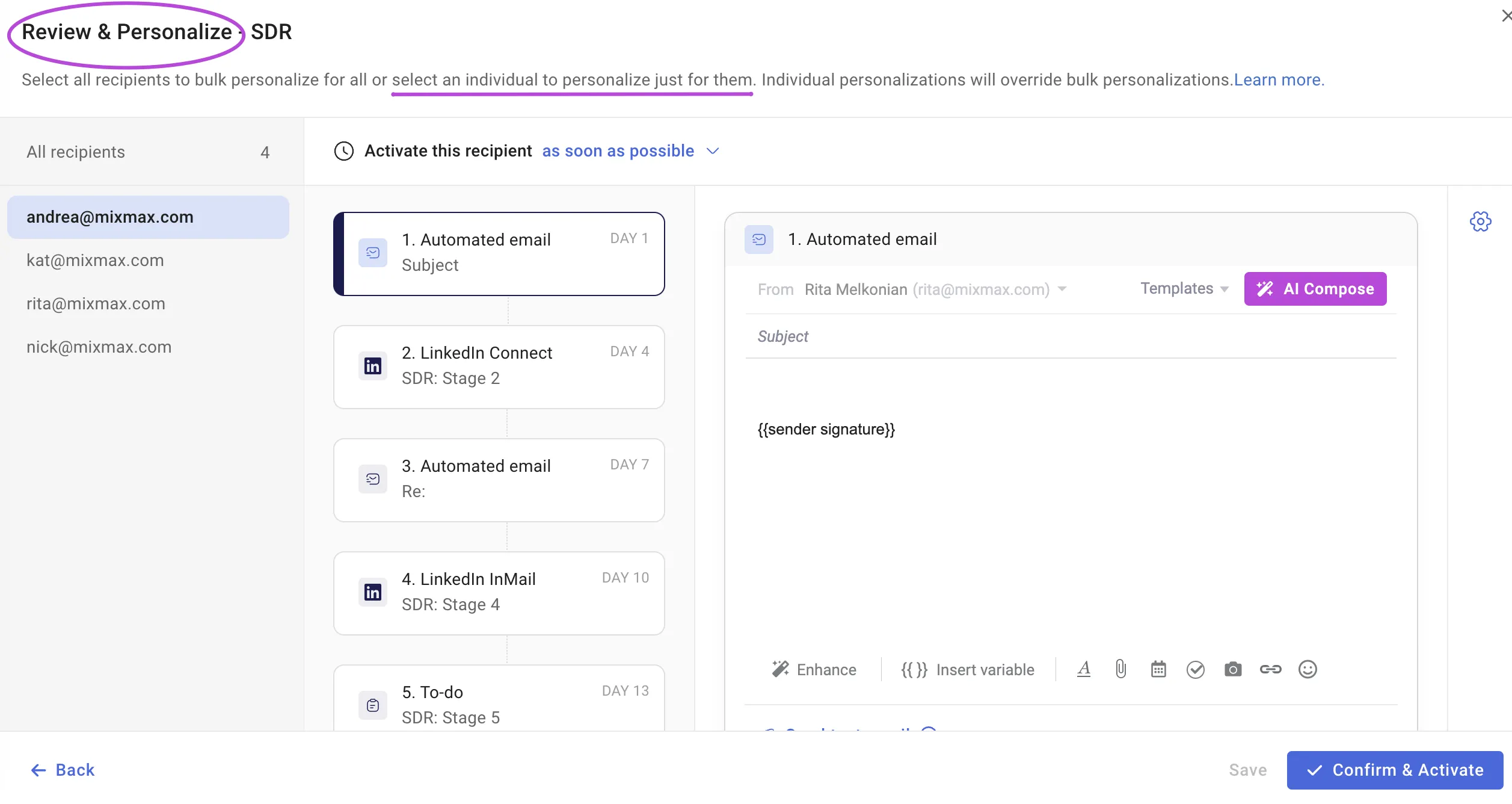 Mixmax sequence personalization
Actively Ask for and Use Customer Feedback
Develop a system for gathering and analyzing feedback from customers across all touchpoints. Use this feedback to refine your customer experience and product offerings continuously.
The easiest ways to get feedback from your customers is either setting up a meeting with them (which might be difficult) or sending them a survey.
You can use tools like SurveyMonkey to send surveys, or, as mentioned earlier, you can insert a survey directly in your email with Mixmax (as shown below).
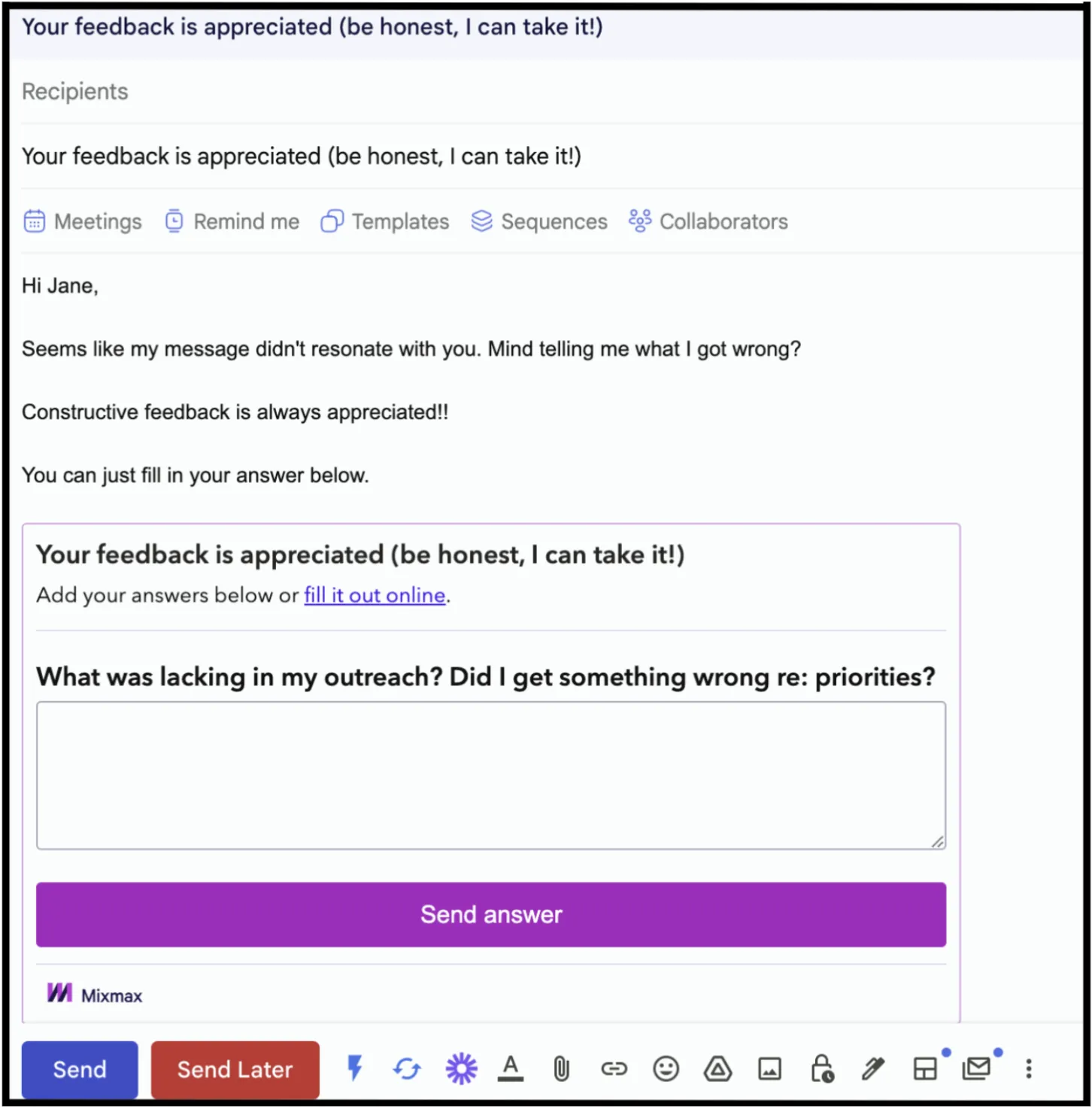
Mixmax’s in-email survey feature
Host Virtual or In-Person Events
Hosting events like product webinars, workshops, or seminars is a great way to engage with customers. When planning these, focus on content that delivers value, such as hands-on training, industry insights, expert advice, or interactive Q&A sessions.
These events offer a platform for customers to interact with your experts, provide feedback, and discuss their experiences with peers, fostering a community around your products or services.
Post-event follow-ups can continue the conversation, turning a one-time event into an ongoing dialogue.
P.S. You can check out Mixmax’s webinars here.
Share Inspiring Customer Success Stories
Sharing customer success stories is a powerful tool in your engagement strategy. By showing real-life examples of how customers have used your product or service to solve a problem, achieve a goal, or improve their business, you provide proof of your value proposition.
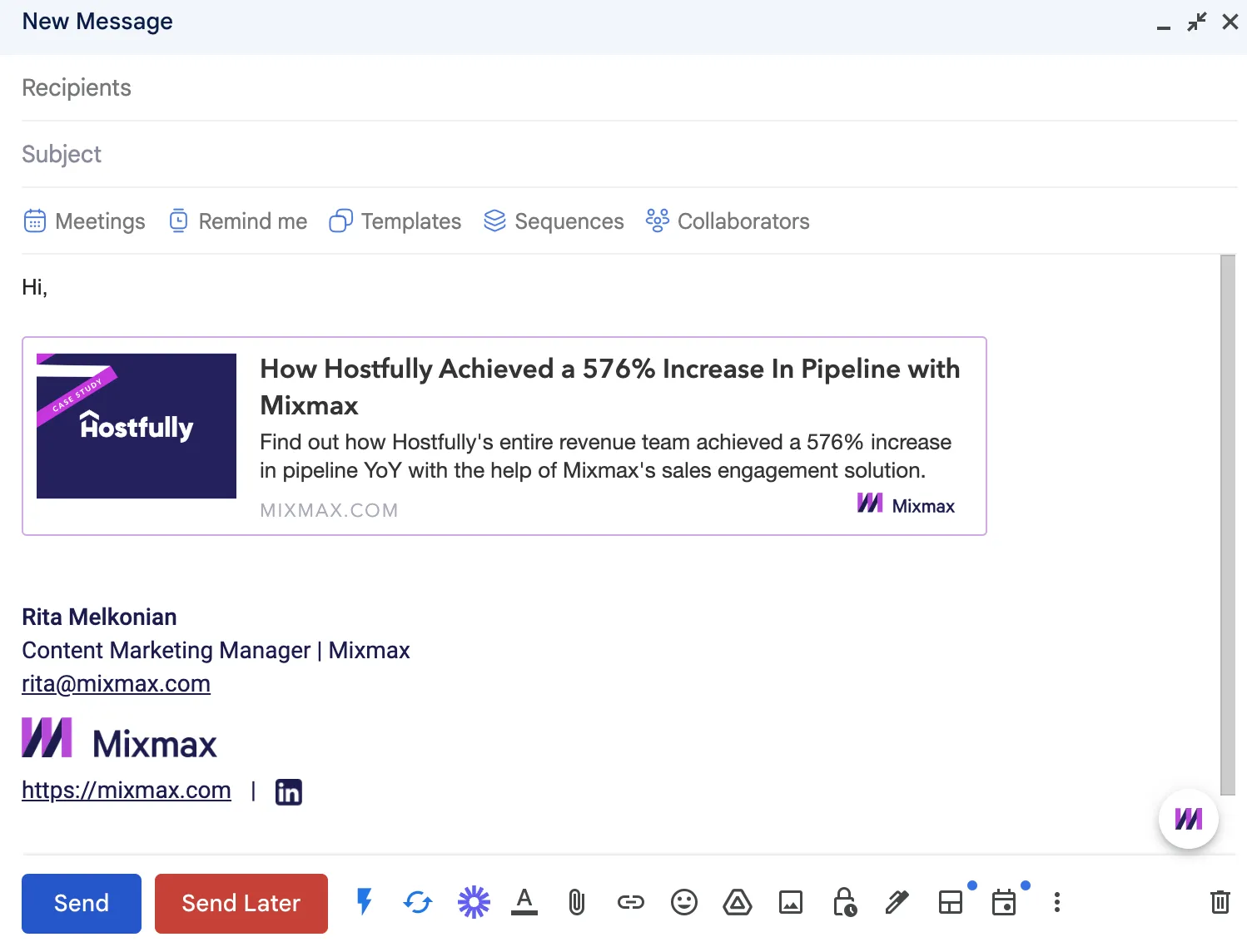
Mixmax’s link previews email enhancement feature
These stories resonate with both prospects and existing customers; they serve as endorsements and can be a source of inspiration for others facing similar challenges.
Engage with Your Audience on LinkedIn
Engaging with customers on LinkedIn means sharing helpful tips, talking about what’s new in your industry, sharing new features, and congratulating customers when they reach certain milestones.
LinkedIn is a great place to make strong connections because it’s where professional discussions take place. By being active and sharing relevant content, you show that you’re an expert in the field and that you’re excited about your customers’ success too.
Related post: 16 LinkedIn Message Templates That Don’t Scream “Prospecting”
A/B testing
A/B testing is a simple way to compare two different versions of something to see which one works better. For customer success teams, this could mean sending out two versions of an email to see which one gets more responses or helps solve customer issues more effectively.
It’s all about making small changes—like two different subject lines or two different calls to action— and seeing what your customers prefer. By doing this, you can make sure you’re always using the best approach to keep your customers happy and engaged.
Build a Thriving Customer Community
This is about bringing your customers together so they can chat with each other, share their own stories, and help each other out. It’s like making a club where everyone has something in common – they all use and love your product or service.
This club can be online, like a group on a social network or a forum on your website. When customers talk to each other and share tips, they feel more connected to your brand, they stick around longer, and they might even tell you new things they want that you hadn’t thought of before.
Offer Instant Support with Chatbots
Implement intelligent chatbots to provide instant support to customers. These bots can handle common questions and problems, providing quick solutions and freeing up your customer service team to handle more complex issues.
You can use apps like Intercom to set this up.
Create a Rewarding Loyalty Program
Loyalty programs are a way to give a little back to the people who keep choosing your service or product. With these programs, you can offer points, discounts, or gift cards to customers who come back or tell their friends about you.
It’s a win-win: your customers get something extra, and you get more sales and new faces. These rewards make customers feel like they’re part of a special club, making them more likely to stick with you and spread the word.
Provide excellent post-purchase support
Once the deal is signed, the real work begins. Excellent post-purchase support is non-negotiable for keeping customers happy and engaged. This means providing clear onboarding materials, being available on the channels your customers actually use, and offering consistent help. You can use AI to help with quick answers to common questions, which frees up your team for more complex issues. By proactively supporting your customers, you not only reduce churn but also create opportunities for them to use your product more deeply, leading to higher lifetime value. To make this manageable, you can use AI-powered workflows to automate check-ins or send helpful resources at key moments in the customer journey. This ensures every customer gets timely support without your team having to manually track everything.
Use visual engagement tools like video chat
Sometimes, an email or phone call just doesn’t cut it. Visual engagement tools like video chat can add a much-needed personal touch to your customer interactions. Hopping on a quick video call allows you to talk face-to-face, read body language, and build rapport much faster than you could over text. It’s incredibly effective for walking a customer through a complex feature or troubleshooting an issue in real-time. For instance, a furniture company could use video chat to diagnose a repair issue without ever sending a technician, saving time and money for everyone. This kind of personal interaction shows you’re willing to go the extra mile.
Incorporate gamification
Let’s be real, everyone loves a good game. Incorporating gamification into your customer experience can make interacting with your brand more fun and rewarding. This doesn’t have to be complicated—it can be as simple as creating challenges, offering points for completing onboarding steps, or creating a leaderboard for power users. You can also encourage customers to share their own content, like photos or reviews, in exchange for badges or exclusive perks. By adding these game-like elements, you motivate customers to engage more deeply with your product and community, turning routine actions into an enjoyable experience.
How to Measure Your Customer Engagement Strategy
You’ve put in the work to build a great strategy, but how do you know if it’s actually working? You measure it. Tracking the right metrics shows you what’s resonating with customers and where you can make improvements. It turns guesswork into a clear, data-backed plan for success, ensuring your efforts are making a real impact.
Customer happiness metrics
These metrics get straight to the point by asking customers how they feel. They give you a direct line into customer sentiment, helping you understand their overall perception of your brand and their specific interactions with your team. You can even use AI-powered workflows to automatically send survey emails after key interactions, ensuring you gather feedback while the experience is still fresh.
Net Promoter Score (NPS)
NPS measures customer loyalty with a single question: “How likely are you to recommend our company to a friend or colleague?” Customers respond on a 0-10 scale, and their answers categorize them as promoters, passives, or detractors. It’s a powerful indicator of long-term happiness and brand advocacy. In fact, a 10-point increase in NPS can lead to a significant rise in revenue.
Customer Satisfaction (CSAT)
CSAT scores measure short-term happiness following a specific interaction, like a support call or a product demo. You typically ask, “How satisfied were you with your experience today?” This gives you immediate feedback on individual touchpoints, helping you pinpoint exactly what’s working and what isn’t in your day-to-day operations.
Customer Effort Score (CES)
CES gauges how easy it was for a customer to get their issue resolved. The question is usually something like, “How much effort did you personally have to put forth to handle your request?” A low-effort experience is a huge driver of loyalty, so this metric is key for identifying and removing friction in your customer journey.
Operational efficiency metrics
While customer happiness is the goal, you also need to know if your team is equipped to deliver it effectively. Operational metrics measure the performance of your internal processes, showing you how smoothly your customer-facing teams are running and where they might need more support or better tools.
First Contact Resolution (FCR)
FCR tracks the percentage of customer issues that are solved during the very first interaction. A high FCR rate is a sign of an empowered and knowledgeable team. It means customers aren’t getting bounced between departments or having to explain their problem multiple times, which is a major win for their experience and your team’s efficiency.
Average Handle Time (AHT)
AHT measures the average duration of a customer interaction, from start to finish. While it’s tempting to push for the lowest AHT possible, the real goal is balance. You want to be efficient, but not at the cost of providing a thorough and satisfying resolution for the customer. Quality should always come first.
Financial and loyalty metrics
Ultimately, customer engagement needs to impact the bottom line. These metrics connect your engagement efforts directly to business growth, showing how happy, loyal customers contribute to the financial health of your company. They are the proof that your strategy is delivering a real return on investment.
Customer Lifetime Value (CLV)
CLV is the total revenue you can expect from a single customer account throughout their entire relationship with your business. Highly engaged customers tend to stick around longer, buy more, and become advocates for your brand, making CLV a critical metric for understanding the long-term value of your engagement strategy.
Customer retention and churn
Retention rate is the percentage of customers who stay with you over a given period, while churn rate is the percentage who leave. These are fundamental indicators of customer loyalty. A strong engagement strategy should directly lead to higher retention and lower churn, proving its value in a tangible way.
Activity metrics
Sometimes, the most telling engagement happens when you’re not actively talking to a customer. Activity metrics track how customers interact with your brand on their own time, offering clues about their level of interest and investment in what you offer, even between purchases or support tickets.
Time spent on site and social media engagement
This involves tracking how long customers spend on your website, which pages they visit, and how often they return. Similarly, you can measure their interactions with your social media content, like likes, shares, and comments. These behaviors show that customers are actively interested in what you have to say, even outside of a direct sales or support conversation.
How to Build Your Customer Engagement Plan with Mixmax
Implementing a customer engagement plan can set your team up for success. Here’s how you can get started with Mixmax’s sales engagement platform to streamline the process:
- Set clear goals: Decide what you want to achieve with your engagement plan. Is it more sales, better customer satisfaction, or something else? Set specific, measurable goals.
- Understand your customers: Use data to learn about your customer’s needs and preferences. Mixmax can help by providing insights into customer interactions.
- Personalize communication: Craft messages that speak directly to the customer’s interests. With Mixmax, you can automate personalized emails at scale.
- Engage across channels: Don’t just stick to email. Reach out on social media, phone calls, and other platforms. Mixmax allows you to manage multi-channel outreach seamlessly.
- Measure and adapt: Use Mixmax’s analytics to track how your engagement strategies are performing. Look at open rates, response rates, and conversion rates. Adjust your plan based on what the data tells you.
- Train your team: Make sure your customer success team knows how to use Mixmax to its full potential. Regular training sessions can help.
- Gather feedback: Use surveys and feedback tools to learn what customers think about your brand. Mixmax’s one-click survey feature can increase response rates.
- Review and improve: Regularly review the entire customer journey and identify areas for improvement.
Frequently Asked Questions
This all sounds great, but where do I even start? Start by understanding your customer’s journey. Before you plan any outreach, map out every single touchpoint they have with your brand, from their first visit to your website to their most recent support ticket. This map will show you the best moments to connect and what kind of help they might need at each stage. It’s the foundation for everything else.
What’s the difference between customer engagement and customer service? Think of it this way: customer service is reactive, while customer engagement is proactive. Customer service is about solving a specific problem when a customer reaches out for help. Customer engagement is the ongoing effort to build a relationship, anticipate needs, and provide value throughout their entire journey, not just when something goes wrong.
How can I tell if my engagement efforts are actually paying off? Look at a mix of happiness, loyalty, and activity metrics. You can directly ask customers for feedback with surveys to get a Net Promoter Score (NPS), but also track their behavior. Are they sticking around longer (higher retention)? Are they spending more over time (higher lifetime value)? Are they opening your emails and visiting your website? These numbers will give you a clear picture of what’s working.
My team is small. How can we manage all of this without getting overwhelmed? Focus on impact, not volume. You don’t need to implement all fifteen strategies at once. Pick one or two that align with your goals, like personalizing your email check-ins or creating a simple self-service help center. Also, lean on technology. Using AI-powered workflows to automate routine follow-ups can free up your team to focus on the high-touch, personal conversations that build the strongest relationships.
I’m worried about using automation. How do I keep my outreach from sounding robotic? Automation should handle the timing, not the tone. Use it to ensure you’re reaching out at the right moment, like after a customer uses a new feature or right before their renewal. The key is to make sure the message itself is still personal and human. You can create templates that leave room for personalization, so you’re starting with a solid, helpful message that you can then tailor to each specific customer. It’s about being efficient, not impersonal.
Key Takeaways
- Build a strategic foundation: A successful engagement strategy starts with a clear plan. Map the customer journey, set measurable goals, and align your teams to ensure a consistent and intentional customer experience from start to finish.
- Make every interaction count: Go beyond generic messages by personalizing your outreach across all channels. Use interactive content like polls and quizzes to capture attention and gather insights, making your follow-up conversations more relevant and effective.
- Track what matters to grow: Understand the real impact of your efforts by tracking key metrics like customer satisfaction, retention, and lifetime value. Use this data and direct customer feedback to continuously refine your approach, turning good engagement into measurable business growth.