




.png)


Welcome to Mixology, our series on go-to-market strategies. What does a bartender know about closing deals? A lot, it turns out. We sat down with Salesroom's Eric Iannello and our own Heath Barnett to discuss why humanizing sales is now a critical business strategy. Eric explained how his time behind the bar taught him that genuine conversation is key, especially for understanding shifting buyer dynamics. Their discussion shows you how to refine your humanizing sales process and make your buyer-seller meetings more authentic and effective.
In this first episode, Heath Barnett, VP of Revenue at Mixmax, sat down with Eric Iannello, Head of Sales at Salesroom, to discuss the evolution of buyer-seller dynamics and what it means for today’s sales leaders.
With Eric’s unique background and experience, this conversation dives into how sellers can adapt to a shifting market and build authentic relationships with buyers.
Here’s a breakdown of their insightful conversation.
Why Sales Is Shifting from Transactions to Relationships
Eric’s transition from B2C to B2B sales came with a few key lessons that sales leaders everywhere should pay attention to: building real human connections is what sets successful sellers apart.
Eric described how his background in brick-and-mortar, customer-facing roles taught him to adapt quickly and focus on human interactions.
“I bartended for years, and I was really good at it because I enjoyed conversing with people. It’s the same application to my conversations today—I get down to the criteria I need to, but I do it in a manner where we’re sitting around having a beer,” Eric explained.
This informal, relational approach is at the heart of his selling style.
Key takeaways:
- The game has changed: We need to meet our buyers where they are, not where we want them to be. This means understanding their needs, challenges, and buying journey to create meaningful, value-driven interactions.
- Sales is not linear: It’s more like a snowball effect where you move forward, then back, but progress over time.
- Focus on the relationship, not just the transaction: Building a connection that feels like a partnership is crucial. Eric emphasized, “It’s not about the destination, it’s about the journey.”
- Diverse backgrounds matter: Salespeople with unique experiences bring fresh perspectives to the table, especially those who have handled high-rejection environments like door-to-door sales.
The Data Behind the Human Touch
This shift from transactional to relational selling isn't just a gut feeling—the data backs it up. Buyers are looking for genuine connection. In fact, recent research shows that buyers want to connect with individual salespeople, not just a faceless company. This means the most successful reps are the ones who take the time to understand what truly motivates each person they talk to. It’s about moving beyond the script and building a real, human-to-human relationship. When you can do that, you’re not just another salesperson; you’re a trusted partner who understands their challenges and is invested in their success. This approach transforms the entire sales process from a simple transaction into a collaborative journey.
Prioritizing this human element has a direct impact on your bottom line. According to one study, a staggering 73% of buyers now say a positive customer experience is more important than the product's quality or price. The financial upside is just as compelling, with businesses that focus on a humanized experience reporting they are 60% more profitable. This data makes it clear: investing in authentic relationships drives serious growth. The challenge is finding the time. Using AI-powered workflows to handle administrative tasks like CRM updates and follow-up reminders gives you back hours in your day. That’s more time to focus on the high-value conversations that build trust and actually close deals.
Where Does the Modern Sales Process Fall Short?
Eric believes that too many companies focus either on prospecting or on managing deals, but they miss out on the crucial middle step: creating meaningful engagement between the initial contact and closing the deal.
This lack of focus on sales process optimization is one of the biggest challenges sales teams face.
“The market isn’t the same as it was 18 to 24 months ago, so why are we still abiding by the same rules?” Eric asked.
Gaps to focus on:
- Middle-of-the-funnel engagement: After setting up a meeting, the next steps are often unclear for many sales teams. As Eric explained, there’s too much emphasis on either automating prospecting or managing deals, while the in-between—the actual sales conversation—gets neglected.
- Humanizing the process: Eric made the point that many sellers treat sales as a transaction. Instead, they should be having genuine conversations that focus on building rapport.
Understanding the 95:5 Rule of Buyer Dynamics
Eric’s point about the market shifting isn’t just a feeling; it’s backed by a simple but powerful concept called the 95:5 rule. Research from institutions like Summit Partners highlights that at any given time, only about 5% of your potential customers are actively looking to buy. The other 95% are not in the market right now. They might be in the future, but today, they’re just not ready. This single idea changes everything. It explains why the old playbook of aggressive, transaction-focused selling feels so out of touch. You’re essentially annoying 95% of your audience by trying to force a sale they don’t want or need yet.
This is exactly why the human-centric approach Eric champions is so critical. Your job isn’t just to close the 5% who are ready today. It’s to build genuine trust and provide value to the 95% who aren’t. By doing this, you become the first person they think of when they eventually move into that 5% buying window. The challenge is managing both groups at once. You need a way to nurture long-term relationships without losing sight of immediate opportunities. This is where having smart, AI-powered workflows becomes essential, helping you stay top-of-mind with the 95% while getting clear signals when someone is ready for a real sales conversation.
The "Long" and "Short" of Your Sales Strategy
To effectively act on the 95:5 rule, you need to run two plays at the same time: a "long" plan and a "short" plan. Your "short" plan is for the 5% of buyers who are in-market and ready to make a decision. This strategy is all about sales activation. It involves clear calls-to-action, direct product information, and making the buying process as frictionless as possible. This is your traditional bottom-of-the-funnel motion, and it’s where you capture existing demand.
Your "long" plan, however, is for the 95%. This strategy is about creating future demand. It’s not about selling; it’s about educating, entertaining, and building brand affinity. This is where you share valuable insights, engage on social media, and have those "sitting around having a beer" conversations Eric mentioned. The goal is to become a trusted resource, so when their needs change, you’re the obvious choice. Balancing both plans is the key to sustainable growth, preventing the feast-or-famine cycle that comes from only focusing on the 5%.
Calculating Your "In-Market" Percentage
The 5% figure might sound abstract, but you can apply this thinking to your own business. To make it tangible, think about the average purchase cycle for your product. For example, if you sell a software solution with an average contract length of three years (36 months), it means that in any given month, only about 2.8% (1 ÷ 36) of your total addressable market is even in a position to consider a switch. This simple calculation brings the 95:5 rule to life and underscores the reality that most people you talk to are not ready to buy today.
This understanding should fundamentally change your goals for every interaction. For the vast majority of prospects, the objective isn't to book a meeting; it's to be helpful and memorable. This is why tracking long-term engagement is so important. With the right engagement signals, you can see when a contact from the 95% suddenly starts interacting with your content, signaling they’ve moved into the 5% window. That’s your cue to switch from the "long" plan to the "short" plan and start a real sales conversation.
What Does Humanizing Sales Look Like in Practice?
Both Heath and Eric shared personal stories that illustrated how important it is to move beyond transactional selling and focus on building meaningful relationships. Here are a few actionable strategies they mentioned that sales teams can start implementing right away.
Set Clear Expectations and Ask for Permission
One of the easiest ways to build trust is also one of the most overlooked: simply asking for permission. This isn't about being timid; it's about showing respect for the buyer's time and intelligence. Before you launch into your next point or ask a deeper question, pause and check in. As sales leader Colby Flood advises, "Before moving to the next step in a conversation, ask if it's okay... This makes clients feel in control and builds trust." This simple act transforms the dynamic from a one-sided pitch into a collaborative discussion. It shows the buyer that you see them as a partner in the conversation, not just a target, which is fundamental to building a lasting relationship.
Act as an Advisor, Not Just a Seller
Once you have that green light, your role shifts from someone asking for time to someone providing value. To truly humanize the sale, you have to be more of an advisor than a seller. This means being honest about whether your solution is the right fit for their specific problems. It’s about prioritizing the buyer’s success over your quota. This approach builds incredible long-term credibility. Being a great advisor means showing up prepared. When you have tools that surface key engagement signals right inside Gmail, you can walk into a conversation with a clear understanding of the buyer's needs, allowing you to offer genuine solutions instead of just pitching features. It’s about having the right information to guide the conversation effectively.
Adjust Your Style to Different Personalities
A key part of being a trusted advisor is speaking your buyer’s language. Not everyone processes information the same way, so a one-size-fits-all script will almost always fall flat. Instead, pay attention to the person you’re talking to and adapt. As Colby Flood puts it, you need to "change how you talk and present information to match their style.” Some buyers are analytical and want to see hard data and ROI calculations. Others are more relationship-driven and respond better to stories and case studies. Adapting your communication style shows you’re truly listening and makes the buyer feel understood, which is the foundation of any real human connection.
Handle Objections Like a Human, Not a Script
Heath recounted his early days in door-to-door B2B sales, where he would get dropped off in the morning and have to approach every business on the block. This tough experience taught him how to handle objections in real-time, which is critical for humanizing any sales process.
💡Actionable tip: When faced with objections, don’t just focus on overcoming them—engage the customer by asking open-ended questions about their concerns. For example, instead of responding to “We’re not interested” with a canned rebuttal, ask: “Can you tell me what specifically doesn’t align with what you’re looking for right now?” This shows you’re genuinely interested in their needs and not just trying to push a product. |
Use real-time insights to personalize the conversation
Eric explained how Salesroom provides real-time feedback during sales conversations, allowing salespeople to adjust on the fly based on the buyer’s reactions. This shifts the conversation from being reactive to proactive, making it feel more like a dialogue rather than a sales pitch.
💡Actionable tip: Leverage real-time data tools to guide your conversations. For instance, if Salesroom provides insights that show your prospect is highly engaged when discussing a particular challenge or feature, shift your focus to that area and explore it in more detail. This allows you to adapt to the prospect’s needs in real-time, making the conversation more dynamic and personalized, rather than sticking to a rigid script. |
Leverage social media for personalization
Eric shared that he often looks at a prospect’s LinkedIn or other social media platforms to personalize his outreach. He doesn’t just rely on AI-generated insights but goes a step further by observing what matters to the prospect, such as their recent posts or industry discussions they’re involved in.
💡Actionable tip: Before a sales call, spend a few minutes on your prospect’s social media profiles. Identify topics they’ve engaged with or posted about and weave that into your conversation. For example, “I noticed you recently shared an article about AI in sales—what's your take on how it’s impacting your team’s workflow?” This creates a more natural, human connection. |
Follow-up with value, not just a meeting request
Heath mentioned how building trust and rapport doesn’t end with a meeting—it requires meaningful follow-up that adds value. “Referrals are your best pipeline,” Heath said, emphasizing the importance of continuing the relationship even after the initial deal closes.
💡Actionable tip: After a call or demo, aside from asking for the next steps, send over a helpful resource—like an article, case study, or tool—tailored to their specific needs. This demonstrates that you’re not just after a quick win but are genuinely interested in helping them succeed. |
Fun fact: Mixmax makes boring links and PDFs more engaging by auto-generating thumbnails. Plus, you can track clicks and downloads with Mixmax Insights to gauge interest.
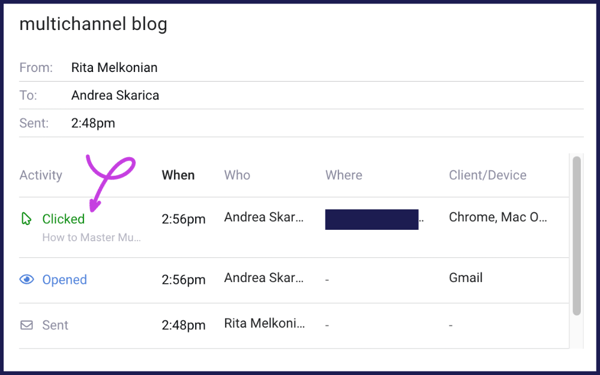
Mixmax's email tracking feature
Inject your personality
Eric explained how he stands out by injecting humor into his emails and conversations, which immediately makes him more relatable. “I zig-zag and use humor because that’s who I am,” Eric said, explaining how this approach helps break the ice and leads to better rapport with prospects.
💡Actionable tip: Don’t be afraid to let your personality shine in your emails or calls. You don’t need to sound overly formal. You can draft your email as if you’re speaking to a child (easy readability, no jargon, friendly, even funny). Just don’t go overboard with the friendliness (aka you’re not texting your friends in the group chat). |
How to Make Your Message Actually Stand Out
In a world where buyers are constantly bombarded by sales messages, it’s more important than ever to break through the noise. Eric shared some unconventional tactics, such as prospecting on weekends, that have helped him stand out.
“I’m a big believer in prospecting on weekends. Why? Because nobody else does it,” he said.
Out-of-the-box tactics:
- Weekend prospecting: Eric’s approach of reaching out on weekends has proven highly effective because buyers are less inundated with messages during this time.
- Using humor and personalization: Eric leverages his unique personality to engage with prospects, often using humor and a more relaxed tone in his messaging.
P.S. Using a tool like Mixmax, reps can set up automated (and personalized) weekend emails, leveraging AI Smart Send to ensure those emails reach prospects at optimal times.
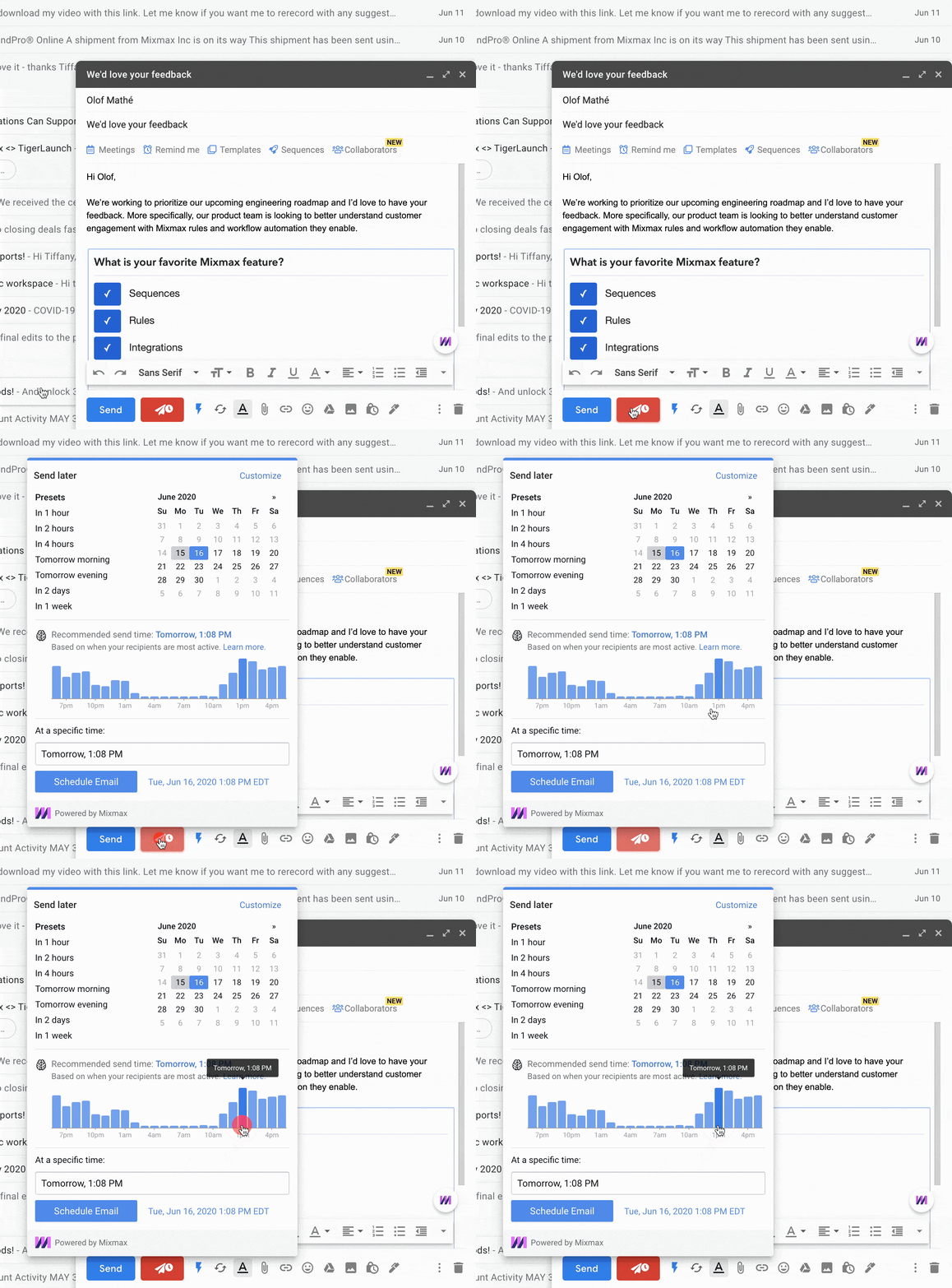 Mixmax's AI Smart Send feature
Think Like a Marketer to Get a Reply
Your prospect's inbox is a battlefield for attention. To win, you can't just show up with the same old sales pitch. You need to think like a marketer. This means crafting outreach that is genuinely interesting and valuable to the person on the other end. It’s about earning a click and a reply, not just sending another email into the void. When you humanize your outreach, you stop seeing a list of leads and start seeing individuals with unique problems. This is how top reps achieve 52% reply rates while the industry average sits at 2-3%. It’s not magic; it’s marketing-minded sales.
Find Your Creative Angle
Finding your creative angle is where you put this marketing mindset into practice. It’s about finding that one specific thing that makes your email different from the other 50 in their inbox. As Eric mentioned, humor can be a powerful tool. A well-placed, self-aware joke can break the ice and show there’s a real person behind the email. Your angle could also be a shared connection, a comment on a recent company announcement, or a question about a topic they posted about on LinkedIn. The goal is to find a hook that is authentic to you and relevant to them.
This level of personalization takes time, which is a resource most reps don't have. This is where having the right tools makes a difference. When you’re not spending hours on manual CRM entry, you get that time back. Mixmax saves reps over two hours a day by automating tasks with AI-powered workflows right inside Gmail. You can reinvest that time into what really matters: researching your prospect, finding that creative angle, and writing an email that actually deserves a reply. It’s the difference between sending 100 generic emails and 10 great ones that start real conversations.
How to Coach Your Sales Team to Be More Authentic
One of the hardest things for sales leaders is to coach reps away from bad habits. Heath and Eric shared some of their methods for getting reps to be more human and authentic in their interactions.
“Stop, drop, and go,” Eric explained, is one of his favorite coaching exercises. When a rep uses a buzzword or starts relying on jargon, Eric has them stop and start over, encouraging them to simplify their language.
He also makes them write emails as if they were talking to a 3-year-old. “It forces them to break things down in simple terms and remove all the industry fluff,” Eric said.
Lead by Example: Get in the Trenches
To truly coach authenticity, leaders need to understand the daily grind their reps face. Eric and Heath both stressed the importance of empathy, which starts with experience. As one study on humanizing sales notes, leaders should try prospecting themselves to understand what their team goes through. This isn’t about micromanaging; it’s about building credibility and showing your team you’re in it with them. When you’ve recently felt the sting of a cold outreach campaign that fell flat, your advice on how to handle objections or personalize a follow-up carries much more weight. It shows you understand the challenges firsthand and aren’t just coaching from an ivory tower.
Know Your Reps as People, Not Numbers
Effective coaching goes beyond just looking at dashboards and performance metrics. It’s about understanding the individuals on your team. As experts suggest, leaders need to know their salespeople as people, not just numbers, to understand what helps or hinders them. Does a rep thrive on friendly competition, or do they need quiet encouragement? Are they struggling with a specific part of the sales process, like writing compelling opening lines? When you know your reps on a human level, you can tailor your coaching to their specific personality and needs, which is far more effective than a one-size-fits-all approach. This is how you build a team that feels supported and motivated to do their best work.
Encourage Creativity to Prevent Burnout
The pressure to hit quota can often lead to reps sounding robotic and scripted, which is a fast track to burnout. To counter this, leaders should foster an environment where reps feel safe to be themselves. This means giving them the freedom to experiment with their messaging, inject their own personality, and find what works for them. As Eric mentioned, using humor and zig-zagging when others zag is what makes him stand out. When you encourage creativity, you not only prevent burnout but also unlock innovative ways to connect with buyers. This could mean letting reps build their own personalized email sequences in Mixmax or A/B test funny subject lines. The goal is to empower them to be authentic, which is more sustainable and effective in the long run.
Exercises to foster authenticity:
- Stop, drop, and go: Anytime a rep slips into jargon, have them stop, drop the buzzwords, and start from the beginning with simpler, clearer language.
- Write for a 3-year-old: Have reps write their emails as if addressing a child, which forces them to simplify their language and focus on clarity.
“It’s amazing how much easier it is to get your point across when you cut out the noise,” Eric shared.
Fun fact: You can use Mixmax’s AI Compose feature to draft personalized messages in less time. But remember, always review and tweak AI-generated emails before sending them.
%20Oct%2023%20GIF.gif?width=600&height=566&name=Mixmax%20AI%20Compose%20(GA%20launch)%20Oct%2023%20GIF.gif)
Mixmax's AI Compose feature
The Future of Sales: Aim for Impact, Not Just Revenue
The conversation ended on a powerful note: the old model of Predictable Revenue is broken.
Heath and Eric both believe that the future of sales lies in Predictable Impact—where the focus is on providing value and impact at every stage of the sales process.
As Heath put it, “It’s not about the meeting, it’s about how we impact the conversation. If we focus on recurring impact, that’s where the real value is unlocked.”
Key insights:
- Shift from revenue to impact: Sales leaders should focus on the impact their reps are having in every interaction, not just pushing for meetings or deals.
- Meet buyers where they are: Understanding where your buyer is in their decision-making process is crucial to building meaningful connections and progressing deals.
Selling Is Human, and That’s Your Advantage
The takeaway from Heath and Eric’s conversation is clear: find out who you are as a seller before focusing on who you’re selling to. Authenticity, empathy, and human connection are the new pillars of success in sales.
As Eric succinctly put it, “Find out who you are as a seller more than who you're selling to—that’s your real value.”
This is just the beginning of the conversation on how to navigate today’s evolving sales landscape. Stay tuned for more insights and strategies in upcoming episodes of Mixology.
Frequently Asked Questions
What does it mean to "humanize sales"? It means shifting your focus from making a quick transaction to building a genuine relationship with your buyer. Instead of just pushing a product, you act more like a trusted advisor who understands their specific problems. This involves having real conversations, showing your personality, and prioritizing the buyer's success, which builds the trust needed to close deals and earn future business.
Why is the old, transactional sales model no longer effective? Buyers are more informed and have more options than ever before. They are also tired of generic, high-pressure sales tactics. The reality is that only about 5% of your potential customers are ready to buy at any given moment. A transactional approach ignores the other 95%, while a human-centric strategy builds trust with everyone, making you the first person they call when they are ready to buy.
How can I balance building relationships with my need to hit quota? You can balance both by using a "long" and "short" plan. The "short" plan focuses on the 5% of buyers who are ready to purchase now, using direct calls-to-action. The "long" plan is for the other 95%; it involves educating and building trust over time so you become their first choice later. Using tools with AI-powered workflows can automate administrative tasks, giving you more time for the high-value conversations that serve both plans.
What's a simple, actionable way to start being more authentic on sales calls? Start by asking for permission before you move to the next part of your conversation. A simple, "Is it okay if we talk about X next?" or "Would you mind if I asked a few questions about your current process?" shows respect for the buyer's time. This small change shifts the dynamic from a one-sided pitch to a collaborative discussion, making the buyer feel more in control and building trust.
My team sounds robotic. How can I coach them to be more human? Lead by example and create a safe environment for them to be themselves. Try exercises like the "stop, drop, and go" method, where you have reps restart their sentence whenever they use jargon. Also, encourage them to write emails in simple, clear language, as if explaining it to a child. This helps them cut out the corporate fluff and communicate more directly and authentically.