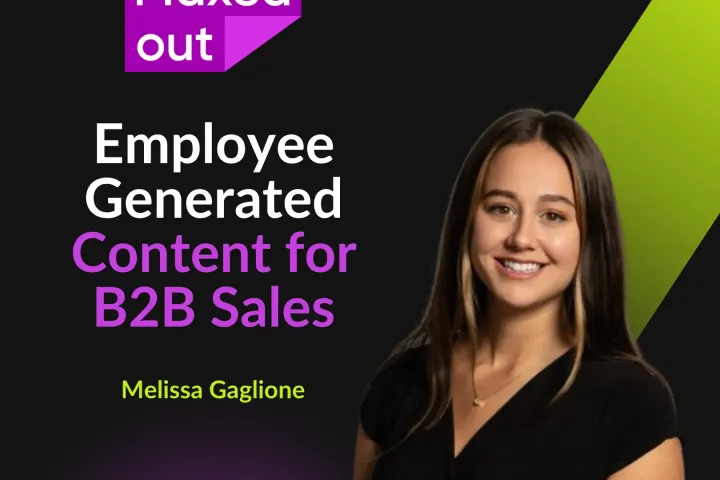
Why do some companies feel magnetic on LinkedIn—while others sound like a brochure? The difference isn’t the budget. It’s people. Specifically, it’s people like Melissa Gaglione. She grew her following from zero to 40,000 and built a $200,000 side business in just two years. Her approach to B2B SaaS sales isn’t about hacks; it’s about teaching. Melissa understands that great selling is just clear, helpful communication. Here, we’ll break down her lessons so you can build a team where every B2B employee sells with confidence and authenticity.
Maxed Out: AI-Powered Selling for the Next Best Action brings that human edge into focus as host Heath Barnett sits down with Melissa Gaglione, Senior Sales Manager at Warmly and founder of Async Sales Co. Together, they unpack how employee-generated content (EGC) is reshaping B2B sales—turning teams into credible storytellers, building community, and creating pipelines without feeling sales-y.
“Approach social selling authentically to meet buyers where they are—that’s where the magic happens,” Heath notes. Melissa’s journey—from elementary education and news reporting to leading modern sales teams—adds a refreshing, practical lens: this isn’t about going viral; it’s about being real, consistent, and useful.
Who is Melissa Gaglione?
From Educator to Sales Coach
Melissa Gaglione’s path to becoming a leading voice in sales wasn’t typical. She holds a Master’s degree in Education from the University of Tampa, with a focus on teaching and leadership. This background is her superpower. Instead of starting with quotas and scripts, she starts with people. Her approach is rooted in the principles of education: making complex ideas simple, building confidence, and empowering individuals to find their own voice. This perspective is a breath of fresh air in an industry often focused on brute-force tactics. She understands that great selling isn’t about manipulation; it’s about clear, consistent, and helpful communication—the same skills that make a great teacher.
Building a Following and a Business on LinkedIn
On LinkedIn, Melissa put her principles into practice with incredible results. She grew her following from zero to over 40,000 people in less than two years, all while building a side business that generated over $200,000. Her secret wasn’t a complex algorithm hack; it was consistency and authenticity. As she explains, the most successful content comes from employees being real and helpful, not from chasing viral trends. This philosophy proves that when you focus on building trust, the pipeline follows. It’s a powerful reminder that the real work of selling is human. That’s why the right tools are so important—they automate the repetitive tasks that get in the way. With AI-powered workflows that handle CRM updates and surface the next best action right in Gmail, reps get back hours each day. That’s time they can spend creating genuine connections and sharing valuable insights, just like Melissa.
Why Employee Advocacy on LinkedIn Matters
Think about the last time a company’s logo convinced you to make a big purchase. It probably hasn’t happened. That’s because in B2B sales, buyers trust people, not brands. A polished corporate post is easy to scroll past, but a genuine insight from someone on the front lines cuts through the noise. As Melissa Gaglione points out, the most successful content comes from real employees sharing their experiences. It’s not about crafting the perfect sales pitch or trying to go viral; it’s about being consistently helpful and authentic. This approach builds a foundation of trust that a marketing slogan simply can’t replicate.
When your team members share their expertise, they do more than just post content—they humanize your brand. Each article, comment, or story transforms your company from a faceless entity into a group of credible, approachable experts. This builds familiarity with potential buyers long before the first sales call ever happens. A prospect who has been following your engineers or account executives already feels a connection. That initial outreach isn’t cold anymore; it’s a warm conversation. The goal is to build a community and create sales leads naturally, turning your team into storytellers who attract opportunities by being themselves.
Why Do We Trust People More Than Logos?
If you’ve sensed a shift from corporate polish to human credibility, you’re not imagining it. In B2B SaaS, buyers increasingly look to practitioners, not brand handles, for proof and perspective. That’s the heart of EGC.
- It’s not influencer marketing in a suit. It’s practitioners sharing what they’re learning—live, in public.
- It reduces friction. When sellers post consistently, they create familiarity and trust before the first meeting.
- It scales belief. One voice becomes many, amplifying brand reach without forcing a single script.
At Warmly, Melissa sees EGC as a flywheel: empower employees to share, engage with the community, celebrate wins, and turn curiosity into conversations. “Feeling like an imposter means you’re growing,” she says. “Share your journey, and amazing things will follow.”
How to Build a Social Selling Program That Works
Building a “program” sounds formal and complicated, but it really just boils down to a few core habits. It’s not about creating a dozen perfect posts, but about showing up consistently with something real. People trust people, not corporate logos, so the goal is to let your team’s genuine experiences shine through. This approach builds familiarity and trust long before a sales call ever happens. It makes the first conversation feel less like a cold pitch and more like a continuation of a discussion they’ve already seen online.
So, where do you start? It begins with giving your team a simple playbook and the freedom to be themselves. The goal isn’t to turn every rep into a LinkedIn influencer overnight. It’s to create a flywheel where employees feel empowered to share what they’re learning, engage with their network, and turn that curiosity into real conversations. This isn’t just about brand building; it’s about pipeline building. When done right, social selling becomes a natural extension of your sales process, feeding directly into the actions your team takes every day.
Start with a simple, repeatable framework
Forget trying to write the perfect viral post. Melissa’s advice is clear: consistency beats perfection every time. It’s better to share small, real updates about your work than to chase a single big hit. Give your team a simple structure to follow, like the “Hook, Story, Takeaway” model. The hook grabs attention, the story shares a real experience or lesson learned, and the takeaway makes it useful for the reader. This framework removes the pressure of staring at a blank page and encourages reps to share their authentic journey, which is far more relatable than a polished marketing message.
Empower, don’t mandate
The fastest way to kill a social selling program is to force it. Mandated posting leads to generic, copy-pasted content that everyone can spot a mile away. Instead, focus on empowerment. Create a dedicated Slack channel where team members can share post ideas, celebrate each other’s wins, and ask for feedback. Provide weekly prompts or interesting stats they can use as inspiration. As Melissa puts it, the goal is to create a flywheel effect. When you empower employees to share, they engage with the community, which in turn sparks conversations and builds momentum naturally.
Connect social activity to sales outcomes
Social selling isn’t just about posting; it’s about starting conversations. When a prospect likes or comments on a post, that’s a critical buying signal. The next step is to move that interaction into your sales workflow. This is where having the right tools makes all the difference. For example, you can include LinkedIn connection requests or InMail messages as steps in your outreach sequences. When you see a prospect engaging with your content, you can use that as a warm entry point for an email, referencing the topic they showed interest in. This turns a passive social view into an active sales opportunity.
How to Encourage Your Team to Actually Post
Most teams don’t struggle with “what to say.” They struggle with “should I say it?” Fear—of judgment, of not being an expert, of saying it wrong—stops posts before they start.
Melissa’s antidote is a volunteer-first culture. Start with those who want in. Celebrate early movers. Make it enjoyable, not mandatory. Offer structure without stifling voice.
A simple starting point:
- Define your content pillars: 3–4 themes you genuinely care about (e.g., discovery, onboarding, PLG, AI in selling).
- Document, don’t perform: share a snippet from your day, a lesson from a call, a template you refined.
- Respond with intent: thoughtful comments > generic congratulations. If you use AI, add your take. Make it you.
- Measure what matters: profile views, DMs, reply quality, meeting momentum—not just likes.
The result? Consistency breeds confidence, and confidence compounds.
Addressing the “No Time” Objection
“But my team doesn’t have time for this.” It’s the most common objection, and it’s a fair one. Reps are paid to close deals, not become content creators. The key is to reframe the work. Melissa’s advice is to “document, not perform.” This isn’t about writing a perfect article. It’s about sharing one lesson from a call or a template that worked. It takes five minutes, not five hours. When reps save hours each day with AI-powered workflows that automate CRM updates, they can reinvest that time. Instead of just sending more emails, they can spend a few minutes building the trust that makes every email more likely to get a reply.
Post with Purpose Using the SHINE Framework
Melissa’s SHINE framework gives sellers an easy creative prompt to avoid “posting just to post.” While every team can tailor it, think of SHINE as a checklist for meaningful content:
- Story: Lead with a moment—a buyer objection, a failed experiment, or a small win.
- Human: Share your perspective, doubt, surprise, or lesson learned.
- Insight: Offer a takeaway others can use today.
- Next step: Invite discussion, question the crowd, or link to a resource.
- Evolution: Return to the theme over time; show progress, not perfection.
This structure keeps posts authentic, useful, and repeatable—without sounding scripted.
Why Authenticity Beats Automation on LinkedIn
Yes, AI can help you draft, brainstorm, or structure comments. But the feed can smell autopilot from a mile away. Melissa’s rule: if you use AI to accelerate, always add a real opinion—what you agree with, what you’d change, a nuance from your experience. That’s how you stand out.
Practical guardrails:
- Avoid empty praise. Add context or a counterpoint.
- Reference specifics from the post to prove you actually read it.
- Keep comments short, smart, and human—like you’d talk at a meetup.
- Build relationships, not just impressions. Follow up via DM with relevance.
It won’t transform your funnel overnight. But with patience and consistency, you’ll see what Warmly and teams like Melissa’s are proving: people-first content moves markets.
Key Takeaways
- Employee-generated content humanizes B2B brands and accelerates trust.
- Consistency beats virality—document your day, don’t perform.
- Use a simple framework (like SHINE) to keep posts authentic and useful.
- AI can help you draft, but your voice and viewpoint make it credible.
- Start with volunteers, celebrate early wins, and measure real buying signals.
Ready to Get Your Team Started?
If you’ve been waiting for the “perfect” moment to post, consider this your green light. Share what you’re learning. Ask better questions. Engage like a human. As Melissa puts it, growth often looks like imposter syndrome at first. Keep going.
For more grounded conversations at the intersection of sales, brand, and AI-powered selling, listen to the full episode of Maxed Out: AI-Powered Selling for the Next Best Action. And follow host Heath Barnett for more practical, people-first sales leadership insights.
Frequently Asked Questions
What if I don’t feel like an expert? I’m worried about looking like an imposter. That feeling is completely normal; in fact, it’s a sign you’re growing. The goal isn’t to be the ultimate authority on a topic. It’s to share what you’re learning as you go. Melissa Gaglione’s advice is to “document, not perform.” Simply share a lesson from a recent call, a question you’re thinking about, or a small win from your week. People connect with the journey, not just the polished result.
Realistically, how much time does this take each day? This doesn’t have to be a huge time commitment. You can make a real impact in just 15 to 20 minutes a day. Spend that time sharing one quick thought or engaging with a few posts in your network. The key is consistency, not volume. When you use tools that automate your administrative work, like updating the CRM, you get hours back. Reinvesting just a fraction of that saved time into building your presence pays off significantly.
How is this different from just reposting my company’s marketing content? Reposting company content is fine, but it’s broadcasting. Employee-generated content is about building trust. Your personal perspective, experiences, and even your questions are what make people stop scrolling. Buyers trust people more than logos. Sharing a real story about a customer challenge (without naming names, of course) is far more compelling than sharing a generic corporate announcement.
How do I turn a LinkedIn comment into an actual sales conversation? A like or comment is a buying signal. It’s an invitation to connect on a human level. Instead of immediately pitching, move the conversation to a direct message or a personalized email. You could say something like, “Thanks for your comment on my post about discovery calls. It made me think of [a relevant insight or resource]. Curious to hear your take.” This turns a passive interaction into an active, relevant conversation.
My company doesn’t have a formal social selling program. Can I still do this? Absolutely. You don’t need permission to build your professional credibility. Start small by defining a few topics you genuinely care about and are learning about in your role. Engage thoughtfully in comments on other people’s posts and share your own small lessons. You’ll build a network and create opportunities for yourself, which will ultimately benefit both you and your company.
Related Articles
- 16 LinkedIn Message Templates That Don’t Scream “Prospecting”
- Storytelling in sales: 4 principles and 3 story examples to imitate
- Tips for Prospecting, Outreach & Objection Handling With Charlotte Lloyd
- Hannah Ajikawo on Cold Email & LinkedIn Prospecting Best Practices
- 6 Must-Have B2B Sales Tools for Reps in 2026