
The sales world is full of gurus selling silver bullets. John Barrows is not one of them. Instead of high-level theory, he provides a practical playbook tested on the front lines. It’s why giants like Salesforce, Google, and LinkedIn hire him for their jbarrows sales training. These companies are at the top of their game and turn to John to sharpen their teams’ skills. This article breaks down the core principles he teaches, pulling key insights directly from the John Barrows blog and his training sessions to show you what really drives business success.
Mixmax Account Executive, Roxy Ameri, sat down with an all-star panel to discuss these topics and much more. Get the inside scoop from industry pros Kyle Smith, John Barrows, and Don Erwin.
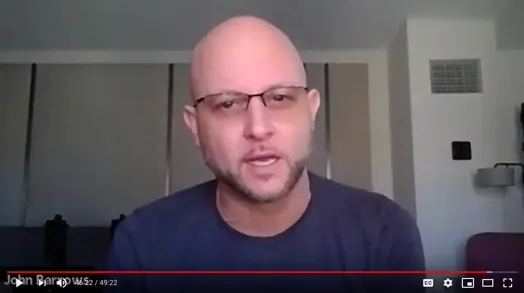
Who is John Barrows?
If you’ve been in B2B sales for more than a minute, you’ve probably heard of John Barrows. He’s the CEO of JB Sales, a go-to resource for sales training that focuses on tangible results. He’s built a reputation for cutting through the noise and teaching reps how to sell effectively and ethically. His philosophy is simple but powerful: sales is a great profession when it’s done well, but a terrible one when done poorly. His entire mission is to give sellers the tools and techniques they need to do it the right way, turning sales into a craft rather than just a job.
From Cold Caller to Sales Leader
John didn’t just appear at the top; he started in the trenches just like most sales reps. His journey from cold caller to a leading voice in the sales industry gives him a level of credibility that’s hard to match. He understands the daily grind, the rejection, and the thrill of closing a big deal because he’s lived it. This firsthand experience is baked into every piece of advice he shares. He’s not just teaching theory; he’s sharing a playbook that has been tested and proven on the front lines of the world’s most competitive markets.
Training the World’s Top Tech Companies
John’s methods aren’t just for small teams trying to find their footing. He has trained the sales teams at some of the biggest and fastest-growing companies on the planet. We’re talking about industry giants like Salesforce, Google, LinkedIn, and DropBox. These companies are at the top of their game and can hire anyone, yet they turn to John to sharpen their teams’ skills. This speaks volumes about the quality and impact of his training, proving that his principles work at the highest level of enterprise sales.
The Core of J Barrows Sales Training
At the heart of John Barrows’ training is a deep-seated desire to professionalize the sales industry. He saw a major gap in the market: while sales is a critical function for nearly every business, there was a surprising lack of formal, high-quality education available for reps. This realization prompted him to launch his own training company in 2013. He set out to create practical, actionable training that reps could use immediately to improve their performance and, in turn, elevate the perception of the entire sales profession. His work is about building skills, not just sharing hacks.
Elevating the Sales Profession
John’s mission goes beyond just helping reps hit their quota. He aims to change the way people think about sales. By providing a structured, educational framework, he helps transform salespeople from persistent callers into trusted advisors. He believes that a well-trained sales professional can provide immense value to clients by helping them solve real problems. This focus on value and professionalism is what separates his training from so many others and is a key reason why top companies trust him to develop their talent.
Key Training Topics
John’s training covers the full sales cycle, but he places a special emphasis on a few core areas that make the biggest difference in a rep’s success. These aren’t just abstract concepts; they are the fundamental building blocks of a successful sales career. From finding new leads to writing emails that actually get replies and closing deals without resorting to cheap tricks, his curriculum is designed to build well-rounded, effective sellers. Let’s look at a few of the key pillars of his training.
Prospecting and Cold Calling
Prospecting is often the least glamorous part of sales, but John emphasizes that it’s non-negotiable for success. He acknowledges that many reps avoid it because it requires consistent effort and resilience. However, he teaches that if you don’t build a strong, regular prospecting habit, your pipeline will inevitably dry up. His approach focuses on making prospecting a systematic, manageable part of your daily routine rather than a dreaded task you put off until the end of the quarter.
Effective Email Writing
In a world of overflowing inboxes, getting a prospect’s attention is harder than ever. John teaches reps to move beyond generic, mass-blasted emails. His advice is to create simple, reusable message templates based on common trigger events or company news. This allows for personalization at scale. For reps who live in their inbox, having a tool that supports this workflow is critical. With Mixmax, you can build and share effective email templates and sequences right inside Gmail, so you can act on John’s advice without ever switching tabs.
Negotiation and Closing
When it comes to closing, John’s advice is refreshingly straightforward: don’t create false urgency. He teaches that trying to pressure a customer into buying before they’re ready is a surefire way to damage trust and lose the deal. Instead, his methods focus on building a strong business case and aligning with the buyer’s timeline. This approach positions the sales rep as a partner in the buying process, not an adversary, leading to healthier long-term customer relationships.
The N.E.A.T. Selling™ Methodology
In partnership with Harris Consulting Group, John Barrows offers a proprietary sales methodology called N.E.A.T. Selling™. This framework is designed to replace outdated models like BANT (Budget, Authority, Need, Timeline) with a more modern, buyer-centric approach. N.E.A.T. focuses on understanding the prospect’s core Needs, the Economic impact of the solution, their access to Authority, and a realistic Timeline. It’s a comprehensive system delivered through an online platform, giving teams a structured way to qualify opportunities and manage their pipeline effectively.
Barrows’ Approach to Consistent Prospecting
Consistency is the secret weapon of top-performing sales reps, especially when it comes to prospecting. John Barrows argues that the key isn’t just working harder; it’s about working smarter by building a reliable system. Sporadic, frantic prospecting efforts at the end of the month rarely yield good results. Instead, he advocates for creating a repeatable process that feeds you the information you need and makes outreach a seamless part of your day. This systematic approach reduces the friction of starting and helps maintain momentum, ensuring your pipeline is always full.
Create a System for Inbound Information
The foundation of Barrows’ prospecting method is to stop manually hunting for every piece of information. He teaches reps to set up systems that automatically deliver relevant news and trigger events to them. This could involve setting up Google Alerts for target accounts, using social listening tools, or following key industry publications. When information comes to you, you spend less time researching and more time reaching out with timely, relevant messages that show you’ve done your homework.
Use Personalized Templates for Outreach
Once your information system is in place, the next step is to act on it efficiently. John recommends creating simple, personalized message templates for common events, like a funding announcement or a new executive hire. This isn’t about sending generic emails; it’s about having a starting point that you can quickly customize. Tools like Mixmax are built for this. You can create multi-step outreach sequences with personalized templates directly in Gmail, turning those valuable insights into conversations without missing a beat.
Key Sales Insights from the John Barrows Blog
The JB Sales blog is a goldmine of practical advice for sales professionals. It’s not filled with fluff or high-level theory but with actionable insights you can apply to your deals today. John regularly shares his thoughts on everything from mastering your mindset to leveraging new technologies. His writing is direct, honest, and always focused on helping reps improve their craft. Here are a few standout lessons that consistently appear in his work and resonate with sales teams everywhere.
Avoid Creating False Urgency
This is a recurring theme in John’s teaching for a reason. Pushing a prospect with an end-of-month discount or a “limited-time offer” when there’s no real reason for them to buy now erodes trust. True urgency comes from the prospect’s own business pains and priorities, not from the seller’s quota. John advises reps to focus on uncovering and quantifying those pains. When a buyer understands the cost of inaction, they create their own urgency to solve the problem.
Master Your Emotions to Close Deals
Sales is an emotional rollercoaster, and John points out that a salesperson’s own feelings can often be the biggest obstacle to closing a deal. “Commission breath,” or the desperation to close a deal, can be sensed by a buyer from a mile away and often causes them to pull back. He teaches the importance of emotional discipline—staying objective, focusing on the buyer’s needs, and being willing to walk away from a bad deal. Mastering this internal game is just as important as mastering any sales technique.
Use Video to Connect with Prospects
In an age of automated emails and impersonal outreach, finding ways to stand out is crucial. John is a big advocate for using personalized video in prospecting. A short, simple video message can cut through the noise, show your personality, and build a human connection much faster than a block of text. He suggests that using video can be a fantastic way to find new customers and re-engage prospects who have gone quiet, adding a powerful and personal tool to your outreach toolkit.
How to Prioritize Profit for Sustainable Growth
These days, it seems like every startup is obsessed with maximizing revenue at almost any cost. And, although revenue growth is no doubt vital to a company’s success, failing to equally consider profitability is a big mistake.
“The path to profitability is going to become increasingly important,” said Kyle Smith, Director of Sales and Customer Success at The Bridge Group. “Everyone has been so focused on massively over-hiring instead of focusing on productivity per rep.”
Developing a responsible growth plan and providing adequate sales training are two ways to strike a better balance between revenue and profitability. Strategically targeting certain accounts is also key.
“I’d rather be profitable with engaged customers who actually want to work with me rather than huge organizations that don’t really care,” said John Barrows, Founder and CEO of JBarrows Sales Training. “Companies get too enamored with big logos just to say that they work with large customers, but singles and doubles are what pay the bills.”
So, how can you prevent sales staff from becoming overly enamored with the wrong accounts? Maintaining a tiered account structure can help.
“Tier your accounts and figure out which ones are going to make you succeed as an organization in the long-term,” Barrows said. “Tier one are the big logos, tier two are the singles and doubles that pay your bills, and tier three are suboptimal customers, which can be great opportunities for new team members to practice on.”
Related Post: Are You A Sales Monkey Or Alpha Wolf?
Want More Renewals? Focus on Product Adoption
Speaking of account management, churn continues to be a major problem for many organizations. Obtaining renewals is often a sales-driven initiative, but, according to our panel, customer success teams are starting to play a greater role.
“Renewals take care of themselves if adoption is there,” Barrows said. “Your renewal rate is in direct proportion to your adoption rate, which is why customer success is so key for keeping customers engaged and identifying new ways to serve their needs.”
If success teams will be more involved with renewals, does it also mean that they should actively pursue upsell and cross-sell opportunities? According to Kyle Smith, the answer depends on a variety of factors.
“Sometimes it makes sense to have a different resource who is managing cross-sell and upsell,” Smith said. “Prospecting into a new functional group within the organization isn’t necessarily the same skill set as someone who drives the client to initial adoption.”
Even if cross-sell and upsell remain a part of the sales function, one trend is certainly true: success teams are performing more sales-like activities. And, for many customer success reps, that can be a difficult pill to swallow.
“I’m seeing a lot more organizations bringing their customer success teams into my training, and success reps do not like the idea of selling,” Barrows said. “If you take the word ‘sales’ out of the equation, however, customer success and sales teams are focused on the exact same thing: helping the customer achieve a goal or solve a problem.”
To ensure customers achieve their goals, sales and success teams play equal roles in managing the customer’s ongoing expectations. That’s why clear and transparent communication is absolutely necessary during every step of the customer journey—and even before the initial sale.
“Sales should set the right expectation that the client is going to be properly onboarded and gain value as quickly as possible,” said Don Erwin. “There must be a process that starts during the sales cycle so the customer knows exactly what to expect.”
Related Post: Customer Success and Sales: Your Next Dream Team
Are Your Sales and Success Roles Ready to Adapt?
With success reps performing sales functions and assisting with renewals, will customer success teams ultimately be absorbed by sales? Not necessarily. In fact, according to John Barrows, the reverse may be true in certain situations.
“There’s a strong chance that inbound SDRs will be replaced by customer success representatives,” Barrows said. “Customers are highly educated, many of whom are 60% to 70% of the way through the buying process before entering the sales cycle. They’re ready to talk to an expert, not some 22-year old kid who puts them through a canned demo.”
Increased standardization of roles, responsibilities, and terminology will make it easier for customer success teams to adapt and fill new roles in a rapidly changing business environment.
“Currently, if you recruit a CSM from another company, it’s difficult to know if he or she has the right level of expertise or specific skills,” Barrows said. “Looking ahead, we’ll see a more standardized approach to customer success along with increased role specialization in the post-sale function.”
As an example, this type of specialization has already begun to take shape at Mixmax.
“We’re building a hunter-farmer account management team,” Erwin said. “CSMs are now responsible for the upsell and have an upsell quota.”
Related Post: Tips for building the most coveted thing every sales person wants
Using AI to Speed Up Your Sales Cycle
Artificial intelligence and machine learning get a lot of buzz. Is this just a bunch of noise, or could AI finally make a measurable impact for today’s sales professional?
For John Barrows, the most promising solutions leverage big data to help sales organizations understand buyer needs before the buyer recognizes those needs.
“Algorithms will help us understand where companies actually plan to spend their money instead of relying on guesses,” Barrows said. “Marrying that type of technology up with the right insights and messaging could deliver meaningful results.”
Will AI-driven robots eliminate sales teams altogether in 2020? No, quite the opposite. Even the most advanced technology still needs sales reps, just as much as sales reps need the technology.
“Sales reps of the future will be like Iron Man,” Barrows said. “Technology is the sales rep’s metal suit that provides superhuman strength. Without the sales rep, however, the metal suit is just a pile of metal. The two work together in tandem.”
Tech solutions that enable mass personalization at scale will continue to be essential for sales reps looking to achieve “superhuman strength.”
“Automated tools will allow sales reps to augment certain parts of the sales process while maintaining high levels of personalization,” Erwin said. “You can’t just automate things without the personal element. People buy from people they like and trust, and automation can never replace that.”
Identifying High-Intent Signals
Every sales rep knows the feeling of a flooded inbox. You see opens and clicks, but it’s tough to tell what’s just noise and what’s a genuine buying signal. A single person opening your email once could be a mistake. But when three different people from the same account open it, and one of them clicks your pricing page link, that’s intent. The real challenge isn’t just collecting data; it’s interpreting it in real-time. This is where AI-powered tools make a difference. Instead of leaving you to piece together clues, platforms like Mixmax analyze engagement for you. You get real-time engagement signals that show who opened your email, how many times, and when—all without leaving Gmail. The AI scores this activity, automatically surfacing the accounts that are heating up so you can focus your energy on the deals most likely to close.
Give Your Sales & Success Teams What They Need to Win
Whether you’re looking to maximize profitability, achieve a better mix of sales and success during renewals, or build a better tech stack in 2020, Mixmax can help. With affordable monthly plans, tools for sales and success teams, and robust data integrations, Mixmax helps you engage more customers for a fraction of the cost and effort.
Try Mixmax for free.
Related Post: Mixmax Aligns Outbound Communication Across Sales and Customer Success at Gong.io
Enabling Top Performance
While technology and team structures evolve, the core of sales remains the same: enabling individual reps to win. John Barrows emphasizes that salespeople must commit to continuous learning to stay at the top of their game. The goal isn’t just to hire more reps, but to make every rep perform like your best one. This means giving them the right strategies and the right tools—the kind that support their work without adding friction. When your team has a clear path to improvement and technology that helps them execute right inside their inbox, you create a culture where top performance becomes the standard, not the exception.
Training highlights that top-performing SDRs can hit targets as high as 225% of their quota, showing what’s possible with the right skills and tools.
Hitting 225% of quota sounds like a fantasy, but it’s a reality for top-performing SDRs. This isn’t about luck; it’s about having a system. Barrows points out that consistent, high-quality prospecting is key, and that requires having information come to you automatically. When reps don’t have to switch between apps to run sequences or log activity, they can focus on the human part of selling. Tools that surface real-time engagement signals—like who opened an email and when—tell reps exactly which prospects to follow up with. This turns prospecting from a guessing game into a precise, repeatable motion that drives incredible results.
Frequently Asked Questions
What’s the most important lesson from John Barrows’ sales training? The core idea is to treat sales as a profession, not just a job. His training isn’t about finding shortcuts or magic scripts. It’s about building a consistent, repeatable process that focuses on providing real value to your customers. He teaches reps to become trusted advisors who help solve problems, which is a far more effective and sustainable way to sell.
I’m too busy to prospect consistently. How can I apply Barrows’ advice? His approach is about building a system, not just working harder. Instead of manually hunting for information, he advises setting up alerts and feeds that bring trigger events and company news directly to you. From there, you can use simple, personalized templates to act on that information quickly. The goal is to make prospecting a small, manageable part of your daily routine rather than a huge task you never get to.
Barrows says to avoid creating false urgency. How do I close deals without it? True urgency comes from the customer’s business pain, not from your end-of-quarter discount. Your job is to build a strong business case that clearly shows the cost of inaction. When a prospect understands the real impact of their problem, they will create their own urgency to solve it. This shifts your role from a high-pressure seller to a helpful partner in their buying process.
Is this type of training only for reps at big enterprise companies? Not at all. While John trains teams at massive companies like Google and Salesforce, his principles are fundamental to good selling at any level. The core concepts of consistent prospecting, providing value, and mastering your emotions apply whether you’re a solo founder, part of a 10-person startup team, or on a floor of 500 reps.
How does Barrows view the role of AI and sales tools? He compares technology to Iron Man’s suit. It gives the sales rep superhuman abilities, but it’s useless without the person inside. He believes the best tools are the ones that augment a rep’s skills, not replace them. AI-powered workflows can handle administrative work and surface critical buying signals, which frees up the rep to focus on what humans do best: building relationships and solving complex problems.
Key Takeaways
- Ditch false urgency to build trust: Instead of pushing end-of-month discounts, focus on the customer’s actual business problems. When a buyer understands the cost of inaction, they create their own urgency, leading to stronger deals.
- Systematize your prospecting for consistency: Create a repeatable process for finding and engaging leads. Set up automated alerts for trigger events at target accounts and use personalized templates to act on that information quickly.
- Treat product adoption as your best renewal strategy: Renewals are a direct result of how much value customers get from your product. Prioritize customer engagement and success after the sale, because high adoption makes renewals a natural next step.