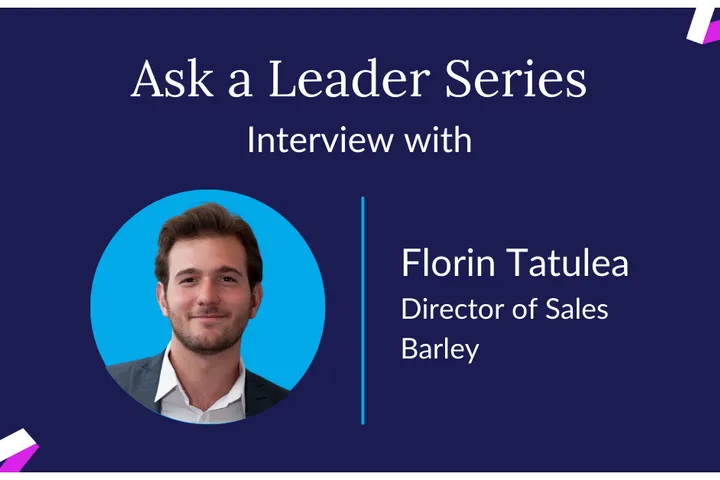
What does it take to build a high-performing sales team? It’s not just about data and dashboards. It’s about execution. We sat down with Florin Tatulea, Director of Sales at Barley, to understand exactly how he does it. He’s an expert at building systems that help reps act on signals and close deals. In this conversation, Florin breaks down the top trends shaping modern sales, the cold email mistakes that kill deals, and the essential tech you can't work without. He also shares his best advice for new salespeople.
Meet Florin Tatulea: A Modern Sales Leader
From SDR to GTM Leader
Florin Tatulea’s career is a masterclass in growth. He started as the first sales hire at Loopio and worked his way up, giving him a ground-level view of what it takes to build a successful sales organization. He’s known as a "GTM Engineering Leader," meaning he excels at designing and refining the entire sales process. Florin focuses on creating smart, repeatable systems that help teams win—a philosophy that turns high-level strategy into daily, executable actions for reps.
Key Milestones at Loopio and Common Room
His track record is defined by explosive growth. At Loopio, he helped grow revenue by 65x. Later, at Common Room, he quadrupled ARR and increased monthly sales leads by 20 times. This kind of success isn't luck; it's the result of a well-built engine. It requires the right processes and tools, like AI-powered workflows, to ensure no lead is lost during rapid scaling. Florin’s results prove he knows how to build that engine.
A Recognized Voice in Sales
Florin doesn't keep his insights to himself. He is a prominent voice in the sales community, actively sharing practical advice that other professionals can use immediately. His commitment to helping others has made him a go-to resource for reps and leaders alike. Because his perspective is shaped by years in the trenches, his guidance is always credible, actionable, and cuts through the usual noise. He understands the daily grind and focuses on what actually works.
LinkedIn Top Voice and Advisor
With over 75,000 followers, Florin is a recognized LinkedIn Top Voice, a title for those leading conversations in their industry. He also advises companies on scaling their sales functions. Leaders like Florin know that the best strategies fail if reps don't adopt the tools. The key is finding technology that works inside a rep's existing day, not in a separate app. This focus on adoption is what gives leaders the visibility and performance they need to hit their targets.
Florin's Philosophy: Leading from the Trenches
Florin’s leadership isn't just about managing a team. It’s about building a culture of success from the ground up. His philosophy rests on three pillars: putting people first, leading by example, and constantly improving. This approach has become a blueprint for building high-performing sales teams that last. It’s a direct contrast to old-school, top-down management, focusing instead on empowerment, empathy, and a real drive for growth. This is how modern sales leaders win.
A "People-First" Approach to Success
At the core of Florin's leadership is a powerful belief: his success is a direct result of his team's success. He operates on the principle that a leader's main job is to lift others up and create an environment where every person can thrive. This isn't just a nice idea—it's a practical strategy. When reps feel supported and have tools that help them focus on selling instead of admin work, they become more engaged and motivated. This people-first mindset builds a foundation of trust and loyalty that pays off far more than hitting a single quarterly target.
The Hands-On Leader
Florin is known for leading from the trenches, a quality that sets him apart. He doesn’t just manage from a distance; he gets involved in the daily work, even joining his team on cold calls. This hands-on approach does more than just create coaching moments—it builds real trust. When a team sees their leader doing the same tough work they do, it proves he understands their reality. It shows he isn't asking for anything he isn't willing to do himself. This creates a powerful sense of solidarity and a shared mission.
A Focus on Constant Reinvention
Sales changes fast. The strategies that worked last quarter might be obsolete today. Florin champions a culture of constant reinvention for himself and his team because he knows that adaptability is key to success. He encourages curiosity, tests new approaches, and embraces technology that gives his team an edge. For modern teams, this means using tools like AI-powered workflows to refine outreach and follow-up. This allows them to adapt their sales motion quickly and stay ahead of the competition, ensuring the team remains agile and effective.
1. What is THE top trend you're seeing in sales right now?
I think a lot of sales tech is really focused on providing data, which is great, and it tells salespeople what they should do. And we all know what we should be doing, but the question is, how do you actually execute on that. So I think a big trend is going to be sales, tech that actually helps you execute on that date, and what you should do.
One thing that comes to mind is a company like Second Nature where they actually have AI, where people that are joining the company can actually do live calls with the robot. That way you're actually practicing saying the things that the data is telling you to do, which I find super cool. And I think that's going to catch on a lot more in the coming years.
The Evolution to "Outbound 3.0"
Florin’s point about execution is part of a bigger shift in sales. We're moving away from the old playbook of sending thousands of generic messages and hoping something sticks. The new approach, what some call "Outbound 3.0," uses technology to find specific clues—or signals—that show who might actually be ready to buy. This means outreach is more focused, relevant, and successful. Instead of just giving you data, the right tools help you act on it. For example, AI-powered workflows can trigger a personalized follow-up the moment a prospect re-engages with an old email, turning a cold lead into a warm conversation without any manual work from the rep.
The Rise of the "10X SDR"
As AI takes over routine tasks like building contact lists and logging CRM activity, the role of the human sales rep is becoming more strategic. When you can automate administrative work, reps can dedicate their time to what they do best: understanding customer problems and building real relationships. This has led to the rise of the "10X SDR"—a more experienced, strategic seller who can craft deeply personal messages that cut through the noise. Companies are finding that investing in these skilled reps pays off. When your tech saves each rep over two hours a day, they have the time to think, research, and connect on a human level, which is what actually closes deals.
The Growing Value of Human Connection
Here’s the paradox: the more common AI becomes in sales, the more valuable real human connection gets. When every inbox is flooded with automated, "personalized" messages, the things that truly stand out are the interactions AI can't fake—a thoughtful referral, a unique insight shared on a call, or an in-person meeting. Technology should serve this goal, not replace it. For instance, using a tool for one-click scheduling eliminates the tedious back-and-forth of finding a meeting time, getting you to the actual conversation faster. The best tech works in the background, freeing you up to be more present and human when it matters most.
2. What is your #1 cold email faux pas?
As someone who talks about cold emails all the time, I think I have a lot of these faux pas. But just to name a few quick ones, I think a lot of people waste the opening sentence on non-valuable content.
Things like, "Hi, my name is X and I work at Y company" and saying, "I hope you are well" are big pet peeves for me.
The other big one–I think reply rates are getting higher when emails are very short. People are still writing emails over 150 words. Companies like Lavender have been analyzing emails and found that 25-to-50-word emails–super short and succinct–tend to perform the best.
So stop writing long emails.
3. What sales tech can't you live without?
I'm not going to mention any names; I'm going to keep it neutral in terms of the actual software. But in terms of categories, I think the most important ones that I can't live without are obviously some form of CRM, a sales engagement platform, and data so that you actually have access to phone numbers and emails to reach your prospects.
And then the last one, which I think is super important, is call recording and analysis to make sure you can listen back for note-taking, but also see how you can improve and focus on what you shouldn't be doing.
And I guess in the future, going back to the previous question around trends, is probably going to be around software that helps you execute and helps sales reps train on actual calls.
The Role of AI-Powered Workflows
Florin’s point about sales tech evolving to help reps execute is crucial. It marks a shift from simply providing data to guiding action. This new approach, sometimes called Outbound 3.0, uses AI to find specific buying signals, so reps can stop sending generic messages and start having relevant conversations. Instead of just getting a list of contacts, reps are pointed toward prospects already showing interest. This makes outreach more focused and human, letting technology do the heavy research so you can focus on connecting with people.
This is where AI-powered workflows come in. They handle the repetitive parts of the job that drain time—like logging activities in your CRM or figuring out the best time to follow up. For example, a platform like Mixmax uses AI-powered workflows right inside Gmail to automate these tasks, saving reps over two hours each day. This isn't about replacing salespeople; it's about equipping them. When AI handles the busywork, reps can spend their time on what they do best: building relationships, understanding customer needs, and turning conversations into deals.
4. What's one piece of advice you have for novice salespeople?
For novice salespeople, I think especially right now, as times are really difficult, I actually think that you shouldn't put yourself down. Everybody in this economy is having a hard time selling.
I think Pavilion released a study that said only 26% of executives thought that they were even going to hit their 2022 numbers. So in a way, it's not you, it's becoming a lot harder. But that means a lot of opportunity for all of you. Because if you can sell through this type of economy and environment, you're going to be doing a really good job when things get back to a better state.
And quite frankly, a lot of sellers that, you know, grew up and were developing their skills in the last decade have been spoiled, I think quite a bit because the economy was going good. People were buying software without much justification and little scrutiny. But now it's like this is where the real sales skills come into play where you have to focus on value. And I think that that's a big opportunity for novice salespeople.
The Buyer Awareness Funnel: Finding the Hidden 7%
Most of your market isn’t ready to buy. In fact, only about 3% are actively looking for a solution right now. The old playbook of sending thousands of generic messages just doesn't work anymore. A better approach is to use buying signals—clues that show who might be ready to talk. According to a Pavilion TRLP recap, another 7% of your market is open to buying, and 30% are starting to think about it. Focusing on this hidden 7% is how you stop guessing and start selling based on real intent. It’s about finding the right people at the right time.
Putting Signal-Based Sales Plays into Action
Knowing who to target is half the battle. The other half is knowing what to say. Instead of using a one-size-fits-all script, signal-based selling uses specific "plays" tailored to the clue you found. These aren't complex strategies. They are direct, relevant messages that connect a prospect's problem to your solution. This approach shows you've done your homework and respect the buyer's time. It’s the difference between a cold call and a warm introduction. Here are two simple, effective plays you can use to start booking more meetings.
The Competitive Website Play
This play is simple but effective. You find a direct competitor of your prospect and use a tool to compare their website traffic. If your prospect's traffic is significantly lower, you have your opening. The key is to frame it helpfully, not aggressively. You can reach out and show the company that their competitor has much more website traffic, then explain how your product can help them capture more leads from the visitors they already have. This play works because it’s based on a clear business pain—losing ground to the competition—and offers a direct path to a solution.
The Strategic Initiative Play
This one requires a bit more digging, but the payoff is huge. It involves finding out what big projects or strategic initiatives a company is working on. You might find this in their quarterly reports, job postings, or press releases. Sometimes, these projects even have internal code names. Once you know the initiative, you can show how your product directly helps them achieve that specific goal. This level of personalization shows you’re not just another salesperson; you’re a potential strategic partner. It requires some human detective work, but it’s how you cut through the noise and land on a decision-maker's radar.
Who Should Own This Strategy?
Putting a signal-based selling model into practice isn't just on the sales reps. The responsibility for building and managing this strategy usually falls to teams like Revenue Operations (RevOps) or Go-to-Market (GTM) Operations. It requires close teamwork between sales, marketing, and strategy to identify the right signals and build the right plays. Ops teams can then build these plays into the sales team's daily process using AI-powered workflows. This ensures every rep can execute the strategy perfectly, right from their inbox, turning data into deals without adding more manual work to their day.
5. What resources would you suggest for new sales leaders?
When I was a sales rep, my go-to is always Sales Hacker. I think that it's a fantastic blog.
More recently, though, I don't read blogs from publications as much. I do listen to 30 Minutes to President's Club, which I think is a fantastic podcast that's really tactical without a lot of fluff.
I've also been taking quite a few courses on Pavilion. Like frontline manager school. I just recently taught a course on copywriting and sequencing. So check out the Pavilion community if you haven't had a chance.
And then my personal favorite as well: LinkedIn. There are a lot of great content creators these days. Obviously, there's also a lot of fluff on LinkedIn, so you have to take it with a grain of salt. But you can find some really valuable content from people just in your newsfeed as well.
Check out VP of Sales Kyle Parrish's interview for more expert tips and advice from our Ask a Leader series.

Florin's Recommended Resources
Florin doesn't just share his opinions; he actively helps other sales professionals improve their craft. He's a big believer in practical, hands-on learning. If you're looking to sharpen your own skills, he offers several excellent resources that are packed with real-world advice you can start using today.
The "Prospecting from the Trenches" Newsletter
If you're looking for actionable advice that cuts through the noise, Florin's newsletter, Prospecting from the Trenches, is a must-read. He shares weekly tips straight from his own experience on how to effectively find new customers. This isn't high-level theory; it's practical guidance designed for Sales Development Representatives and Account Executives who are actively prospecting every day. Florin focuses on the 'how'—the actual execution of finding and engaging potential buyers. It’s the perfect resource for anyone who wants to stop guessing and start implementing proven tactics that get results in a tough market.
Sales Message and Sequence Writing Course
Florin also offers a popular course on writing effective sales messages and sequences. He dives deep into crafting cold emails that actually get replies, a skill he touched on earlier. Once you have that killer copy, you need the right tool to put it into action. This is where AI-powered workflows can make a huge difference, helping you build, test, and automate multi-step outreach across email and social channels without leaving your inbox. Combining Florin's messaging expertise with a platform that helps you execute flawlessly is how you turn great writing into booked meetings and closed deals.
Sales Flo Advisory
For businesses that need a more tailored strategy, Florin runs his own advisory company, Sales Flo. Through this service, he works directly with companies to help them generate sales leads by creating unique content. This isn't just about writing better emails; it's a holistic approach to using content as a strategic lever for your entire sales process. If your team is looking to move beyond standard outreach and build a more sustainable engine for pipeline generation, Florin’s advisory offers the expert guidance to make it happen. It’s a great option for leaders who want to invest in a distinct and effective go-to-market strategy.
Frequently Asked Questions
What is the main takeaway from Florin Tatulea's sales philosophy? Florin believes that modern sales success comes from execution, not just data. He argues that while many tools tell you what to do, the best tools help your team actually do it. This means focusing on practical, repeatable systems and technology that reps will adopt because it works inside their existing day, like in their Gmail inbox.
Florin mentions "Outbound 3.0." What does that mean? "Outbound 3.0" is a modern approach to sales that moves beyond sending generic mass emails. It's about using technology to find specific buying signals, or clues, that show who might be ready to buy. This allows reps to send highly relevant, personalized messages to a smaller, more interested audience, leading to better reply rates and more meaningful conversations.
What is the biggest mistake reps make in cold emails, according to Florin? The most common mistake is wasting the opening sentence with fluff like "Hi, my name is..." or "I hope you are well." He also points out that many reps still write emails that are too long. Data shows that short, direct emails between 25 and 50 words perform best, so getting straight to the point is critical.
Florin says reps should focus on the "hidden 7%." Who are they? While only about 3% of your market is actively looking to buy a solution right now, another 7% is open to the idea, even if they aren't actively searching. This "hidden 7%" represents a huge opportunity. By using signal-based selling tactics, you can identify and engage these prospects before your competitors do, effectively creating new pipeline.
How can AI-powered workflows help with the strategies Florin discusses? AI-powered workflows are the engine that puts Florin's execution-focused philosophy into practice. They automate the repetitive, manual tasks that slow reps down, like logging CRM activities or scheduling follow-ups. This frees up reps to focus on high-value work like researching accounts and building relationships. For example, a workflow can automatically trigger a personalized message when a prospect shows a buying signal, ensuring no opportunity is missed.
Key Takeaways
- Focus on execution, not just data: Successful sales teams use tools that help them act on information, not just view it. The trend is moving toward technology that guides reps on what to do next, turning signals into executable plays.
- Write short, valuable emails: The best cold emails are concise, often under 50 words, and get straight to the point. Skip the generic introductions and focus on providing immediate, relevant value to capture your prospect's attention.
- Adaptability is a salesperson's core skill: In a challenging market, success comes from focusing on value and human connection. New reps can build strong habits by learning to sell based on signals and adapting their approach, skills that are crucial when buyers are more selective.