
Sales development reps know the daily grind. You’re juggling countless tasks, trying to connect with potential customers and set the stage for a win. But what if you could stop guessing? What if you knew which tools actually made a difference? For a Mixmax sales development representative, that clarity is part of the job. We’re pulling back the curtain on the exact workflow our team uses. This isn’t theory. It’s a practical look at how the right tools, like Mixmax, can transform your day and drive real results.
That’s where Mixmax comes in 👀.
I recently chatted with Brandon Butron, our Lead SDR at Mixmax, to get a glimpse into his daily routine and how he leverages Mixmax to make his outreach more effective, personal, and efficient.
Here’s a closer look at how he uses Mixmax to drive more conversations and book more meetings.
What is a Sales Development Representative (SDR)?
Before we dive into Brandon’s day, let’s quickly define what an SDR actually does. Think of them as the opening act for the sales team. They are the first point of contact a potential customer has with a company, responsible for finding and qualifying new leads. Their primary goal isn’t to close the deal, but to spark the initial interest and book a meeting for an Account Executive (AE), who then takes over to close the sale. They are the engine at the top of the sales funnel, ensuring a steady stream of qualified opportunities.
The Core Role and Responsibilities
At its heart, an SDR’s job is to identify potential customers and see if they’re a good fit for the company’s product or service. According to Digital Waffle, “An SDR’s main job is to find new potential customers (leads) and get them interested in a product or service.” This involves a lot of research to find the right companies and the right people within those companies. Once they’ve identified a prospect, they begin outreach through emails, phone calls, and social media to start a conversation and determine if there’s a genuine need. They are the ultimate conversation starters of the sales world.
Inbound vs. Outbound SDRs: What’s the Difference?
SDR roles are often split into two categories: inbound and outbound. Inbound SDRs handle leads that have already shown interest, like someone who filled out a form on your website. They qualify that interest and move the person to the next step. Outbound SDRs are the prospectors. They are the ones doing the cold outreach to people who may have never heard of your company before. They “research people and companies, then reach out using emails, phone calls, and LinkedIn” to generate new business from scratch. Both roles are critical for building a healthy sales pipeline.
Key Skills for a Successful SDR
To succeed as an SDR, you need more than just the ability to talk. Resilience is probably the most important trait, as you’ll hear “no” far more often than “yes.” Strong communication skills are a must, but that’s more about listening and asking insightful questions than just delivering a pitch. You also need to be a great researcher, able to dig deep to understand a prospect’s business and challenges. Finally, a good SDR is incredibly organized and persistent, able to manage follow-ups for dozens of prospects at once without letting anyone fall through the cracks.
What Kind of Companies Hire SDRs?
You’ll typically find SDR teams in B2B companies, especially in the tech and SaaS industries. Any business with a complex or high-value product and a long sales cycle can benefit from having a dedicated team to handle top-of-funnel activities. Companies that are focused on growth and looking to scale their sales operations rely on SDRs to create a predictable and consistent flow of new opportunities. If a company wants to grow its customer base, hiring SDRs is one of the most effective first steps to building a powerful sales machine.
The Challenges Every SDR Faces
While the SDR role is a fantastic entry point into a sales career, it’s far from easy. In fact, as one sales leader on LinkedIn put it, “Being a Sales Development Representative (SDR) or Business Development Representative (BDR) is one of the hardest jobs in sales.” It’s a high-activity, high-rejection role that requires a unique combination of grit and skill. SDRs are on the front lines every day, facing a number of obstacles that can make it difficult to hit their targets and fill the pipeline for the rest of the team.
High Volume, High Rejection: The Reality of the Role
The daily life of an SDR is a numbers game. It involves sending a high volume of emails, making dozens of calls, and connecting on social media, all in the hopes of getting a response. The industry average reply rate for cold outreach is a painful 2–3%. This means the vast majority of an SDR’s work is met with silence or rejection. That constant grind can be mentally draining and requires a thick skin. The pressure to hit quota is always on, and it takes incredible self-discipline to stay motivated when it feels like you’re shouting into the void.
Common Obstacles to Performance
Beyond the inherent difficulty of the role, several common problems can hold even the best SDRs back.
Working with Bad Data
One of the biggest time-wasters for SDRs is dealing with bad data. When contact lists are full of bounced emails, incorrect phone numbers, and outdated job titles, reps spend their days doing administrative cleanup instead of selling. It’s incredibly frustrating to craft the perfect, personalized email only to have it bounce back immediately. Without accurate information, it’s impossible to gain any momentum. Clean, reliable data is the foundation of any successful outreach effort, and too many teams are forced to work without it.
Using Disconnected Sales Tools
Another major hurdle is a clunky tech stack. SDRs often have to jump between their email, their CRM, their sequencing tool, and a dialer just to complete a single task. This constant tab-switching kills productivity and creates opportunities for error, like forgetting to log a call in Salesforce. When your tools don’t work together, you create friction. A platform that brings all your sales workflows into one place—right inside your inbox—eliminates that friction and gives reps back hours each day to focus on what they do best: selling.
Lacking a Clear Ideal Customer Profile
Finally, many SDRs are sent into battle without a clear map. If you don’t have a well-defined Ideal Customer Profile (ICP), you don’t know who your best customers are. This leads to a “spray and pray” approach, where reps waste time and energy reaching out to leads who are a poor fit and will never buy. A clear ICP, on the other hand, allows SDRs to focus their efforts, personalize their messaging, and engage prospects who have a genuine need for their solution. It’s the difference between targeted outreach and just making noise.
The Impact of Leadership and Tools
At the end of the day, SDR performance comes down to enablement. As one expert noted, “If you want your SDRs and BDRs to perform, you have to give them the setup to do it.” This means providing them with high-quality data, a clear strategy, and tools that actually help them do their job better. Giving reps a platform that provides real-time engagement signals—showing who opened an email, when, and how many times—turns a blind follow-up into a timely, relevant conversation. When you equip your team properly, you don’t just make their jobs easier; you make them more successful.
See Real-Time Engagement First Thing
Brandon kicks off his day by diving into the Live Feed in Mixmax.
This is where he gets a real-time view of how his outreach is performing. He can see who’s opening his emails, who’s clicking on links, and who’s engaging with his content the most.
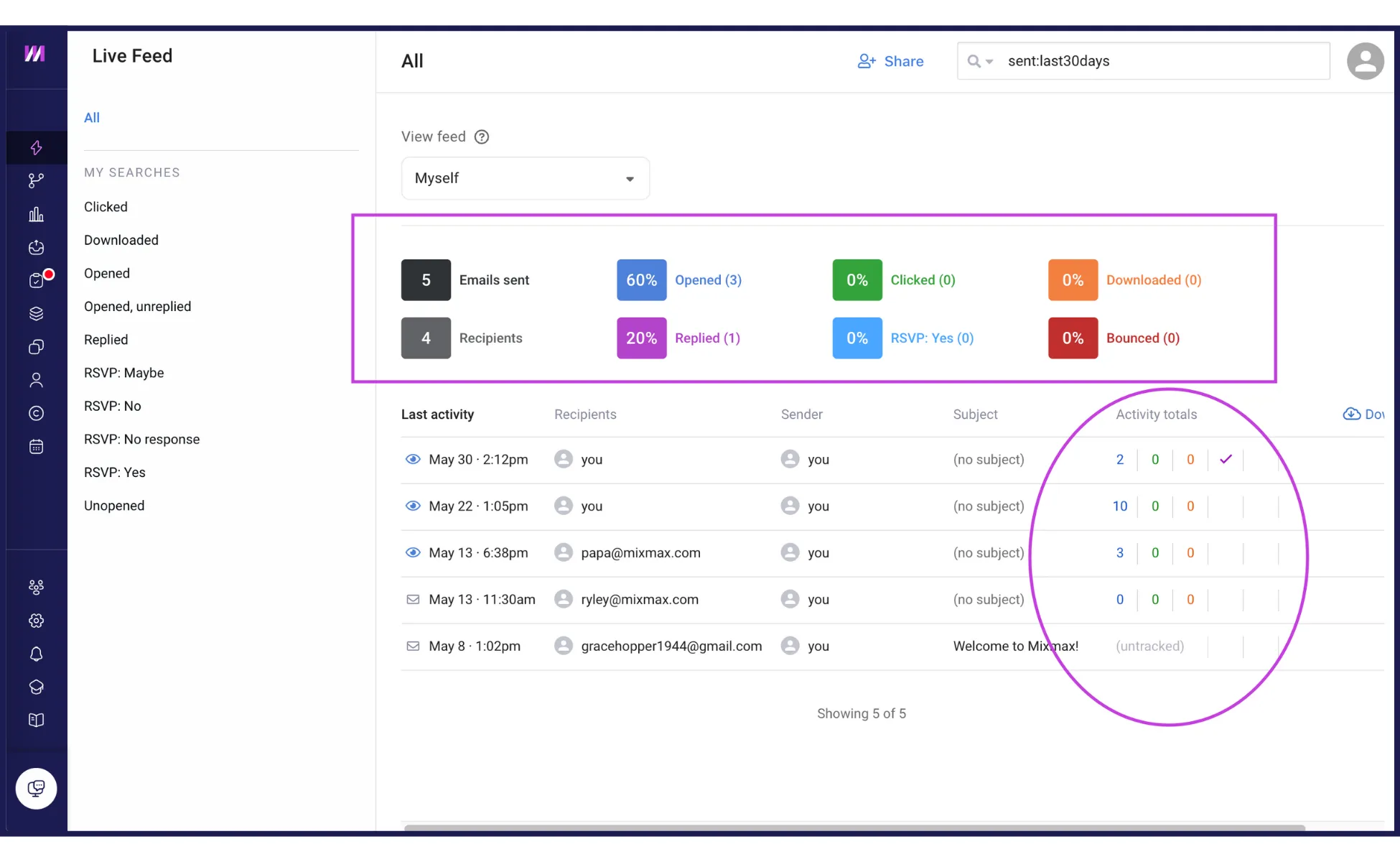 This real-time data allows Brandon to prioritize his follow-ups. If a prospect has opened an email multiple times or clicked on a link, that’s his cue to reach out with a call or a personalized email.
It’s all about striking while the iron is hot.
Never Miss a Follow-Up with Tasks
Next up, Brandon heads over to the Tasks section. Let’s be honest—SDRs live and die by their task lists.
Mixmax’s Tasks feature keeps Brandon organized and on top of his game. Whether he’s making calls, sending emails, or connecting on LinkedIn, everything he needs to do is laid out clearly.

One of the things Brandon loves about Mixmax is how it simplifies his workflow. Soon, he’ll even be able to manage SMS tasks from the same dashboard, streamlining his day even further.
No more switching between tools—Mixmax has it all in one place.
Related post: How Mixmax’s Account Executives Use Mixmax to Win More Deals
Focus on Prospects Who Are Ready to Talk
One of the standout features for Brandon is the Contacts Dashboard. This tool is a game-changer for SDRs because it ranks contacts based on their engagement levels.

The “highly engaged” label highlights the prospects who are most interested in what Brandon’s offering, so he knows exactly where to focus his energy.
Instead of spreading himself too thin, Brandon can zero in on the prospects who are most likely to convert, making his outreach more efficient and effective.

Personalize Emails Faster with the Sidebar

Mixmax’s Sidebar within the inbox is another tool Brandon relies on to keep his outreach personal and collaborative.
The Side Chat feature allows him to bring colleagues into email threads effortlessly. For example, he often loops in an Account Executive (AE) on an email thread to ensure they’re fully up to speed before a demo. This level of collaboration ensures a seamless experience for the prospect and increases the likelihood of closing the deal.

What’s more, the Sidebar lets Brandon make calls, send SMS, and update Salesforce records—all without leaving his inbox. It’s all about maximizing efficiency while keeping the focus on building strong relationships.
Get More Replies with Interactive Email Widgets

Email engagement is the lifeblood of any SDR’s work, and Mixmax’s email enhancements widgets are designed to boost reply rates.
Brandon is a big fan of using polls within his email sequences. These polls make it easy for recipients to respond with just one click, which has been shown to increase reply rates by up to 40%.

Another favorite feature of his is Mixmax’s One-click scheduler.
Unlike traditional scheduling tools that require multiple steps, Mixmax’s tool lets prospects book time with just one click. It’s faster, easier, and can be custom-branded, which adds a professional touch to every interaction.
When’s the Best Time to Email? Let AI Decide

Last but not least, Brandon uses Mixmax’s AI email scheduler, AI Smart Send, to ensure his emails land in prospects’ inboxes at the perfect time. This feature analyzes recipient data to suggest the best times for email delivery, helping to boost open rates and, ultimately, book more meetings.
How a Mixmax Sales Development Representative Wins
For SDRs like Brandon, Mixmax isn’t just a tool—it’s an essential part of the daily workflow. From real-time insights to personalized outreach, Mixmax helps SDRs work smarter, engage more effectively, and ultimately drive better results.
If you’re an SDR looking to up your game, take a page out of Brandon’s playbook and see how Mixmax can help you connect with more prospects and book more meetings. After all, success in sales is all about using the right tools to make the most of every opportunity.
The SDR Career Path and Hiring Information
The SDR role is more than just a job; it’s a launchpad for a successful career in sales. It’s where you learn the fundamentals of prospecting, qualifying, and building relationships. For those looking to build a team, understanding this career path is key to attracting and retaining top talent. Whether you’re an aspiring SDR or a manager building a team, it’s helpful to know what the journey looks like, what to expect in terms of compensation, and how to spot the right candidates for the job.
From SDR to Sales Leader: A Common Career Trajectory
Starting as an SDR opens doors to numerous opportunities within a sales organization. The skills you build—resilience, communication, and strategic thinking—are foundational for future growth. A common career trajectory often starts with mastering the art of finding and qualifying leads. From there, you might move into a closing role as a Business Development Manager, where you manage the entire sales cycle. With experience, you could lead a team as a Sales Manager, guiding other reps to success. Ultimately, this path can lead to a senior leadership position like Sales Director, where you shape the company’s overall sales strategy.
SDR Salary Expectations
Compensation for SDRs is competitive and typically includes a base salary plus performance-based incentives. In the UK, for example, an SDR can expect an average base salary between £28,000 and £38,000 per year. However, total earnings are often much higher. Commissions and bonuses tied to performance metrics, like the number of meetings booked or opportunities created, can significantly increase your take-home pay. This structure rewards hard work and results, making it an attractive role for driven individuals who want to have a direct impact on their income and the company’s growth.
How to Hire Top SDR Talent
Finding and keeping great SDRs is a challenge because the market is competitive. Many companies offer similar perks, and reps often move for better opportunities. To stand out, it’s smart to broaden your search beyond candidates with direct sales experience. Some of the best SDRs come from backgrounds in hospitality, customer service, retail, or even athletics. These fields teach invaluable skills like resilience, empathy, and a strong work ethic. The sales process itself can be taught, but the right mindset is what truly sets a candidate apart and predicts their long-term success on your team.
What to Look For in Candidates
When interviewing potential SDRs, focus on their mindset rather than just their resume. Ask behavioral questions that reveal how they handle rejection, stay motivated, and approach problem-solving. A candidate’s curiosity, coachability, and drive are far more important than their familiarity with a specific CRM. A great SDR is someone who is eager to learn and isn’t afraid of a challenge. You can teach them your sales playbook, but you can’t teach them to have grit. Prioritizing these underlying traits will help you build a team that is resilient and adaptable.
Where to Find Great SDRs
Top SDR talent isn’t always found on traditional job boards. To find great candidates, you need to get creative. Building a strong employer brand on social media platforms like LinkedIn, Twitter, and even TikTok can attract ambitious individuals who are a good cultural fit. Don’t overlook freelance platforms like Upwork, where you might find people with excellent communication skills looking for a new challenge. By expanding your search, you tap into a wider pool of talent and increase your chances of finding someone with the unique combination of skills and mindset to excel.
Working as an SDR at Mixmax
Now that we’ve covered the general SDR landscape, you might be wondering what it’s like to be on the team here at Mixmax. We’re a fully remote company with a mission to make sales fun and engaging for everyone involved. Our culture is built on transparency, collaboration, and a deep commitment to our customers and our employees. We believe in giving our team the tools and support they need to succeed, which is why we use our own product every day to connect with prospects and drive results. It’s a place where you can grow your career while making a real impact.
Our Culture and Benefits
We believe that a great work environment is about more than just the work itself. At Mixmax, we offer a comprehensive benefits package designed to support our team’s well-being and professional growth. This includes flexible time off, support for your remote work setup, and paid parental leave. We also offer competitive salaries with stock options, so every employee has a stake in our success. Our goal is to create a culture where people feel valued, supported, and empowered to do their best work from wherever they are. You can learn more about our values and open roles on our careers page.
The Mixmax Hiring Process
We want our hiring process to be as transparent and straightforward as possible. It typically involves four to five interviews, starting with an initial call to get to know you and your career goals. From there, you’ll have the opportunity to meet with different members of the team, including your potential manager and colleagues. These conversations are designed to be a two-way street, giving you a chance to understand our company values and see if we’re the right fit for you. We’re looking for people who are passionate, collaborative, and excited about our mission to change the way sales teams work.
Frequently Asked Questions
How does Mixmax actually help increase reply rates? Getting replies is the toughest part of an SDR’s job. Mixmax helps by making your emails more engaging and timely. You can add interactive polls that let a prospect respond with a single click, which makes it much easier for them to say yes. You also get real-time signals that show you exactly when someone opens your email or clicks a link, so you can follow up at the perfect moment when you’re already on their mind.
My SDRs are always switching between tools. How does Mixmax solve that? That constant tab-switching is a huge time-waster. Mixmax is different because it works directly inside Gmail, not as a separate application you have to log into. Your reps can manage their tasks, update Salesforce, run sequences, and even make calls without ever leaving their inbox. It brings all the essential sales workflows into one place, which gives reps back hours every day.
How does Mixmax help an SDR know which prospects to focus on? When you have hundreds of prospects, it’s hard to know where to start. Mixmax gives you a live feed of engagement, showing you who is interacting with your outreach in real time. It also has a contacts dashboard that automatically ranks your prospects based on their engagement level. This means you can immediately see who is most interested and focus your energy on the conversations that are most likely to turn into meetings.
Does Mixmax replace my CRM like Salesforce or HubSpot? No, it doesn’t. Mixmax works alongside your CRM and makes it better. It syncs all your activity, like emails and meetings, to Salesforce or HubSpot automatically, so you don’t have to do any manual data entry. Think of Mixmax as the execution layer that lives in your inbox, while your CRM remains the system of record for all your customer data.
My team struggles with adopting new tools. Is Mixmax difficult to learn? This is a common problem, and it’s something Mixmax was built to solve. Because the platform lives inside the Gmail interface that your team already knows, there is no new system to learn. Reps work from the same inbox they use all day, just with more powerful tools built in. This is why 90% of new teams are fully using the platform within their first week.
Key Takeaways
- Prioritize prospects based on their actions, not your schedule: Instead of guessing who to follow up with, use real-time engagement signals like email opens and link clicks. This lets you focus your energy on the people who are already showing interest.
- Stop switching between tabs and start selling: Your most important sales tasks, from logging calls in Salesforce to managing follow-ups, should happen right inside your inbox. This eliminates the friction of using disconnected tools and gives you more time to connect with prospects.
- Remove friction to get more replies: Make responding to your outreach as simple as possible. Using one-click polls or embedding your calendar directly in an email removes extra steps for the prospect, which often leads to more booked meetings.