
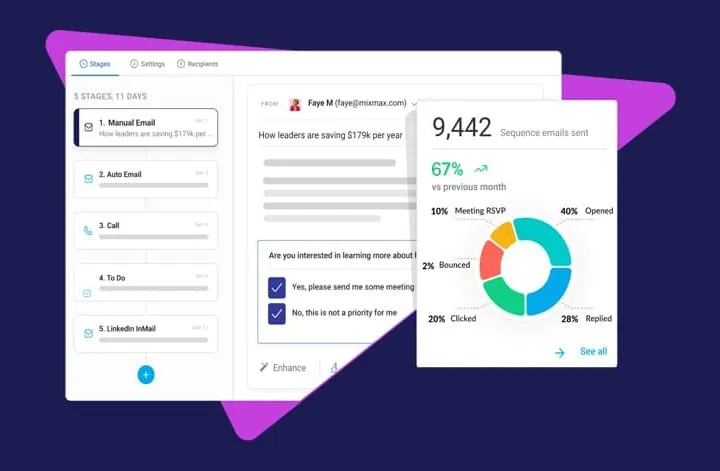
The “spray and pray” method of outreach is officially dead. Sending hundreds of generic, automated emails just leads to low response rates and a tarnished reputation. So, how do you blend efficiency with genuine personalization at scale? The answer is a strategic SDR workflow. This isn’t just another to-do list. It’s a complete framework that uses smart SDR automation to make every touchpoint timely and relevant. We’ll show you exactly how to build a system that streamlines your process and helps you figure out how to book more meetings as an SDR.
Continue reading to learn how to hit the right balance of automated and personalized, streamline your multichannel prospecting, and book 67% more meetings.
Mixmax data shows that SDRs using multichannel, personalized sequences that include call tasks, LinkedIn, or to-do tasks are more successful in booking meetings than SDRs who don’t.
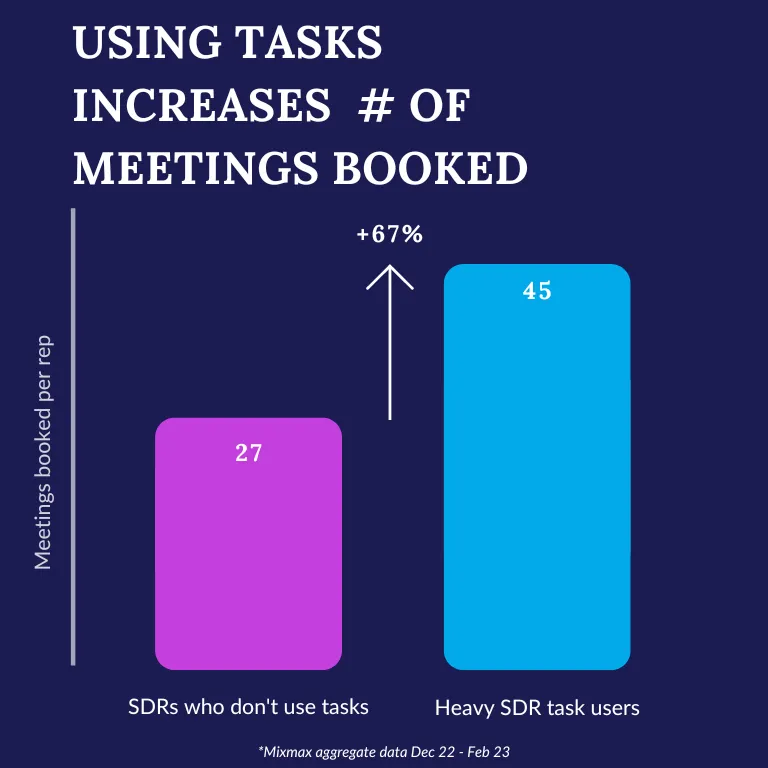
Our SDR Manager, Jack Wauson, explains how to achieve that 67% increase in meetings booked by streamlining your SDR workflows with Mixmax.
How to Build a Better SDR Workflow with Sequence Tasks
Next to research, following up is the most important thing you can do to be a successful SDR.
But follow-up tasks should not be created manually.
With Mixmax, follow-up tasks are created for you via our automation tools. Following up with personalized, relevant information comes down to building a solid multichannel sequence.
There are a lot of different stats out there on how many stages/touchpoints there should be in a sequence. Our SDR team usually creates sequences with more or less 12 stages, and here’s an example of a cold prospecting sequence you could try out 👇 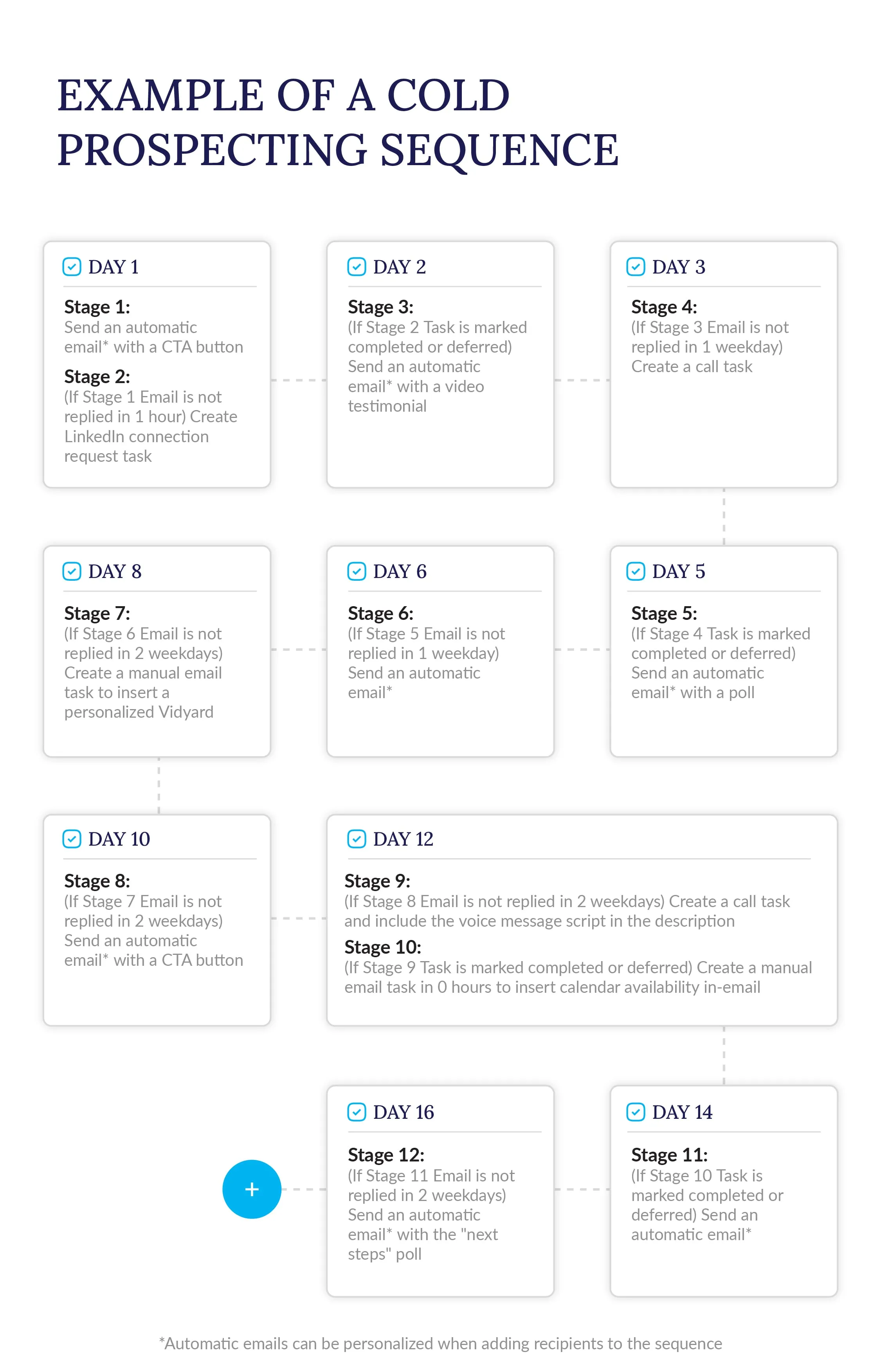
UserGems’ Sales Strategist Krysten Conner recently shared with us their 3-step multi-threading strategy you can steal.
We also suggest following SDR influencers like Jason Bay on LinkedIn for more examples. He recently shared the KISS (Keep It Simple Sequencing) example, which you can easily replicate in our new Sequences editor that is currently being rolled out 👇

Once your sequence is activated, all you have to do is show up and work through these tasks, and we’ve made it as easy as it gets.
Defining Your Ideal Customer Profile (ICP)
Before you even think about outreach, you need to know exactly who you’re talking to. A successful SDR workflow starts with a crystal-clear Ideal Customer Profile (ICP). This isn’t just a vague idea of your target company; it’s a detailed definition that sets firm rules for who to engage with and, just as importantly, who to avoid. Taking the time to define your ICP means every action you take is targeted and purposeful. It prevents you from wasting precious hours on prospects who were never going to be a good fit, allowing you to focus your energy where it will actually make an impact.
Tiering accounts to focus your efforts
Once your ICP is set, you can start organizing your accounts. It’s unrealistic to give every single account the same level of attention. Instead, group them into tiers. Most SDRs can realistically work on about 200 accounts at a time. Within that list, you should identify your top 10-20 “perfect fit” accounts. These are your Tier 1 prospects, and they deserve your most personalized and high-effort outreach. The remaining accounts can be sorted into lower tiers, receiving slightly less customized communication. This tiered approach ensures your best efforts are spent on your best opportunities, maximizing your chances of booking a meeting.
Prospecting and Research
With your tiered accounts in hand, it’s time to dig in and do your research. This stage is all about gathering the specific details that turn a cold outreach into a relevant conversation. Start by collecting verified contact data to make sure your messages actually reach the right person. Then, look for specific “triggers”—events that create a compelling reason to reach out right now. Things like a recent promotion, a new company funding announcement, or a relevant industry award can all serve as the perfect hook for your initial message. This research is the foundation of effective personalization.
Identifying sales triggers for timely outreach
Sales triggers are your secret weapon for timely and relevant outreach. Instead of sending a generic message, you can reference a specific event that makes your solution particularly relevant to the prospect at that moment. For example, sending an email that congratulates a prospect on a recent job change before you make a cold call can make the conversation feel much warmer and more familiar. Using modern tools, especially those with AI capabilities, can help you quickly craft personalized emails based on these triggers, so you can connect with prospects when they are most likely to be receptive.
Managing Your Active Accounts
Once a prospect is in your sequence, the work isn’t over. The best SDR workflows help you prioritize your daily tasks based on prospect engagement. For instance, if a prospect opens your email multiple times or clicks on a link, that’s a strong signal of interest. Your workflow should automatically flag this activity and prompt you to follow up. This is where AI-powered workflows become incredibly valuable, as they can surface these high-intent moments for you. By focusing on the prospects who are actively showing interest, you ensure your time is spent on the conversations most likely to convert into meetings.
Unifying Inbound and Outbound Lead Workflows
Many sales teams make the mistake of treating inbound and outbound leads completely differently, leading to clunky processes and missed opportunities. A streamlined workflow treats all leads with the same consistent logic, regardless of how they entered your pipeline. Whether a prospect filled out a form on your website or you identified them through outbound prospecting, they should move through a similar, well-defined process. This unified approach creates efficiency, ensures a consistent experience for every prospect, and makes it much easier to track performance and identify areas for improvement across your entire sales funnel.
Qualifying Leads and Handoff to AEs
One of the most critical functions of an SDR is to ensure that only qualified leads make it to an Account Executive (AE). A poor handoff process can lead to significant pipeline leakage and waste an AE’s valuable time. Your workflow should include a clear, structured qualification process to vet each prospect thoroughly. Once a lead is qualified and a meeting is booked, the handoff to the AE needs to be seamless. This involves providing the AE with all the necessary context and notes from your conversations so they can pick up right where you left off without missing a beat.
Using frameworks like BANT or MEDDIC
To make qualification consistent and effective, rely on established frameworks. Methodologies like BANT (Budget, Authority, Need, Timing) or MEDDIC help you ask the right questions to determine if a prospect is a genuine opportunity. These frameworks provide a checklist to ensure you’ve covered all your bases before scheduling a meeting with an AE. Using a structured qualification framework removes guesswork from the process and builds trust with your AE team, as they know every meeting you book for them has been properly vetted and is worth their time.
Which SDR Tasks Actually Lead to Booked Meetings?
You can work from your Mixmax dashboard or directly from Gmail, but most SDRs prefer the Mixmax Tasks dashboard.
Structuring the SDR’s Daily Schedule
The key to managing your tasks is to organize your day around different types of work. An effective SDR workflow isn’t about randomly checking off items on a to-do list; it’s about dedicating specific blocks of time to specific activities. This method, known as time blocking, helps you focus deeply on the task at hand without getting sidetracked by notifications or the urge to multitask. By creating a predictable structure, you can ensure that high-priority activities, like prospect research and outreach, get the attention they deserve every single day. This approach reduces decision fatigue and builds momentum, making your workflow smoother and more productive.
Time blocking for deep work and high-activity tasks
A great way to structure your day is by breaking it into three distinct blocks. Start your morning with deep work. This is when you’re fresh and can focus on researching new prospects and personalizing your outreach. Dedicate your mid-day block to high-activity tasks like making calls and sending follow-up emails. Your energy is typically higher during this period, making it perfect for direct engagement. Finally, use the afternoon for administrative work. This is the time to update your CRM, manage LinkedIn tasks, and review your performance metrics. This structure ensures you tackle your most important work when you’re at your best.
Developing a Messaging Strategy That Resonates
Your daily schedule is set, but what are you actually sending to prospects? A successful messaging strategy moves beyond the outdated “spray and pray” method of sending generic, automated emails to a massive list. That approach rarely works and often leads to dismal response rates. Instead, the goal is to create a balanced outreach that combines the efficiency of automation with the genuine connection of personalization. Prospects can spot a generic template from a mile away. To get more meetings, you need to show them you’ve done your homework and understand their specific challenges. This means mixing automated messages with personal touches across different channels.
The most effective way to do this is by building strong multichannel sequences. A well-rounded sequence should include around 12 touchpoints that use a variety of outreach methods, including emails, phone calls, and LinkedIn messages. For example, you might start with a personalized email, follow up with a LinkedIn connection request a couple of days later, and then schedule a call task for the following week. Using AI-powered workflows can help you automate the scheduling of these tasks, ensuring you never miss a follow-up while still leaving room for you to add that crucial human element to each interaction.
Handling Common Sales Objections
No matter how perfect your messaging is, you’re going to face objections. Instead of viewing them as rejections, think of them as requests for more information. The key to handling objections effectively is preparation. When a prospect says, “it’s too expensive” or “we’re already working with someone,” you need a thoughtful response ready to go. This doesn’t mean reciting a script, but rather understanding the root of the objection and addressing it with confidence. Keeping a playbook of common objections and effective responses is a great practice for any sales team.
Regular coaching and call reviews are essential for improving how you handle these conversations. Recording calls allows you and your manager to identify what works and where you can improve. AI tools can also be a huge help, offering real-time suggestions to help you respond to objections naturally and keep the conversation moving forward. When you consistently practice and refine your approach, you’ll find that objections become less of a barrier and more of an opportunity to build trust and demonstrate the value of your solution.
Actionable Tips for Booking Meetings Faster
🤔 Engagement is a good indicator of interest. Start with our “Most engaged” quick filter to call the people thinking about your offer first.
🏆 Relevancy FTW. Contact’s recent activities, sequence stage, LinkedIn, and CRM information are visible in every task, so you can get the context you need. For example, if they are in stage 5 and open your emails multiple times, the chances of them knowing who you are are higher, so you can call them with (more) confidence.
🗓 Structure your schedule. Call block time? Filter out everything but call tasks.

Try these out today, and you’ll end up on top of the leaderboard.
Equipping Your Team with the Right SDR Tech Stack
Having the right tools is about more than just efficiency; it’s about empowering your SDRs to build genuine connections at scale. A well-integrated tech stack acts as a central nervous system for your sales efforts, ensuring every action is smart, timely, and personalized. When your tools work together seamlessly, your team can spend less time on manual data entry and more time doing what they do best: selling. Let’s look at the essential components that make up a modern, high-performing SDR toolkit.
The Core Components of an SDR Toolkit
Before you can even think about advanced strategies, you need to get the fundamentals right. The core of any SDR toolkit consists of two main pillars: a system to manage relationships and a way to find new ones. These platforms are the foundation upon which all your outreach activities are built. Without a solid CRM and reliable prospecting data, even the most skilled SDRs will struggle to maintain momentum and keep their pipelines full.
CRM (Customer Relationship Management)
Your CRM is the single source of truth for all prospect interactions. Think of it as your team’s collective memory, housing every email, call, and meeting note. A robust CRM allows SDRs to track communications, schedule follow-ups, and maintain a clear view of their pipeline. When your sales engagement platform integrates directly with your CRM, like Salesforce or HubSpot, it eliminates tedious administrative work. This allows your reps to update records and manage their tasks without ever leaving their inbox, ensuring data stays accurate and up-to-date.
Data and prospecting platforms
You can’t sell to people you can’t find. Data and prospecting platforms are essential for building targeted lists of potential customers and uncovering their contact information. These tools go beyond simple directories, often providing valuable insights like company size, technology usage, and recent funding announcements. This information helps you identify sales triggers that signal a prospect might be ready to buy. Using this data, you can build highly relevant outreach sequences that speak directly to a prospect’s current needs and challenges, making your first touchpoint significantly more impactful.
The Role of Artificial Intelligence (AI) in SDR Workflows
Artificial intelligence is no longer a futuristic concept; it’s a practical tool that top-performing sales teams are using every day. For SDRs, AI is a powerful ally that helps automate repetitive tasks and provides data-driven insights to guide their outreach. By handling the manual work that bogs reps down, AI frees them up to focus on more strategic activities like personalizing messages, building relationships, and having meaningful conversations with high-value prospects.
How AI improves prospecting efficiency
The biggest advantage of AI is its ability to handle time-consuming tasks with speed and precision. Generative AI can help SDRs draft personalized emails in seconds, saving them hours of writing time each week. Beyond content creation, AI can analyze engagement data to identify which prospects are most likely to convert, allowing your team to prioritize their follow-ups effectively. With AI-powered workflows, you can automate entire sequences of actions based on prospect behavior, ensuring no lead ever falls through the cracks and every opportunity gets the attention it deserves.
Practical AI use cases and limitations
AI excels at personalizing outreach at scale. For example, it can quickly draft an email that references a prospect’s recent LinkedIn post or a new company initiative, making the message feel unique and relevant. However, it’s important to remember that AI is a co-pilot, not the pilot. SDRs should always review and refine AI-generated content to add their personal touch and ensure it aligns with their voice. Relying solely on AI without human oversight can lead to generic or slightly off-key messaging that undermines the goal of building a genuine connection.
Technical Best Practices for Email Deliverability
All your hard work crafting the perfect outreach sequence is wasted if your emails land in the spam folder. Strong email deliverability is the unsung hero of successful outbound prospecting. It ensures your messages actually reach your intended audience. This involves more than just writing a good subject line; it requires setting up the proper technical foundation to prove to email providers that you are a legitimate sender, not a spammer.
Setting up SPF, DKIM, and DMARC
To protect your sender reputation, you need to configure three key email authentication records: SPF, DKIM, and DMARC. Think of these as your email’s official ID. SPF (Sender Policy Framework) specifies which mail servers are allowed to send email on behalf of your domain. DKIM (DomainKeys Identified Mail) adds a digital signature to your emails to verify they haven’t been tampered with. DMARC tells receiving servers what to do with emails that fail SPF or DKIM checks. Properly setting up these records is a non-negotiable first step for any team serious about their email deliverability.
From an Efficient Workflow to Exceeding Your Quota
Money is the ultimate motivator, not the leaderboard, we know. But reporting is especially crucial for SDR Managers, enabling them to easily analyze performance and coach the SDRs on which strategies work best for your business.
If you use Salesforce, make sure to install our new Mixmax Insights for Salesforce.

We hope this simple guide helps you harness the power of personalized, multichannel outreach with Mixmax. Let us know if you have any questions.
Key Metrics for Measuring SDR Performance
While activity metrics like calls made and emails sent are easy to track, they don’t tell the whole story. To truly understand performance, you need to focus on metrics that directly connect to outcomes. Shifting your focus from pure volume to quality and efficiency will give you a much clearer picture of what’s working. It helps you identify top performers and pinpoint exactly where other reps might need coaching. Instead of just asking, “Did you hit your numbers?” you can ask, “How effective were your conversations?” This approach moves your team from being busy to being productive, which is what really drives pipeline and revenue.
Connect-to-meeting rate
Your connect-to-meeting rate is the percentage of conversations with prospects that result in a booked meeting. This is a powerful indicator of an SDR’s ability to articulate value and persuade a prospect to take the next step. According to Outbound Sales Pro, a healthy target for this metric is between 10% and 25%. If a rep is having a lot of conversations but booking few meetings, it’s a clear sign they need coaching on their pitch, objection handling, or closing skills. Tracking this helps you diagnose issues early and provide targeted support to improve their effectiveness during live interactions.
Held meeting rate
Booking a meeting is great, but it doesn’t count for much if the prospect doesn’t show up. The held meeting rate measures the percentage of booked meetings that actually happen. A strong held rate, typically between 70% and 85%, shows that your SDRs are not only booking meetings but are also qualifying prospects properly and setting clear expectations. A low rate might indicate that prospects aren’t fully bought-in, the meeting’s value wasn’t communicated clearly, or there are issues in the handoff process. This metric is essential for ensuring the pipeline your SDRs are building is made of genuinely interested leads.
Email reply rate
Your email reply rate is a fantastic top-of-funnel metric for gauging the effectiveness of your written outreach. It tells you if your subject lines are grabbing attention and if your messaging is compelling enough to warrant a response. A higher reply rate suggests your personalization and value propositions are hitting the mark. This metric provides quick feedback on your copy, allowing you to test different approaches and see what resonates with your audience. It’s one of the first signals you have that your outreach strategy is on the right track and is generating real interest from potential customers.
Continuously Improving with A/B Testing
The most successful sales teams don’t rely on a “set it and forget it” strategy. They are constantly refining their approach through A/B testing. This means systematically experimenting with different elements of your outreach to see what performs best. You can test everything from email subject lines and call-to-action buttons to the timing and frequency of your sequence stages. By isolating one variable at a time and measuring the results, you can make data-driven decisions instead of relying on guesswork. This iterative process ensures your messaging stays fresh and effective, helping you adapt to changing market conditions and consistently improve your results over time.
How Manager Involvement Can Refine Workflows
It’s one thing to look at a dashboard, but it’s another to experience a workflow firsthand. When sales managers occasionally step into the shoes of their SDRs and try the workflow themselves, they gain invaluable insights. This hands-on approach helps them identify friction points that reps might not even think to report, like a clunky CRM integration or an outdated email template. According to LeadIQ, this practice helps managers find and fix problems effectively. It also builds trust and shows the team that their leaders understand the daily challenges they face, leading to more practical and impactful workflow improvements.
Structuring Your SDR Team for Success
A high-performing SDR isn’t a lone wolf; they’re part of a well-supported ecosystem. Building the right team structure around your SDRs is critical for their success and for the overall health of your sales pipeline. When roles and responsibilities are clearly defined, it eliminates confusion and allows each person to focus on their area of expertise. This creates a support system that handles everything from data analysis to technical troubleshooting, freeing up your SDRs to concentrate on their primary goal: engaging prospects and booking qualified meetings. A strong structure turns a group of individuals into a cohesive unit, fixing process gaps and creating a foundation for scalable growth.
Defining Key Roles to Support Your SDRs
To build that supportive ecosystem, you need a few key players working behind the scenes. These roles are designed to handle specific functions that, while crucial, can distract an SDR from their core tasks. Think of them as the pit crew for your sales drivers. By having dedicated experts in coaching, operations, and technical health, you ensure your SDRs have the guidance, data, and tools they need to perform at their best. This specialization not only improves efficiency but also creates clear career paths and areas of ownership within the broader sales organization, making the entire team stronger and more effective.
The SDR Lead
The SDR Lead is the team’s day-to-day coach and mentor. Their main job is to guide the SDR team, ensuring everyone is following best practices and hitting their targets. They listen to call recordings, provide real-time feedback on email copy, and run regular training sessions to sharpen the team’s skills. Unlike a manager who might be focused on high-level strategy, the SDR Lead is in the trenches with the reps, helping them navigate tough conversations and celebrate wins. This person is essential for maintaining team morale, fostering a culture of continuous improvement, and ensuring new hires ramp up quickly and effectively.
Revenue Operations
If the SDR team is the engine, Revenue Operations (RevOps) is the engineering team that keeps it running smoothly. A dedicated RevOps person is crucial for managing the tech stack, ensuring data is clean and accurate, and building the reports that track performance. They analyze the data to identify trends and bottlenecks, helping leadership make informed decisions about strategy and resource allocation. By handling the technical and analytical heavy lifting, RevOps allows SDRs and their leads to focus on execution. They are the ones who optimize the workflows that power the entire sales process, making them an indispensable part of a modern sales team.
The Deliverability Owner
In the world of high-volume outreach, ensuring your emails actually land in the inbox is a full-time job. That’s where the Deliverability Owner comes in. This person is responsible for maintaining your company’s email sending reputation and technical health. They manage critical settings like SPF, DKIM, and DMARC, monitor bounce rates, and troubleshoot any issues that could get your domain blacklisted. Without this role, your SDRs’ carefully crafted messages could end up in spam folders, rendering their efforts useless. Having a dedicated owner for deliverability is a non-negotiable for any team serious about successful email prospecting.
The Importance of Coaching and Development
A great workflow and a solid team structure are the foundation, but continuous coaching is what builds a skyscraper. Regular coaching sessions—whether daily, weekly, or monthly—are essential for developing top-tier SDRs. This involves more than just reviewing metrics; it’s about actively helping reps improve their craft. Effective coaching includes recording and reviewing calls to break down what went well and what could be better, role-playing difficult scenarios, and building a shared playbook of effective responses to common objections. By investing in ongoing development, you not only improve performance but also show your team that you are committed to their professional growth. This is where tools with AI-powered workflows can help, by automating administrative tasks and freeing up more time for managers to focus on high-impact coaching.
Frequently Asked Questions
How do I know if I’m personalizing enough or just automating too much? The right balance is when automation handles the timing and your personalization handles the content. Your workflow should automatically schedule follow-ups and create tasks, but each message needs a human touch. If your outreach could be sent to any company on your list without changing a word, you’re relying too much on automation. The goal is for the prospect to feel like you’re talking directly to them, not just to their job title.
What’s the ideal number of touchpoints for a sales sequence? While there isn’t a single magic number, a strong sequence usually has around 12 touchpoints. The key isn’t the exact count, but the variety within the sequence. A good plan should be multichannel, mixing emails with call tasks and LinkedIn interactions. This approach helps you connect with prospects in different ways without overwhelming them in one channel. Start with a 12-step framework and adjust it based on what your performance data shows you.
My emails aren’t getting replies. What am I doing wrong? A low reply rate often points to one of two problems: your message isn’t relevant, or it isn’t being seen. First, check your technical email setup. Make sure your SPF, DKIM, and DMARC records are configured correctly to keep your emails out of the spam folder. If your deliverability is solid, then focus on your messaging. Are you referencing a specific sales trigger or a detail about their company? A generic message is easy to ignore, so your outreach needs to show you’ve done your homework.
How should I structure my day to be most effective? The best strategy is to block your time into dedicated chunks for different kinds of work. Use your morning, when you’re most focused, for deep work like researching accounts and crafting personalized outreach. Save the middle of your day for high-energy activities like making calls. Then, use the afternoon to wrap up administrative tasks like updating your CRM. This structure prevents multitasking and ensures your most important work gets your best energy.
Besides booking meetings, what’s the most important metric I should track? Pay close attention to your connect-to-meeting rate. This metric shows you how many of your actual conversations with prospects turn into booked meetings. It’s a direct reflection of how well you communicate your value and handle objections. While tracking calls and emails is fine, this rate tells you about the quality of your interactions. A low rate is a clear signal that you might need to refine your pitch or practice your objection handling.
Key Takeaways
- Create a strategic workflow that prioritizes personalization: Go beyond a simple to-do list by defining your ideal customer, tiering accounts, and building multichannel sequences that combine automated touchpoints with genuine, personalized outreach.
- Structure your day for maximum impact: Use time blocking to dedicate specific parts of your day to different tasks, like prospect research in the morning and high-activity calls in the afternoon, to maintain deep focus and improve productivity.
- Empower your team with the right support system: Use tools with AI-powered workflows to automate repetitive tasks and establish key support roles, such as RevOps, to manage the technical details so your SDRs can concentrate on selling.
Related Articles
- SDR Workflows That Result in 67% More Meetings | Mixmax
- 4 Ways to Set Up Your SDR Team for Success With Mixmax
- Schedule More Meetings with Inbound Lead Routing | Mixmax
- Does Your Sales Team Waste Too Much Time Scheduling Appointments? | Mixmax
- 13 Sales Voicemail Script Examples to Get Callbacks | Mixmax


.-3INYKdL.png)