
A sales rep’s day is a constant shuffle between their inbox, CRM, and calendar. They find a prospect in Salesforce, jump to Gmail to write an email, then open another tool to find a meeting time. This app-switching wastes valuable selling time. It’s no wonder hitting a consistent target for how many sales appointments per day feels like an uphill battle. The issue isn’t your reps; it’s their workflow. Let’s look at how a smarter sales scheduling process, built right into the tools your team already uses, can make all the difference.
Each moment spent on administrative tasks, such as manually scheduling product demos and consultations, detracts from your team’s ability to pursue new opportunities. Yet, these tasks are a necessary part of the sales cycle – after all you’ll never close a customer if you can’t get them to a meeting. So, how can you free up more time for your sales team to focus on elevating customer engagement? Automating your appointment scheduling process is a great place to start.
Let’s explore the root causes of inefficient appointment scheduling and best practices for fixing the problem.
Related Post: Mixmax Eliminates Six Days of Admin Work per Month for the Pixlee Sales Team
How Many Sales Appointments Should You Aim For?
Setting the right goals is the first step toward a more efficient sales process. But what are the right goals? The ideal number of appointments varies by role, industry, and sales model. Here are a few solid benchmarks to get you started.
Benchmarks for Inside Sales Reps
For inside sales reps, a common benchmark is to aim for 60 phone calls or three hours of talk time per day, whichever comes first. This isn’t an arbitrary number; it’s a proven target that helps maintain a consistent rhythm of outreach needed to keep a pipeline healthy. Hitting this goal ensures you’re making enough attempts to connect with prospects and generate new opportunities. Of course, volume alone isn’t the answer. The real challenge is balancing this activity with high-quality conversations and diligent follow-up. Having a system in place to manage your outreach and track engagement is what separates busy reps from productive ones, turning raw activity into actual meetings booked.
Benchmarks for Outside Sales Reps
Outside sales is a different game, and the right number of appointments can vary widely. There’s no single magic number. Some reps report conducting as few as 1-2 visits per week, while others in B2B manufacturing aim for 10-12. High-performers have even been known to target 15 to 25 visits weekly. The right goal for you depends entirely on your industry, the complexity of your sales cycle, and the size of your territory. The most important thing is to set a realistic target based on your specific environment and work backward to figure out the activity needed to hit it.
Benchmarks for Sales Development Reps (SDRs)
Sales Development Reps live and die by the meetings they book. A strong benchmark for an SDR is to schedule three to five qualified meetings per day. To get there, the math is crucial. If you have a 10% answer rate on cold calls and a 30% meeting set rate from those conversations, you’ll need to make around 100 calls to book three meetings. This highlights a critical point: your success isn’t just about call volume, it’s about the efficiency of your entire outreach process. Improving your answer and set rates by even a few percentage points can dramatically change your output, letting you hit your quota with less raw effort. This is where smart, AI-powered workflows can make a huge difference.
What’s Slowing Down Your Sales Scheduling?
Your reps work hard to maintain high levels of efficiency. Trouble is, their current sales tech stack may not exactly align with this goal. After all, they’re constantly jumping between their inboxes, CRM records, meeting schedulers, and other systems. Booking appointments is no exception to the rule.
Here are just a few reasons why appointment scheduling consumes so much of your sales team’s day:
1. The Time Sink of Personalizing Every Email
Sales reps send a lot of appointment request emails each day. In an effort to streamline this process, some teams use sales appointment request email templates from their CRMs. Although this approach may be more productive than manually copying and pasting, CRM templates rarely offer the level of customization to truly engage prospective customers. As a result, reps often abandon their CRM templates altogether and resort to writing customized, one-off emails for each invitation.
Certainly, personalized messages are more likely to yield positive results – but, at what cost? A 20% response rate on 100 carefully crafted emails is the same as a 2% response rate on 1,000 templated emails. The obvious difference is that 100 “carefully crafted” emails require much more time and effort.
2. Playing Email Tag to Find a Time
Obtaining a prospect’s agreement to meet can require several follow-up attempts. Without the right toolbox, scheduling a meeting becomes the next time-intensive endeavor to manage.
Does the following email exchange sound familiar?
- Email #1 (Rep): “How does your calendar look for next week?”
- Email #2 (Prospect): “Sorry, I can’t meet next week. I’m out.”
- Email #3 (Rep): “How about the week after next? I’m open Monday or Tuesday…”
- Email #4 (Prospect): “Monday and Tuesday already look pretty full. How about Wednesday?”
- Email #5 (Rep): “Sorry, I’m in an all-day training on Wednesday. Thursday?”
- Email #6 (Prospect): “Thursday at 10 am?”
- Email #7 (Rep): “I’ll be traveling then. 2 pm Thursday?”
- Email #8 (Prospect): “2 pm Thursday it is!”
- Email #9 (Rep): “OK, I’ll send over a calendar invite and web conference link.”
Simply agreeing on a time and date required nine total emails. This email thread required multiple interactions with the prospect, each of which consumed several minutes of the rep’s busy day.
Related Post: The Effective Engineering Demo
3. Manually Creating Calendar Invites and Links
Once a meeting date has been agreed to, the rep must then go into his or her calendar, create an invitation, include the necessary details, and send the invitation to the prospective customer. If a web conferencing service will be used, the rep must also log into the application, generate a new meeting link, copy the details, and paste it into the calendar invitation.
All of this takes time and requires the rep to jump between several systems, increasing the chance for oversights and manual errors.
4. Chasing Down RSVPs and Confirmations
Despite previously agreeing to meet, prospects can be slow to RSVP. Some get cold feet. Others forget to click the “accept” button. Still others overlook the invitation entirely due to the massive amount of email that’s already in their inboxes. No matter the reason, failing to receive an RSVP can be a frustrating experience for the sales rep.
Unfortunately, just determining who has RSVP’d (and who hasn’t) can be a cumbersome process. Sure, each calendar invitation maintains a record of responses, but who has time to click through dozens of calendar items? Certainly not your sales reps.
The Foundation: Building an Effective Sales Cadence
Before you can fix your scheduling process, you need a solid outreach plan. A sales cadence provides the structure your team needs to be persistent and effective. It’s the playbook that turns random acts of outreach into a predictable system for booking meetings. Without a clear cadence, reps are just guessing what to do next, which leads to wasted effort and missed opportunities. A structured approach ensures every prospect gets the right amount of attention at the right time, dramatically increasing your chances of success.
What is a Sales Cadence?
A sales cadence is simply a schedule of touchpoints you plan for contacting a prospect. It’s your game plan, mapping out when you’ll email, when you’ll call, and when you’ll connect on social media. Think of it as a roadmap that keeps your outreach organized and consistent. Instead of starting each day wondering who to follow up with, you follow a proven sequence of steps. This brings a predictable rhythm to your sales process, turning chaotic outreach into a repeatable system that consistently books meetings and fills your pipeline.
The Importance of Persistence in Outreach
Here’s a hard truth: most reps give up way too soon. Research shows it often takes at least eight touches to book a meeting, but many salespeople stop after just four or five attempts. That gap is where potential deals are lost. A well-designed sales cadence solves this by building persistence directly into your workflow. It ensures you follow through with the necessary number of attempts, even when you don’t get an immediate reply. This structured follow-up is the difference between a prospect going cold and finally getting that “yes” for a meeting.
Using a Multi-Channel Approach
Relying only on email is like trying to fish with just one type of bait. The most successful sales teams use three or more channels to connect with prospects, making over 15 contacts in total. This means combining emails with phone calls, LinkedIn messages, and even SMS. A multi-channel approach helps you cut through the noise and meet buyers where they are. Using a platform with AI-powered workflows lets you build these multi-step sequences right inside your inbox, so you can manage every touchpoint without constantly switching between different apps and tabs.
Strategies to Hit Your Appointment Goals
Once you have a solid cadence in place, it’s time to focus on execution. Hitting your appointment goals requires a combination of smart preparation, precise timing, and proven techniques. It’s not just about working harder; it’s about working smarter. These strategies will help your reps refine their approach, making every call and email more effective. By focusing on these key areas, your team can move from simply sending messages to starting meaningful conversations that lead to booked meetings and, ultimately, closed deals.
Prepare Your Outreach in Advance
The best reps don’t start their day wondering who to call. They start their day calling. You can do the same by preparing your prospect lists before you need them, like at the beginning of the week or quarter. When you have your lists ready to go, you remove the distraction of prospecting from your prime selling hours. This simple habit allows you to focus entirely on execution—making calls and sending emails—when your energy is highest. It’s about separating planning from doing so you can be more effective at both.
Optimize Your Call Timing
When you call matters just as much as what you say. The best times to reach prospects are typically early in the morning, before their day gets swamped with meetings, and late in the afternoon as they’re wrapping things up. Calling during these windows increases your chances of getting someone on the phone instead of their voicemail. Test different times to see what works best for your target audience, but start with these proven slots. A small shift in your call schedule can make a big difference in your connection rate.
Use Proven Call Techniques
Confidence is contagious, and it comes across in your voice. When you ask for the meeting, use a downward tonality. This means your pitch drops slightly at the end of the sentence, which sounds like a confident statement rather than a hopeful question. It’s a subtle shift, but it signals that you believe in the value of the meeting you’re proposing. Practice this technique until it feels natural. It’s a small detail that can have a big impact on how prospects perceive you and your request.
Focus on Selling the Meeting, Not the Product
The only goal of a cold call is to book the meeting. That’s it. It’s not the time for a full product demo or a deep discovery session. Your job is to generate enough curiosity and establish enough credibility to earn 15 or 30 minutes on their calendar. Trying to sell the entire solution on the first call often overwhelms the prospect and leads to a quick “no.” Keep your pitch concise, focus on a specific pain point, and make a clear ask for the meeting. Save the details for the demo.
Track the Right Performance Metrics
You can’t improve what you don’t measure. To understand what’s working, you need to track a few key metrics. Start with the basics: total calls made, your answer rate, and your appointment set rate. Look at these numbers in batches, like for every 100 calls, to identify patterns. Are you calling at the right times? Is your script effective? The data will tell you. Using a sales execution platform gives you clear engagement signals and analytics, so you can see exactly how your sequences are performing and make adjustments based on facts, not guesswork.
A Better Way to Handle Sales Scheduling
An all-in-one sales productivity and workflow automation tool, like Mixmax, can streamline how your sales reps schedule their appointments. For starters, Mixmax integrates the tools that your team uses each day, such as Zoom, Salesforce, Pipedrive, Google Calendar, and Gmail. Instead of jumping between multiple systems, sales reps can easily coordinate appointments without leaving their email inboxes and can also create an email automation rule to automatically send appointment reminders prior to the meeting to minimize no shows.
Here’s a quick overview of how it works:
Send Personalized Outreach That Scales
With Mixmax sequences, reps can strike the perfect balance of personalization and scalability. Prior to enabling a sequence, sales appointment request emails can be quickly customized at the recipient level, thereby increasing the likelihood of an RSVP.
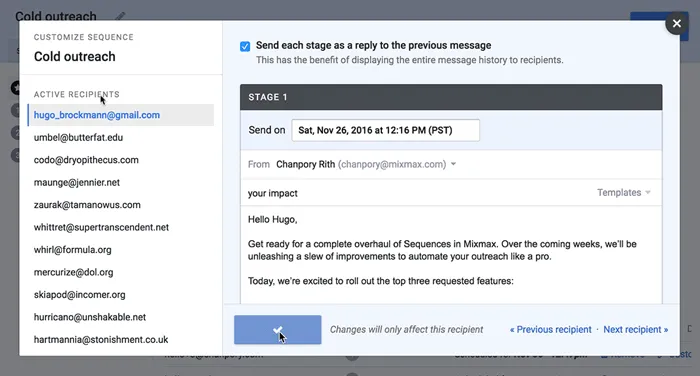
Mixmax can also send automated follow-up emails after receiving no response, further increasing the efficiency of your team’s communication.
Let Reps Schedule Meetings in One Click
Sales reps can quickly insert their availability into the body of any email. Rather than exchanging countless emails to determine when both parties are available, prospects can view and select a time that works best for their needs.
Automate Booking and Confirmations
Once a recipient chooses a time and date, the sales rep receives a confirmation email and the time slot is automatically added to his or her calendar. The prospective customer also receives a calendar invitation, saving both parties time and eliminating unnecessary clicks.
Never Forget a Meeting Link Again
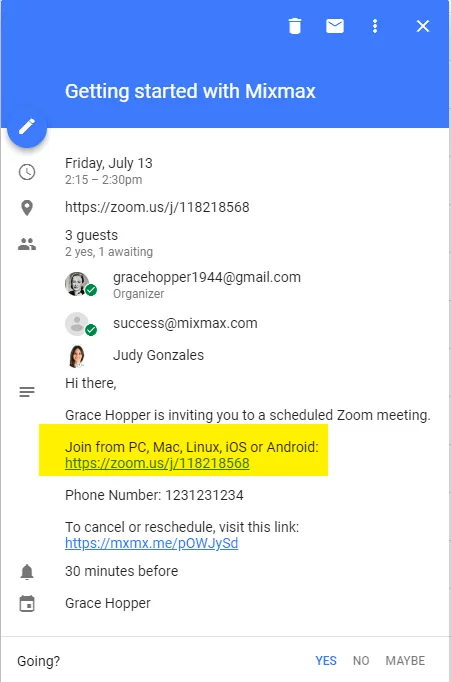
Reps can predefine their preferred meeting location, such as a permanent Zoom meeting link. As recipients book time, Mixmax eliminates another step in the process by automatically updating the calendar invitation to include the rep’s preferred meeting link.
Common Sales Rules of Thumb to Remember
Now that we’ve covered how to fix the mechanics of scheduling, let’s talk strategy. Certain rules of thumb have guided sales teams for years. They provide a solid framework for outreach and help set clear expectations for your team. Understanding these concepts is the first step to building a process that consistently fills the pipeline with qualified meetings.
The 10-3-1 Rule
The 10-3-1 rule is a classic benchmark for sales outreach. It suggests that for every 10 prospects you contact, you can expect about three to show interest, which ultimately leads to one booked meeting or new customer. This isn’t a hard-and-fast law, but it’s a powerful way to manage expectations and quantify the effort needed to hit your pipeline goals. It highlights that sales is fundamentally a numbers game that requires consistent, high-volume activity. Manually managing that volume is a huge time drain, which is why reps use AI-powered workflows to automate multi-step outreach right from their inbox, making it possible to work through hundreds of contacts without sacrificing personalization.
The 2-2-2 Rule and Modern Alternatives
Another long-standing guideline is the 2-2-2 rule, a simple cadence for follow-ups. The idea is to contact a prospect two days after your initial outreach, again two weeks later, and a final time two months after that. This structure helps maintain persistence without overwhelming your prospect’s inbox. While it’s a decent starting point, today’s sales environment calls for a more dynamic approach. A rigid, one-size-fits-all cadence can leave opportunities on the table, especially when you have tools that provide real-time engagement signals.
Instead of waiting a full two weeks, what if you could follow up the moment a prospect re-opens your proposal? Modern sales execution platforms make this possible. You can build multi-channel cadences that mix email, LinkedIn messages, and calls, and use AI to trigger the next best action based on actual prospect behavior. This shifts the strategy from a fixed timeline to one based on genuine interest, helping your team focus their energy where it counts most.
Book More Sales Appointments Per Day, Automatically
If your sales reps are spending too much time on meeting coordination, perhaps it’s time to give Mixmax a try. In addition to being a Google Calendar scheduling tool you can build customizable sequences at scale, suggest available time slots, book meetings without leaving your inbox, and gain total transparency into recipient engagement.
Start a free trial of Mixmax today.
Frequently Asked Questions
What’s a realistic daily appointment goal for a sales rep? There isn’t a single magic number, as it depends on your role and industry. For SDRs, a strong benchmark is booking three to five qualified meetings per day. Inside sales reps often aim for a certain activity level, like three hours of talk time, which then leads to appointments. For outside sales, the number varies widely from a few visits a week to over a dozen. The key is to set a goal based on your specific sales cycle and then work backward to determine the outreach activity needed to hit it.
My biggest issue is getting prospects to agree to a meeting. How does better scheduling help with that? That’s a common problem, and you’re right to focus on it. Efficient scheduling is the final step, not the first. The real challenge is the persistence it takes to get a “yes.” This is where a structured sales cadence comes in. Using a system that helps you manage multi-step, multi-channel outreach (email, calls, LinkedIn) ensures you don’t give up too early. Once a prospect is interested, one-click scheduling simply removes the final bit of friction, making it easy for them to get on your calendar without the back-and-forth emails.
How is this different from just sending a basic scheduling link in my emails? A simple scheduling link solves one small problem: finding a time to meet. A sales execution platform solves the entire workflow problem around it. It connects your scheduling directly to your outreach sequences, your CRM, and real-time engagement signals. This means you not only make booking easy, but you also get data on who is opening your emails and clicking your links, so you know exactly who to follow up with and when. It turns scheduling from a passive tool into an active part of your sales process.
Do I have to switch between Gmail and another app to manage all this? No, you don’t. The whole point is to stop the constant app-switching that drains your day. A tool like Mixmax works directly inside your Gmail inbox. You can build sequences, track engagement, and schedule meetings without ever leaving the place you already spend most of your time. This is why reps actually use it, saving them hours of administrative work every week.
You mentioned AI-powered workflows. What does that actually mean for booking meetings? It means your outreach becomes smarter, not just faster. For example, instead of a generic follow-up rule like “send email in 3 days,” an AI-powered workflow can see that a prospect just re-opened your proposal from last week. It can then automatically create a high-priority task for you to call them immediately. It uses real-time engagement signals to tell you the next best action to take, helping you focus your energy on the prospects who are most likely to book a meeting right now.
Key Takeaways
- Stop switching between apps: A sales rep’s biggest time-waster is jumping between their inbox, CRM, and calendar. Integrating your scheduling and outreach tools directly into Gmail keeps reps focused on selling, not on administrative tasks.
- Create a structured outreach plan: Booking meetings requires persistence across multiple channels like email, phone, and social media. A defined sales cadence turns random follow-ups into a predictable system that ensures you make enough contact attempts to get a response.
- Automate scheduling to sell the meeting: The goal of a cold call or email is to book a meeting, not to sell the entire product. Use one-click scheduling and automated follow-ups to handle the logistics, so your reps can focus their energy on the conversation that earns the appointment.