
Let’s be honest: selling to executives is a completely different ballgame. They aren’t the end-user, and their schedules are packed with competing priorities. Just getting a meeting can feel like a major win. But top performers know the secret to executive selling. They don’t pitch products; they act as strategic partners who solve major business problems. This guide shows you exactly how to sell to a CEO by shifting your approach from vendor to indispensable advisor, building trust and focusing on the outcomes that actually matter.
To better your odds, we amassed a panel of busy, tech CEOs to shake out tips on how to sell top-down.
Below are the can’t-miss highlights of the exchange between Ryan O’Hara, VP of Marketing at LeadIQ and 3 CEOs of high-growth companies: Olof of Mixmax, Ray of Chorus.ai, and Eric of Terminus.
Challenge Their Thinking, Don’t Just Agree
Matthew Dixon, author of “The Challenger Sale” argues there are 5 main personalities of B2B sales reps:
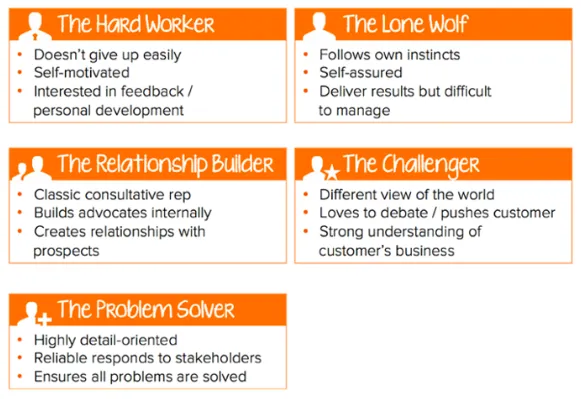
Overwhelmingly, while persistence and relationships are important, each CEO cited examples of reps who caused them to think deeper, and ask internal questions, as being more memorable, and effective with their pitch.
It makes sense, as studies found that high performing reps are 2x as likely to use a Challenger sale approach, over any others.
Bring Unique Insights to the Table
Challenging an executive isn’t about being confrontational. It’s about acting like a strategic partner. Executives live inside their own business every day; your real value is bringing an outside perspective they haven’t considered. Instead of listing features, you need to offer new, valuable ideas that help them solve major business problems. This requires serious preparation and research into their market and customers. That’s where the 2+ hours you save each day from admin tasks becomes your secret weapon. When AI-powered workflows handle the busywork, you get time back to invest in the strategic thinking that actually closes deals with the C-suite.
What Matters Most to an Executive?
Strengthen their domain expertise but shaking up assumptions.
Olof reveals one of the most detrimental beliefs of an executive is to, “build up functions where you have had a little bit of expertise, because you’ve done it to some extent.
An example of this: earlier on I did all sales for the company. I thought I totally knew what sales was all about. Then I hired our first sales rep, and they totally schooled – which was eye opening and wonderful.”
It’s near impossible for an executive to be an expert in every function & speciality. And in many cases, the area where they have historic sole contributor experience has evolved considerably. This is a chance to demonstrate value without going straight into your pitch.
Reveal data points and insights into impactful areas of the business.
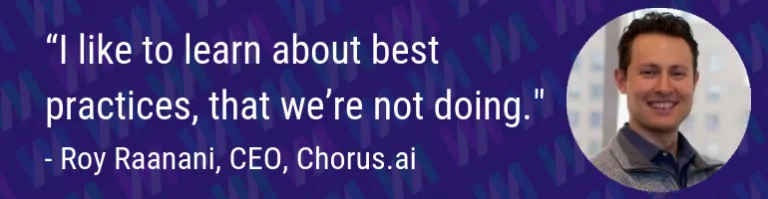
“I like to learn about best practices, especially from our Industry, that maybe we’re not doing. It’s the fear of missing out. Not knowing what you don’t know.” – Roy
Ask pointed questions that open dialogue.
Sometimes you may shoot too high and find the executive approached a broad budget for their department head or team lead, and they have full discretion in spending it. Instead of going into your usual pitch, instead spark curiosity, so they bring up the topic to their team leads.
“Is there a question you can get the CEO to ask somebody on their team? To start a conversation. Tell me what I should dig into if there’s an opportunity there.” – Roy
Set the follow-up.
“Ask upfront for the permission to reach out afterwards, to see how the conversation went”. – Roy
The Three Core Business Outcomes: Cost, Revenue, and Risk
When you get time with an executive, your conversation needs to map directly to one of three things: cost, revenue, or risk. Executives are measured on their ability to manage these outcomes for the business. They want to know how your solution can save them money, make them money, or protect them from losing money. Research shows that executives prioritize ROI (Return on Investment) and ROTI (Return on Time Invested) above all else. This means your pitch can’t just be a list of features. It has to be a clear, direct story about how your product will impact their bottom line. Every point you make should tie back to one of these three pillars.
Understanding ROI and ROTI (Return on Time Invested)
To have a real conversation with the C-suite, you need to speak their language, and that language is ROI and ROTI. ROI is straightforward: if they spend X, what will they get back in return? ROTI, or Return on Time Invested, is just as critical because an executive’s time is their most finite resource. This is where tools with AI-powered workflows come in. If a tool saves each sales rep two hours a day on admin work, that’s a massive ROTI. That time can be reinvested into selling activities, which directly drives revenue. Your job is to draw a straight line from time saved to dollars earned.
Why Top Performers Succeed with Executives
Top reps don’t act like vendors; they act like strategic partners. They understand that their job is to help executives solve major business problems, not just push a product. This approach builds the trust needed to discuss the big-picture outcomes of cost, revenue, and risk. But trust isn’t built on talk alone. You have to back it up by showing them the results they can expect. Instead of saying your tool improves outreach, show them data that proves it delivers 52% reply rates versus the 2-3% industry average. Concrete, data-driven proof points are what capture an executive’s attention and make your solution a clear, smart investment.
Sell to the Person, Not Just the Title
Authenticity and excitement go a long way.
“For cold email, some degree of flattery works. You see through it, but it puts you in a good frame of mind. It’s 1000x more interesting if the rep actually uses your product or service and can reference it intimately.” – Olof

Get personal.
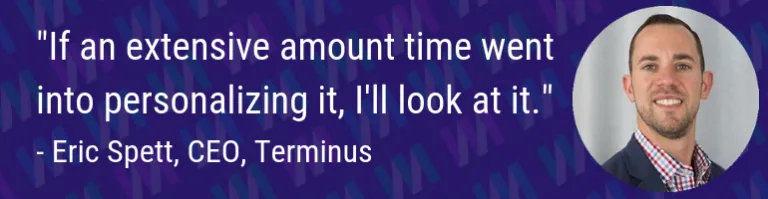
“For anything coming from someone I don’t know, anything that is hyper-personalized will get flagged and read, but outside of that, I never see it. If an email looks like they have a relationship, or put an extensive amount of time personalizing it, I at least want to look at it.” – Eric
To sell is human.
“ [ They’re] normal people, I think that’s what most people miss out on. Many started as employee #1 or #2 in their organization.” – Ryan

“Whenever an email comes in, it goes to one of two parts of my brain: it either goes into the professional part, or it goes into the personal side. I handle the two completely differently. If something comes in that’s classified on the professional side, I have to rank it against every other priority I have. And there can only ever be 2-3 priorities there; and everything else gets blown off.
When something comes in on the personal side: I’ll make time. There’s a lot more flexibility if something comes in a little less than purely professional. Trying to find a way to make it human can go a long way.” – Roy
Tailoring Your Pitch to the C-Suite Role
When you get a meeting with an executive, you have to make every second count. This means tailoring your message to their specific role and responsibilities. A Chief Financial Officer and a Chief Technology Officer care about very different things, and your pitch needs to show you understand their world. A generic, one-size-fits-all presentation falls flat because it signals you haven’t done your homework. Instead, focus your conversation on the specific outcomes that matter most to their corner of the business. This is how you move from being just another vendor to becoming a trusted strategic partner who understands their unique challenges.
The CFO: Focus on Financials and ROI
The Chief Financial Officer lives in a world of spreadsheets, forecasts, and bottom-line results. When you speak with a CFO, your primary language should be money. They want to know the direct financial impact of your solution. Forget listing features; instead, present a clear business case focused on Return on Investment (ROI). For example, instead of saying your tool automates tasks, explain how saving each rep two hours per day on admin work translates to more selling time and a 25% improvement in close rates. Show them the math. A platform that can deliver a positive ROI in just four months will always get a CFO’s attention.
The CTO: Focus on Technology and Security
The Chief Technology Officer is the guardian of the company’s tech stack. Their main concerns are security, integration, and implementation. A CTO needs to know that your solution will play nicely with their existing systems and won’t create data silos or security vulnerabilities. When you talk to a CTO, emphasize how your product fits into their current workflow. A tool that works directly inside Gmail and syncs automatically with Salesforce is far more appealing than another standalone app that requires complex integration and training. Highlighting ease of implementation and a 90% week-1 adoption rate shows the CTO that your tool won’t become a drain on their resources.
Selling to Executives vs. Lower-Level Managers
Selling to a VP of Sales is fundamentally different from selling to a sales manager. Executives operate at a 30,000-foot view, focusing on strategic business outcomes like hitting growth targets and improving overall team performance. They think in terms of transformation and long-term value. A sales manager, on the other hand, is focused on the day-to-day execution. They want to know how your tool will make their team more efficient, help them hit their monthly quota, and solve immediate operational headaches.
Your messaging needs to adapt. For the executive, you might discuss how AI-powered workflows can standardize your top performer’s habits across the team, leading to a measurable lift in close rates. For the manager, you’d frame the same feature as a way to automate follow-ups and data entry, freeing up reps to spend more time selling. It’s the same product, but you’re highlighting different facets of its value. The executive buys the strategic “why,” while the manager buys the practical “how” that makes their team’s life easier.
How to Prepare for an Executive Meeting
Walking into a meeting with an executive unprepared is like showing up to a final exam without ever attending the class. You might get lucky with a few answers, but you won’t pass. Preparation is what separates a memorable, valuable conversation from a forgettable one. It’s not just about what you’ll say in the room, but also how you manage the entire process, from scheduling the meeting to the critical follow-up. Using tools with AI-powered workflows to handle administrative tasks, like sending meeting summaries, frees you up to focus on the high-impact research that truly makes a difference. This deep work involves two key parts: conducting thorough research and using a structured framework to guide your approach.
Start with Deep Research
True preparation goes far beyond a quick scan of the executive’s LinkedIn profile. Executives are measured on their ability to see the bigger picture and drive strategic outcomes. To earn their time and attention, you need to demonstrate that you understand their world. This means digging into their company’s priorities, challenges, and the market forces that shape their decisions. When you show up with this level of understanding, you’re no longer just a vendor; you’re a potential strategic partner. This initial research phase is the foundation upon which a successful executive conversation is built, allowing you to tailor every talking point to what matters most to them.
Use Annual Reports to Understand Priorities
A company’s annual report is a goldmine of information, and it’s one of the best tools for understanding an executive’s agenda. Don’t be intimidated by the length; focus on the CEO’s letter to shareholders. This section is a direct communication of the company’s wins, losses, and, most importantly, its strategic priorities for the coming year. As you read, look for key initiatives, growth targets, and challenges the company is facing. According to sales experts at RAIN Group, aligning your solution with these stated priorities shows you’ve done your homework and can contribute to their core objectives. This turns your pitch from a generic presentation into a specific, relevant solution.
Conduct a PEST Analysis
To show you understand the executive’s world, you need to look at the external factors influencing their business. A PEST analysis is a simple framework for this, examining the Political, Economic, Social, and Technological trends affecting their industry. For example, a new data privacy law (Political) or a shift in consumer spending habits (Economic) could be major concerns. By considering these macro-level forces, you can have a much more strategic conversation. As noted by SBI Growth, this level of research helps you ask smarter questions and position your solution not just as a product, but as a response to the changing landscape.
Structuring Your Approach with Frameworks
Once you’ve done your research, you need a plan to put it into action. Frameworks provide a reliable playbook for navigating high-stakes conversations, ensuring you cover all your bases and present your ideas in a logical, compelling way. Instead of improvising, you can follow a proven structure that keeps the conversation focused on value and moves the opportunity forward. These methods aren’t rigid scripts but rather guiding principles that help you adapt to the flow of the meeting while staying on track. Using a framework builds your confidence and helps the executive clearly see the value you bring to the table.
The STRATEGIC Framework for Executive Engagement
The STRATEGIC framework from RAIN Group offers nine principles for selling to senior leaders. The core idea is to shift your mindset from that of a typical salesperson to a trusted advisor. This means respecting the executive’s limited *Time* by being *Concise* and focusing on the *Results* you can deliver. It also means having the *Gravitas* to challenge their thinking with unique *Insight*, rather than just agreeing with everything they say. By approaching the meeting with a plan to *Elevate* the conversation beyond product features, you transform the dynamic and build a foundation of credibility and trust that executives value.
The RAMP Method: Research, Access, Meeting, Propose
The RAMP method provides a clear, four-step process: Research, Access, Meeting, and Propose. As emphasized by SBI Growth, the process rightly begins with *Research*, which serves as the foundation for everything that follows. Once you have your insights, you work on gaining *Access* to the right executive. The *Meeting* itself is where you present your findings and have a value-driven conversation. Finally, you deliver a tailored *Proposal* that directly addresses the needs and goals uncovered in the previous steps. This methodical approach ensures that by the time you make a proposal, it’s a logical conclusion to a well-researched, collaborative process, not a shot in the dark.
How to Get a Warm Introduction to an Executive
Leverage your team to get in the door faster.
From one EA to another.
“The EA relationship can be critical to getting meetings, and in many cases, open doors that I normally wouldn’t be able to.” – Eric
Find team members with personal relationships.
“When there’s a personal relationship there, it can be extraordinarily effective.” – Eric
Try to get into a deal cycle with current vendors your company is using.
Leverage the existing relationship, customers are often treated differently.
Title matters.
If you’re struggling to get in touch, try your VP, Head of Sales, or even your CEO to get a foot in the door.
Writing Emails That Get a Response
Getting an executive to open your email is one thing; getting them to reply is another challenge entirely. Their inboxes are a battlefield of competing priorities, and your message is just one of many. To break through the noise, your email can’t just be another generic pitch. It needs to be sharp, personal, and immediately demonstrate value. Forget the mass templates and focus on crafting a message that feels like it was written specifically for them, because it was. This isn’t about volume; it’s about precision and making a human connection that cuts through the digital clutter.
Keep it Short, Personalized, and Insightful
Executives have a finely tuned filter for generic outreach. As Terminus CEO Eric Spett notes, “anything that is hyper-personalized will get flagged and read, but outside of that, I never see it.” This goes beyond using their first name. True personalization shows you’ve done your homework. Reference a recent interview they gave, a company milestone, or a specific point they made in a LinkedIn post. This proves you see them as an individual, not just a title on a list. Using a sales execution platform with AI-powered workflows can help you surface these insights and execute your outreach right from your inbox, so you spend less time switching tabs and more time crafting a message that lands.
Ask Strategic Questions
Your goal isn’t always to get a direct “yes” from the CEO. Sometimes, the best outcome is to spark curiosity that they pass down to their team. As Chorus.ai CEO Roy Raanani suggests, “Is there a question you can get the CEO to ask somebody on their team? To start a conversation.” Instead of asking for 15 minutes of their time, ask a question that challenges their assumptions about a part of their business. For example, “I saw your recent expansion into EMEA; how are you ensuring your new sales hires there ramp as quickly as your US team?” This kind of question positions you as a strategic thinker and makes it easy for the executive to forward your email to the right person, creating a warm entry point for you.
How to Run the Meeting and Win Respect
You landed the meeting. That’s a huge win, but the real work starts now. An executive meeting isn’t a standard demo; it’s a high-stakes conversation where you have a brief window to establish credibility and prove your value. This isn’t the time to be a passive presenter. You need to command the room, guide the conversation, and position yourself as a peer who is there to solve a critical business problem. Every minute counts, and how you use that time will determine whether you get a follow-up meeting or a polite dismissal.
Position Yourself as an Equal at the Table
Confidence is key. Avoid starting the meeting with phrases like, “Thanks so much for your time, I know you’re incredibly busy.” As experts from LinkedIn Sales Solutions point out, this immediately makes your time seem less valuable than theirs. You are also a busy professional, and you’re there to provide value and help them solve a problem. Act like it. Sit at the table as an equal, not as a subordinate asking for a favor. Your time is valuable, and you’ve earned your spot on their calendar. Projecting this quiet confidence changes the entire dynamic of the meeting from a pitch into a collaborative working session between two experts.
Use a Whiteboard to Explain Your Ideas
Ditch the slide deck. Instead of clicking through a canned presentation, grab a marker and head to the whiteboard. This simple act transforms the meeting. It makes the session interactive and positions you as a teacher or consultant, not just another salesperson. Drawing out concepts allows you to tailor your explanation in real-time based on the executive’s feedback and questions. It’s a powerful way to look like an authority figure who can think on their feet. This collaborative approach makes the executive a participant in building the solution, which creates far more buy-in than passively watching a presentation ever could.
Save the Last 10 Minutes for Your Request
Pacing is critical in an executive meeting. Don’t rush your “ask” into the final 60 seconds. Intentionally block off the last 10 minutes of the meeting specifically to discuss your request and define the next steps. This shows you respect the process and gives your call to action the weight it deserves. It provides ample time to present your proposal, handle any final questions or objections, and mutually agree on a clear path forward. Using a tool that provides AI meeting summaries ensures that every action item and commitment from this crucial part of the conversation is captured, so you can follow up with precision and hold everyone accountable.
When (and When Not) to Sell to the CEO
The answer is: it depends. If you’re looking for a direct intro, advice, or to influence top level priorities, then it can be worth it. If you’re looking to hard sell, get around department heads, or to take up a lot of time, the answer was overwhelming no.
A few things to take in account:
Reach out in the odd hours.
“90% of emails I hit archive. The one thing to did actually reach me was phone calls. If people call me, I do occasionally answer the phone – I’ll take a call super early, or on my commute home, or while working out.” – Roy
“Early mornings and late nights is when I work my inbox.” – Eric
“My phone is silent during the entire work day, and I don’t have voicemail set up.” – Olof
Cozy up to the gatekeeper.
“The EA relationship can be critical is getting time with meetings. There’s opportunity to learn from them on getting a meeting more effectively.” – Eric
Understand their needs by stage.
“Every 6 months as a CEO, you need to look at yourself hard, and understand how the business is changing.” – Roy
“As the company grows, the needs change. Companies selling products that we don’t need right now. Timing is so important.” – Olof
Key Business Inflection Points:
- Finding Product-Market Fit
- Scaling the Business
- Creating Strategic, Lasting Growth
For heaven’s sake, follow-up!
“I may tell them the best time to follow up. For example, I have BI solutions who are still in-touch with me 18 months later – and I love that. Now we’re at a place to evaluate that software and that’s who will be hearing from us.” – Olof
You’re likely to get back-channeled over a direct response.
“I’ll forwarded them to someone if I think it’s interested, or at least forward to our sales team, saying, hey this one at least got me to read it, and here’s why”. – Eric
They are often not the final budget holders.
“I almost feel like I don’t have budget anymore.” – Eric
“I really trust my team and tell them, you have the D [ ecision].” – Roy
Don’t go in for the hard sale, be helpful.
“If you want me to take action on something: ask a single question.”
Such as: “Do you know the percentage of your highly personalized emails are bouncing? Because that’s going to be impacting your ability to hit your numbers and grow. In your next 1-on-1, with your VP of Sales, ask them that question. If it’s between [ here] and [ here], then you’re OK; if not, it’s likely worth a conversation to improve upon it.” – Roy
“As a CEO you’re constantly so stretched, and constantly looking for help. Help coach us on things we want to think about for the company to grow.” – Olof
People and customers are always top of mind.
While they may defer software and service decisions to their heads of the respected departments who they trust, CEOs want to be intimately involved with mission critical purchase decisions such as Security, Compliance, and People (both employees and customers).
“It’s the organizational health, and things relating to the people. I deeply care about that. I want to see anything that will affect the team.” – Eric
Frequently Asked Questions
What’s the biggest mistake reps make when selling to executives? The most common mistake is acting like a vendor instead of a strategic partner. Reps often jump straight into a product pitch, listing features and functions. Executives don’t buy features; they invest in business outcomes. They want to know how you will help them increase revenue, cut costs, or reduce risk. If your conversation doesn’t connect directly to one of those three pillars, you’ve already lost their attention.
How can I “challenge” an executive’s thinking without sounding confrontational? Challenging an executive isn’t about arguing or proving them wrong. It’s about bringing a valuable, outside perspective they haven’t considered. You have a view of their industry that they don’t, because you work with many companies. Use that vantage point. Share data, trends, or best practices that cause them to question their own assumptions. The goal is to make them think, “I hadn’t considered that,” positioning you as an expert advisor, not just a salesperson.
How do I translate my product’s features into the ROI that executives care about? You have to draw a straight line from your feature to a dollar amount. Start with the feature’s direct impact. For example, an AI-powered workflow saves a rep two hours per day on administrative work. That’s the immediate benefit. Then, translate that time into money. Those two hours become more time for selling, which leads to a measurable improvement in close rates. Present it as a clear equation: time saved equals more selling activity, which equals higher revenue.
My cold emails to executives get ignored. What am I doing wrong? Your emails are likely too generic. Executives are experts at spotting and deleting mass templates. Your message must be hyper-personalized to prove you’ve done your research. Reference a recent interview, a company initiative from their annual report, or a specific point they made online. Also, instead of asking for their time, ask a strategic question that makes them think. A great question often gets forwarded to the right person on their team, which is a much warmer entry point than a cold reply.
Is it always best to go straight to the CEO? No, it depends entirely on your goal. Approaching a CEO can be effective if you want to influence top-level priorities or get a strategic introduction. However, it’s rarely the right move for a direct sales pitch. CEOs often delegate budget and purchasing decisions to their department heads. Trying to go around a VP of Sales can backfire. A better strategy is often to equip the department head to make the case for your solution to the CEO themselves.
Key Takeaways
- Challenge their thinking, don’t just agree: Show up with unique insights about their market or customers. Your value isn’t your product; it’s the outside perspective they can’t get from inside their own company.
- Speak in dollars and sense: Executives care about three things: making money, saving money, and reducing risk. Ditch the feature list and build a clear business case that shows a return on their investment.
- Personalize beyond their first name: Read their company’s annual report to understand their strategic goals. Use that research to ask an intelligent question that makes them think, proving you’re a peer worth talking to.
Related Articles
- How to Sell to Executives: From the Minds of 3 CEOs | Mixmax
- Enterprise Prospecting: 10 Strategies to Land Large Accounts | Mixmax
- 3 Proven Sales Methodologies for B2B Teams | Mixmax
- 8 B2B Selling Techniques to Help You Close More Deals | Mixmax
- How to Write a Foolproof Sales Proposal That Closes Deals | Mixmax