We rarely think about the complex systems running in the background. Like the web of agreements for every third party communications attachment on a utility pole, some things just work. But what about our emails? When you send a standard attachment, you create a clunky process for your prospect. They have to download, find, and open the file. This small friction can kill a deal’s momentum. It’s time to fix the hidden infrastructure of our sales emails. With tools like our Dropbox Spotlight, you can streamline this process and even get third party attachment tracking.
Attachment previews enable you to show beautiful content directly in the body of your email, which saves you the hassle of opening up attachments in a separate application. It also gives you the peace of mind that you’re sending the right document since you’ll be able to see what’s being attached.
What is a Third-Party Attachment?
When you look at a utility pole, you probably see a simple wooden post with some wires. But that pole is actually a critical piece of shared infrastructure. It doesn’t just hold up power lines; it often hosts equipment from various communication companies. A third-party attachment is any piece of equipment placed on a utility pole that doesn’t belong to the pole’s owner or the primary local phone company. Think of the utility pole as a high-rise building and the communication companies as tenants renting space for their equipment. This arrangement allows multiple services to reach homes and businesses without cluttering the landscape with endless new poles for every single provider.
Defining Third-Party Attachments on Utility Poles
So, what exactly counts as a third-party attachment? According to UGI Utilities, it’s essentially *“any equipment put on a UGI-owned utility pole that doesn’t belong to the main local phone company in UGI’s service area.”* This definition is key because it establishes a clear line between the pole owner (the utility), the incumbent local exchange carrier (the traditional phone company), and everyone else. These “everyone else” companies are the third-party attachers. They could be cable television providers, internet service providers, or companies building out new fiber optic or wireless networks. They enter into formal agreements with the utility to gain access to the pole space for a fee.
Common Examples of Attachments
The equipment attached to utility poles is incredibly varied, reflecting the diverse ways we connect to the world. While we might just see a tangle of wires, each one serves a specific purpose for a different provider. These attachments are the physical backbone of our digital lives, from streaming movies to making calls. They represent the complex, layered nature of modern communications infrastructure, all sharing a single, common structure. Understanding the different types of attachments helps clarify how these essential services are delivered to our communities every day.
Wired and Fiber Optic Cables
The most common attachments you’ll see are various types of cables. These are the workhorses of our communication networks. As UGI Utilities points out, typical examples include *“telephone lines, cable TV lines, and fiber optic cables.”* Each of these lines represents a different service provider renting space on the pole. A single pole can carry the infrastructure for your home internet from one company, your cable television from another, and even business-grade fiber optic services from a third. This shared model is what makes widespread service deployment economically feasible for many companies.
Wireless Equipment
It’s not just about wires anymore. As wireless technology advances, utility poles have become prime real estate for hosting wireless equipment. This can include small cell antennas that are essential for building out 5G networks, which require a denser grid of transmitters than previous generations of cellular technology. Utility companies like National Grid actively work with telecommunication companies to facilitate the attachment of this kind of equipment, helping to improve wireless coverage and capacity in a given area. These small but powerful devices are critical for meeting the growing demand for mobile data.
Beyond Poles: Attachments in Underground Conduits
While utility poles are the most visible part of the network, the concept of third-party attachments extends underground as well. In many urban and suburban areas with buried utilities, companies can rent space in underground pipes, known as conduits. National Grid notes that telecommunication companies can *“use underground pipes (conduits) for their equipment.”* This allows for the same shared infrastructure model but keeps the equipment out of sight. Running fiber optic or other cables through existing conduits is far more efficient and less disruptive than digging new trenches for every single service provider.
Understanding the Risks of Specialized Equipment
While sharing pole space is efficient, it also introduces complexity and risk. Each new attachment adds weight and wind load to the pole, which must be carefully calculated to ensure structural integrity. Furthermore, the sheer number of requests can be a major challenge. A webinar from TRC Companies highlighted a key industry issue: *“How to deal with the challenge of a high volume of applications.”* Managing this influx requires significant resources from utility companies to review engineering plans, coordinate work, and ensure every attachment meets strict safety and clearance standards to prevent outages or accidents.
Why Pole Attachments Are a Major Focus Today
Utility pole attachments have suddenly become a hot topic, moving from a niche operational concern to a key strategic issue for utilities and communication companies alike. This isn’t just a minor uptick in activity; it’s a fundamental shift driven by massive changes in how we live and work. The demand for faster, more reliable connectivity is exploding, and utility poles are on the front lines of this expansion. They are the fastest and most cost-effective way to deploy the physical infrastructure needed to meet this demand, making the processes that govern them more important than ever.
The Surge in Demand for Connectivity
At the heart of this new focus is an unprecedented surge in demand for data. Our world is increasingly connected, and the existing infrastructure is being pushed to its limits. This has created a race among communication providers to build out their networks as quickly as possible. From rural broadband initiatives to dense 5G rollouts in cities, the need for physical attachment points on existing infrastructure has skyrocketed. This pressure is reshaping the relationship between utilities and the communication companies that rely on their poles.
The Impact of Remote Work and 5G
Two major trends are fueling this surge: the widespread adoption of remote work and the rollout of 5G technology. According to TRC Companies, electric utilities are seeing more requests *“due to more people working from home, new technologies like 5G and smart cities.”* Remote work requires robust, reliable home internet, pushing providers to upgrade their networks. At the same time, 5G requires a much denser network of small cell antennas than previous wireless generations, and utility poles are the ideal location for much of this equipment.
Government Funding for New Projects
This push for connectivity is also being accelerated by significant government investment. Programs aimed at closing the digital divide and bringing high-speed internet to underserved rural areas are injecting billions of dollars into the industry. TRC Companies confirms that *“Government money is supporting these projects.”* This funding enables communication companies to undertake large-scale network expansions that might not have been financially viable otherwise, leading to a massive increase in the number of applications for pole attachments across the country.
Key Challenges for Utilities and Communication Companies
This rapid increase in demand, while great for connectivity, creates significant operational headaches. Utilities and communication companies are both struggling to keep up with the pace. The old processes, designed for a much lower volume of requests, are now being strained to the breaking point. This creates friction and delays that can slow down critical infrastructure projects. Both sides are now forced to find new ways of working together to overcome these hurdles and meet the public’s demand for better, faster service.
Managing High Application Volume
The most immediate challenge for utilities is simply managing the flood of incoming requests. As TRC Companies notes, *“Utilities are facing challenges in managing the high volume of applications for pole attachments.”* Each application requires a detailed engineering review to ensure the pole can safely handle the additional load and that all required clearances are met. With staffing and resources often stretched thin, this can create a significant backlog, delaying projects and frustrating communication providers who are eager to build out their networks.
Navigating New FCC Regulations
On top of the logistical challenges, the regulatory landscape is also evolving. The Federal Communications Commission (FCC) has introduced new rules designed to speed up the deployment of broadband and 5G. While well-intentioned, these new regulations can be complex to implement. TRC Companies points out that *“Utilities must also navigate new FCC regulations that impact attachment processes.”* This requires utilities to adapt their workflows, update their legal agreements, and train their staff, all while managing the record-high volume of applications.
Future Concerns in Attachment Management
Looking ahead, the industry is focused on evolving its practices to meet these new realities. The current challenges have made it clear that the old way of doing things is no longer sustainable. The conversation is shifting from simply processing applications to fundamentally improving the entire attachment ecosystem. This involves not only making the process faster and more efficient but also ensuring the grid remains secure and resilient as more and more third-party devices are connected to it.
Speeding Up the Application Process
A primary focus for the future is finding ways to accelerate the entire attachment timeline, from application to installation. The industry recognizes that long delays are a major bottleneck for network deployment. According to TRC Companies, *“Utilities are looking for ways to speed up the application process for third-party attachments.”* This includes exploring new technologies like digital modeling, adopting more efficient workflows like One-Touch Make Ready, and improving collaboration between utilities and attachers to resolve issues more quickly.
Protecting Utility Systems from Cyber Attacks
As utility poles begin to host more intelligent, connected equipment for smart city and 5G applications, a new concern has emerged: cybersecurity. Each new device connected to the grid is a potential entry point for bad actors. TRC Companies highlights that *“There are growing concerns about protecting utility systems from potential cyber attacks.”* Utilities and their partners must now work together to establish security standards and protocols to ensure that the communication networks of the future don’t compromise the safety and reliability of our essential power infrastructure.
The Step-by-Step Attachment Process
Getting equipment onto a utility pole isn’t as simple as just showing up with a ladder and some cables. It’s a highly regulated and systematic process designed to ensure the safety of workers, the public, and the electrical grid itself. Every step is carefully managed, from the initial legal agreements to the final inspection of the installed equipment. While the specifics can vary slightly between utility companies, the overall journey follows a clear and logical path. Understanding this process is the first step for any company looking to expand its network using existing utility infrastructure.
Contracts and Applications
Before any physical work can even be considered, a legal framework must be in place. The first step for any prospective attacher is to execute a pole attachment agreement with the utility. This contract outlines the rights, responsibilities, and technical standards for both parties. As UGI Utilities states, *“All third-party attachers must submit a signed contract prior to applications for attachment.”* Only after this master agreement is signed can a company begin submitting applications for specific poles. Each application typically includes detailed engineering diagrams showing the proposed attachment and its impact on the pole.
The Role of Online Portals
In an effort to manage the high volume of requests, most major utilities have moved their application processes online. These dedicated portals allow attachers to submit applications, upload engineering documents, track the status of their requests, and communicate with the utility’s attachment services group. This digital approach creates a clear, auditable record of each project and helps automate parts of the workflow. It replaces an outdated system of paper forms and emails, bringing much-needed efficiency and transparency to a complex process for both the utility and the applicant.
Working with Approved Contractors
Utilities maintain strict control over who is allowed to perform work on their poles and in the vicinity of energized power lines. They typically maintain a list of approved contractors who have the proper training, insurance, and safety certifications. Attachers are required to use one of these pre-vetted contractors for any make-ready work or equipment installation. This ensures that anyone working on the pole understands the specific safety protocols and construction standards of that utility, minimizing the risk of accidents or damage to the existing infrastructure.
Understanding “Make Ready” Work and Costs
Often, a utility pole doesn’t have enough clear space for a new attachment. In these cases, “make-ready” work is required. This involves moving existing attachments (like a cable TV line) to create the necessary space for the new equipment. According to UGI Utilities, the attacher can then *“do the ‘simple make ready’ work (in the telecommunications part of the pole) and install your equipment.”* The cost of this make-ready work is typically paid for by the company requesting the new attachment. It’s a critical step that ensures all equipment on the pole maintains safe clearance from power lines and other attachments.
Installation and Final Inspection
Once the make-ready work is complete and the pole is prepared, the approved contractor can proceed with installing the new equipment. After the installation is finished, the work isn’t done. The utility company will perform a final inspection to ensure the attachment was installed according to the approved plans and meets all safety and engineering standards. In some cases, the attacher submits post-construction photos for review. Only after the work passes this final inspection is the project officially considered complete.
Types of Application Processes
As the demand for pole attachments has grown, the processes for managing them have had to evolve. The traditional method, where the utility company handles every step, has proven to be too slow to meet the needs of rapid 5G and broadband rollouts. In response, new, more collaborative models have emerged. These different approaches aim to balance the utility’s core responsibility for safety and reliability with the communication industry’s need for speed and efficiency. The type of process used can have a major impact on how quickly a new network can be deployed.
The Traditional Utility-Led Process
In the traditional model, the utility company manages the entire make-ready process. After an application is approved, the utility coordinates with all existing attachers on the pole (like the cable and phone companies) to have them each move their own equipment. This can be a slow and sequential process, as the utility has to schedule work with multiple different crews from different companies. While this approach gives the utility maximum control, it often creates significant delays, with each party having to schedule and dispatch their own team to the site.
One-Touch Make Ready (OTMR) Explained
To address the delays of the traditional model, the FCC has endorsed a process called One-Touch Make Ready (OTMR). In an OTMR process, a single, certified contractor is authorized to perform all of the make-ready work in the communications space of the pole in a single visit. This contractor can move the equipment belonging to the cable company, the phone company, and any other attachers to make room for the new attachment. This eliminates the need to coordinate with multiple crews and can dramatically shorten the time it takes to get a pole ready for a new attachment.
How Utilities Support Attachers
Recognizing the importance of third-party attachments, most utility companies have established systems and resources to support the companies that need access to their poles. They understand that collaboration is key to successfully deploying the next generation of communication networks. This support structure is designed to make the complex process of attachment more transparent, predictable, and efficient for everyone involved. From dedicated teams to public documentation, utilities provide a range of tools to help attachers navigate the process successfully.
Dedicated Attachment Groups
Many large utilities have created dedicated departments, often called Joint Use or Pole Attachment Services groups, specifically to handle third-party requests. These teams are the central point of contact for attachers. They are responsible for managing the master agreements, processing applications, coordinating engineering reviews, and answering any questions that come up during a project. Having a specialized group ensures that the unique needs and challenges of pole attachments are handled by knowledgeable staff who are experts in the process.
Important Updates and Publications
To ensure transparency and consistency, utilities typically publish their standards and guidelines for third-party attachments. These documents, often available on the utility’s website, provide detailed information on everything from engineering requirements and construction standards to application fees and safety protocols. They may also publish regular updates or newsletters to inform attachers of any changes to the process or standards. These resources are invaluable for attachers, as they provide a clear rulebook to follow when planning and designing their network expansions.
Who Needs Third-Party Attachment Tracking?
Realtors
Show off your PDF floor plan pages directly in an email. Or send a list of availabilities and images for potential renters or buyers to view without downloading.
Administrators
Send documents for review without requiring recipients to download the attachment.
Contractors
Quickly get blueprints and drawings with updates approved by having them immediately viewable in email.
Consultants
Ensure you’re sending the right documents to your clients. No need to open up files and triple check names to make sure they’re receiving the latest, updated docs.
You can drag and drop any attachment directly into the Mixmax compose window and a preview of that attachment will appear in your email.

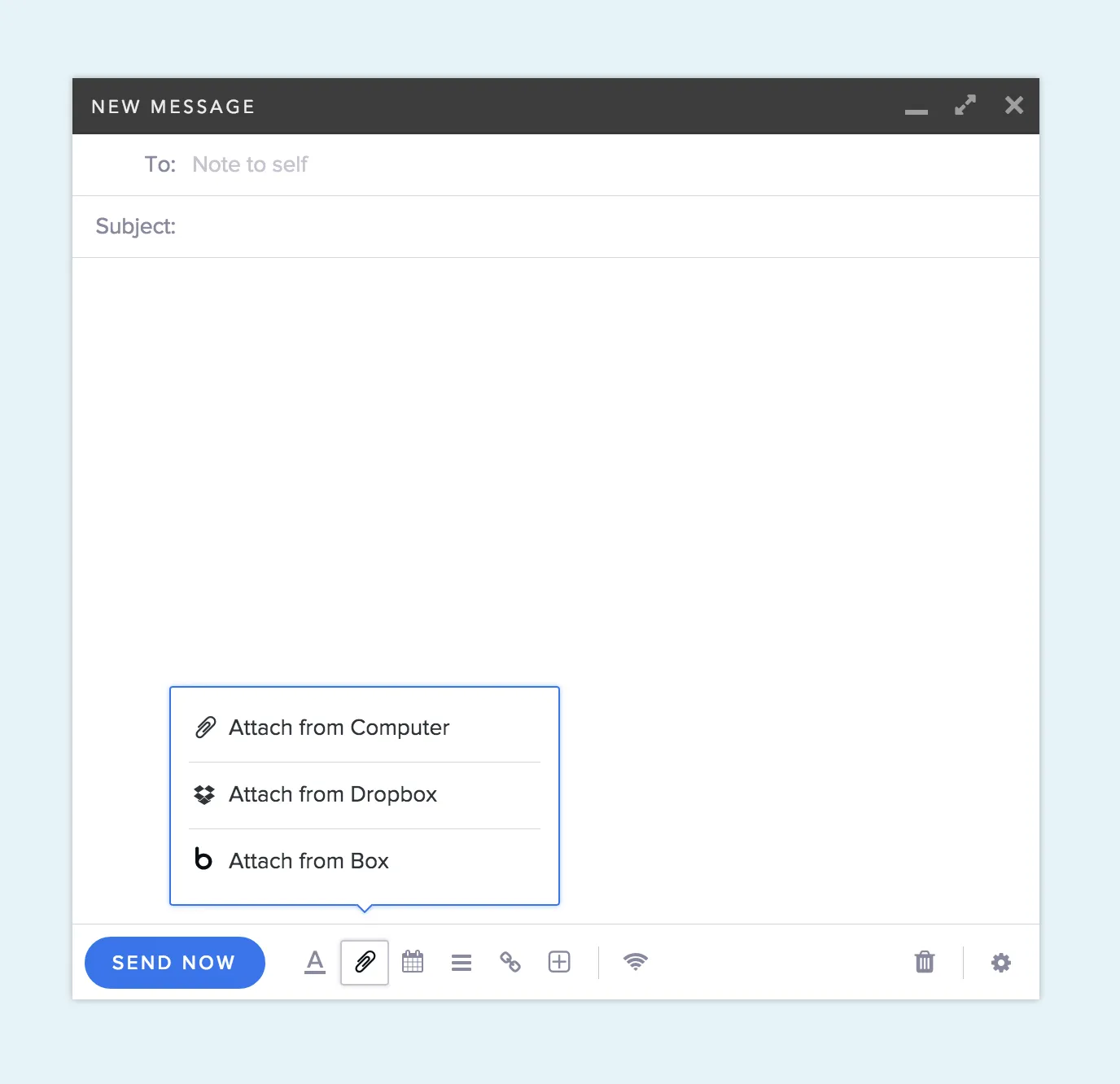
Alternatively, scroll over the paperclip at the bottom of the compose window, and choose the location from which you’d like to upload an attachment. You can upload from your computer, Dropbox, or Box.
If you attach a PDF, you’ll see a special preview of that attachment. A progress bar will let you know that the PDF is being uploaded, then you’ll see a slideshow of the pages in your PDF directly in email.
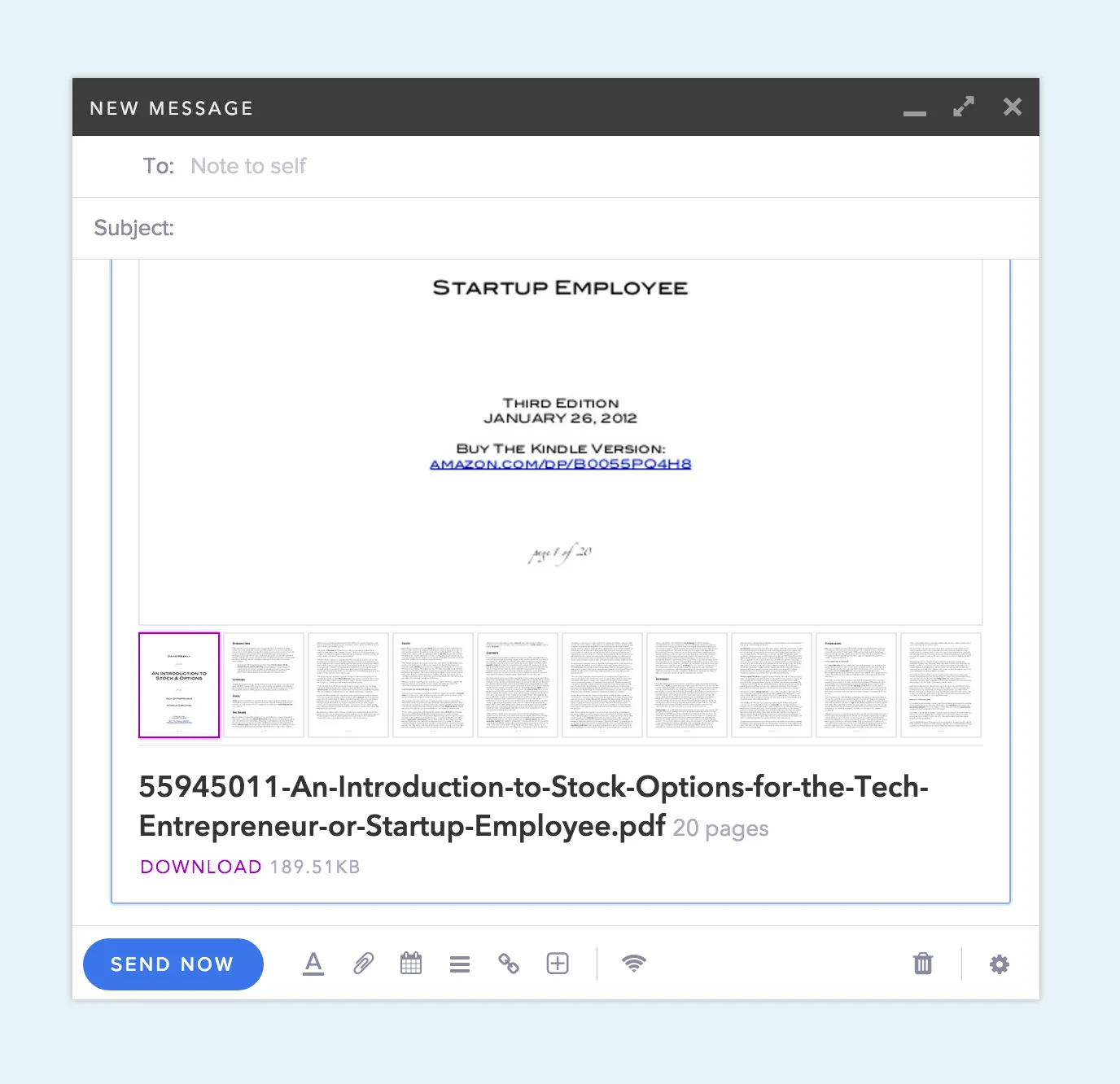
When your recipient opens the email, they can click on those previews to immediately download the associated attachments.
Install for free to try it out right now. Attachment Previews are another example of how Mixmax makes email more powerful for professionals. If you have thoughts on how we can boost your productivity or supercharge your email, we’d love to hear from you. Reach out to us at hello@mixmax.com and follow us @Mixmax.
Frequently Asked Questions
What do utility poles have to do with my sales emails? It’s a metaphor for a hidden problem. A utility pole is a complex system we ignore until it fails. Similarly, standard email attachments create a clunky, invisible process for your prospects. They have to download a file, find it, and open it separately. This friction can stall a deal, and you have no idea if they even looked. We’re fixing that hidden problem.
Why is sending a regular attachment a bad thing? Sending a standard attachment is like sending your proposal into a black hole. You lose all visibility the moment you hit send. You don’t know if your prospect opened it, who they shared it with, or if they got stuck on a specific page. This lack of information forces you to follow up blind, guessing whether they’re engaged or not.
How does Mixmax make sending attachments better? Instead of just a file name, Mixmax displays a visual preview of your document directly in the email. Your recipient can see the content without downloading anything. More importantly, you get real-time signals when they view the document. You know exactly who opened it and when, turning a guess into a clear signal of interest.
How does knowing who viewed my attachment help me sell? It tells you who to focus on. When you see that a prospect has viewed your proposal three times in an hour, that’s a strong signal to follow up immediately. If they haven’t opened it after two days, that’s a different signal. This information helps you prioritize your time on deals that are actually moving forward.
Does this only work with cloud storage like Dropbox? No, it works with files from your computer, too. You can drag and drop a PDF from your desktop directly into your email compose window, or you can connect your Dropbox or Box accounts. Either way, you get the same visual preview and engagement tracking.
Key Takeaways
- Traditional attachments slow down deals: Forcing prospects to download and open files creates small but critical delays. This friction can be enough to kill a deal’s momentum right when it matters most.
- Show your work, don’t just attach it: Displaying documents directly in your email makes it effortless for prospects to see what matters. They can view proposals, floor plans, or case studies instantly, without extra clicks.
- Send the right document every time: Previewing attachments before you send gives you peace of mind that you’re sharing the correct version. This prevents embarrassing mistakes and keeps your communication professional.