You’ve designed a beautiful HTML email, but pasting it into Gmail turns your code into a jumbled mess. It’s a frustrating roadblock when you’re trying to maintain brand consistency. The problem? Gmail’s compose box doesn’t play nice with raw code. This guide is here to help. We’ll show you exactly how to create an HTML email in Gmail using a few simple workarounds. You’ll learn the right way to Gmail compose HTML email so your messages always look professional and polished.
Mixmax brings many features to your Gmail experience, and today we’re adding one more: the ability to add custom HTML to any Gmail message!
There are a number of use cases for why you want to use HTML in your email. For instance, you may want to insert content from an external source, code your own content, or even add a special signature. If that’s the case, Custom HTML is perfect for you.
What a Great HTML Email in Gmail Looks Like
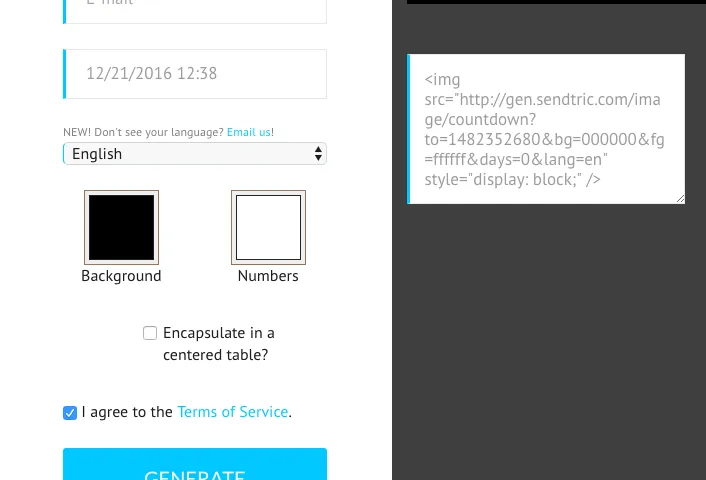
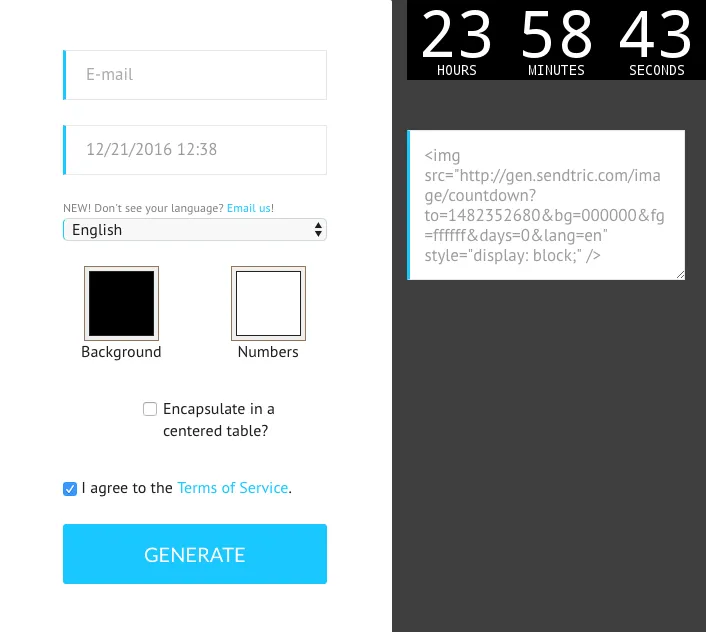
How to insert a third party countdown timer using Custom HTML:
- Go to third party site Sendtric and create a custom countdown timer. Copy the provided HTML.
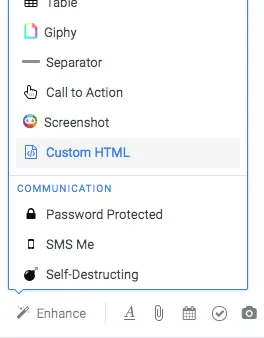
- In your Mixmax compose window, go to Enhance in Mixmax —> Custom HTML:
- Paste the HTML from Sendtric into the editor:
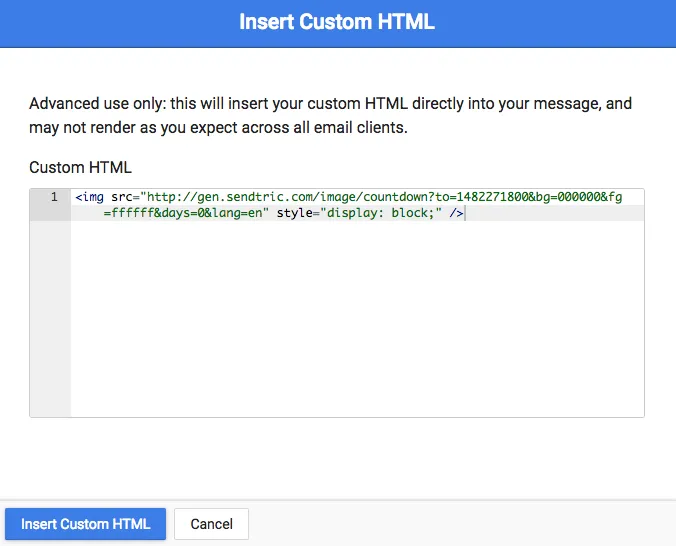
- Click Insert Custom HTML
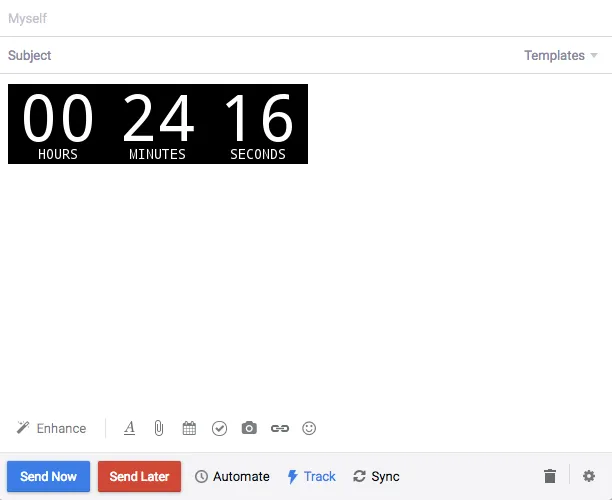
There you have it. Now it’s your turn!
Keep in mind, only HTML is supported (no Javascript!) and it’s up to you to make sure the HTML renders across all email clients. When inserting content it’s always a good idea to test across email clients using a third party testing tool.
Additional use cases:
- Importing a third party email signature (e.g. Wisestamp)
- Hand-coding custom HTML layouts
- Importing third party widgets from website builders
Pretty slick huh? If you have an idea for awesome custom HTML, email us at hello@mixmax.com and follow us @Mixmax.
Why You Can’t Directly Edit HTML in Gmail
If you’ve ever tried to paste a block of HTML code into a Gmail compose window, you’ve probably been disappointed by the result. Instead of a beautifully formatted email, you just see the raw code sitting there as plain text. This happens because Gmail’s compose window is designed as a rich text editor, not a code editor. It’s built to handle things like bolding text, changing colors, and adding images through a user-friendly interface, but it doesn’t have a native function to interpret and render HTML code that you paste directly. It treats that code just like any other text you’d type.
The Core Problem: No Native HTML Editor
The main issue is that Gmail lacks a built-in HTML editor or a “code view” button that you might find in other platforms like a blog editor or a dedicated email marketing service. Without this feature, there’s no direct way to tell Gmail, “Hey, this isn’t just text—it’s code that you need to render.” This limitation is in place for a variety of reasons, including security and ensuring a consistent user experience. As a result, if you want to send a custom HTML email, you have to rely on a few clever workarounds to get your formatted content to display correctly for your recipients.
How to Send an HTML Email in Gmail: 3 Methods
Since you can’t just paste your code and hit send, you’ll need to use a workaround to get your HTML email into Gmail. The good news is that there are a few different ways to do this, ranging from a simple copy-and-paste trick to more technical approaches. The right method for you will depend on your comfort level with code and how often you plan on sending custom emails. We’ll walk through three of the most common techniques, so you can choose the one that best fits your workflow and gets your message delivered just the way you designed it.
Method 1: The Copy and Paste Technique
This is by far the simplest and most popular method for sending a one-off HTML email. The trick is to not copy the code itself, but to copy what the code *looks like* when it’s rendered. First, open your HTML file in a web browser like Chrome or Firefox. You should see your fully formatted email, complete with images, custom fonts, and layout. From there, simply select everything on the page (you can use Ctrl+A or Cmd+A), copy it, and then paste it directly into the Gmail compose window. Gmail will do its best to interpret the copied formatting and display it correctly.
Pros and Cons of Copying and Pasting
The biggest advantage of this method is its simplicity. It’s fast, requires no special tools or browser extensions, and you don’t need any technical knowledge to pull it off. However, it’s not without its drawbacks. The main issue is a lack of reliability; you can’t be entirely sure how Gmail will interpret the pasted content, and it might look different than it did in your browser. It’s also difficult to make quick edits once the content is pasted, and you can’t save the design as a reusable template within Gmail, making it less than ideal for recurring campaigns.
Method 2: Using Google Workspace Layouts
If you have a Google Workspace account (the paid version of Gmail for businesses), you have access to a built-in feature called Layouts. This is Google’s no-code solution for creating professional, branded emails without ever touching a line of HTML. You can choose from a selection of pre-made layouts, customize them with your own colors, logos, and images, and then save them for future use. It’s a fantastic option if you want a polished look but aren’t comfortable with coding or using third-party tools. You can find this feature by clicking the “Layouts” icon in the compose window toolbar.
Method 3: Chrome Developer Tools for Advanced Users
For those who want more precise control and aren’t afraid to get a little technical, you can use your browser’s developer tools to inject HTML directly into the compose window. In Chrome, you can right-click inside the compose box and select “Inspect.” This opens a panel showing the webpage’s code. From there, you locate the HTML element for the email body, right-click it, and choose “Edit as HTML.” You can then delete the existing content and paste your own custom HTML code. This method gives you the most control but is also the most complex and can be intimidating if you’re not familiar with developer tools.
Best Practices for Designing HTML Emails for Gmail
Getting your HTML into Gmail is only half the battle; you also need to make sure it’s designed to look great once it arrives in someone’s inbox. Email clients, and Gmail in particular, have their own set of rules and quirks for rendering HTML that are very different from modern web browsers. Following a few key best practices will help you avoid common formatting issues and ensure your email appears exactly as you intended, no matter what device your recipient is using. From styling with CSS to structuring your layout, these tips will help you craft a reliable and professional-looking email.
Use Inline or Embedded CSS for Styling
When you build a website, you typically put all your styling rules in an external CSS stylesheet. Unfortunately, that approach doesn’t work for email. For security and rendering consistency, Gmail and most other email clients will ignore or strip out links to external stylesheets. To make sure your styles are applied correctly, you need to either use embedded CSS (placing your styles in a `
Frequently Asked Questions
Why does my HTML code just show up as text when I paste it in Gmail? This happens because the standard Gmail compose window is a rich text editor, much like a simple word processor. It’s designed to understand formatting like bold text or different colors, but it doesn’t know how to interpret and render raw HTML code. It simply sees the code as a block of plain text, which is why you need to use a workaround to display the final, visual version of your email.
My images are showing up as broken icons. What did I do wrong? This is a common issue and usually means the images aren’t hosted correctly. For an image to appear in an HTML email, it must be uploaded to a public web server, and you must use its full, public URL in your code. You can’t link to an image file stored on your computer’s hard drive. Double-check that your image links are correct and that the server they’re on is publicly accessible.
Is it okay to use my company’s custom brand font in my email? While it’s tempting to use a custom font for brand consistency, it’s generally not a good idea for email. Most email clients, including Gmail, only support a small set of universal, “email-safe” fonts like Arial, Helvetica, and Georgia. If you use a font the recipient doesn’t have installed, their email client will substitute it with a default font, which can disrupt your entire layout.
What’s the most reliable way to make sure my email looks good for everyone? The key is to build your email using proven, compatible methods and then test it thoroughly. For design, that means using tables for your layout structure and inline CSS for styling, as these are the most widely supported techniques. Before you send your email to your list, always use a third-party testing tool to preview how it will look across different email clients and devices.
I need to send this email design often. Is there an easier way to reuse it? Manually inserting HTML every time isn’t practical for recurring sends. The manual methods, like copying and pasting, don’t allow you to save the design as a reusable template within Gmail. For efficient and scalable outreach, using a platform with AI-powered workflows is the best approach. This allows you to save approved HTML designs as templates and automate sending them, which saves a significant amount of time and ensures consistency.
Key Takeaways
- Use a workaround to insert HTML: Gmail’s compose window won’t render raw code, so you need another method. You can either copy and paste the rendered design from a browser or use a dedicated tool to inject your HTML directly into the email.
- Design for the inbox, not the web: Email clients have unique rendering rules, so what works on a website might break in an email. To ensure your design looks right everywhere, use tables for layouts, apply styles with inline CSS, and stick to email-safe fonts.
- Automate HTML emails to scale your outreach: Manually sending custom emails isn’t practical for sales teams. Use a platform with AI-powered workflows to send personalized, on-brand HTML emails automatically, which saves time and helps your team focus on closing deals.