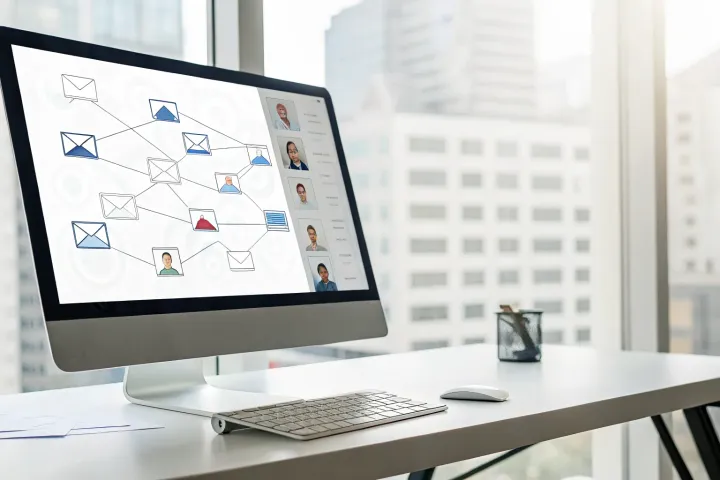
While most sales teams struggle with 2-3% reply rates, top performers are seeing replies over 50%. The difference isn’t luck; it’s a system. They have figured out how to personalize cold emails at scale without losing volume, and it’s a skill you can learn. This isn’t about finding one magic template. It’s about building a repeatable process that uses segmentation, modular content, and real-time engagement signals to make every email feel one-to-one. This guide will deconstruct that process, showing you the exact steps, tools, and templates needed to dramatically increase your own reply rates and build a predictable pipeline.
Key Takeaways
- Personalize for patterns, not just people: Build a scalable system by segmenting your audience into smart groups based on industry, role, or company stage. This allows you to write one relevant message that speaks to the shared challenges of an entire group.
- Adopt the 70/30 template rule: Make 70% of your email a core message that applies to your target segment. The final 30% is your specific, human touch: a single, relevant detail that shows you did your research and earns the reply.
- Measure what matters and automate the rest: Focus on metrics that signal real engagement, like reply rates and meetings booked, not just opens. Use AI-powered workflows to handle repetitive research and data entry, freeing you to focus on the human part of selling.
Why Personalize Cold Emails?
Sending cold emails can feel like shouting into the void. You spend hours crafting messages and building lists, only to see your reply rates flatline. The reason is simple: generic outreach doesn’t work anymore. Your prospects’ inboxes are crowded, and their attention is scarce. Personalization is no longer a nice-to-have. It’s the only way to cut through the noise, start a real conversation, and book the meetings you need to hit your number.
The Problem with Generic Outreach
Your prospect receives around 121 emails every day. That gives your message about two seconds to make an impact before it’s archived or deleted. A generic, one-size-fits-all email simply doesn’t stand a chance. Even with a decent open rate, data shows that only one in fifty recipients will reply to a non-personalized message. That’s a 2% reply rate. It means you’re sending 98 emails that get ignored for every one that starts a conversation. This isn’t just inefficient; it’s a recipe for burnout and missed quotas. Blasting out generic templates is a volume game where the house always wins.
How Personalization Affects Reply Rates
For cold outreach, the only metric that truly matters is the reply rate. It’s the most reliable engagement metric because it signals a real human is on the other end. Unfortunately, getting that reply is getting harder. Recent industry analysis shows average reply rates are falling, hovering between 5% and 10% for most B2B teams. This is where personalization makes a measurable difference. It’s the single most effective way to get your emails noticed and answered instead of being ignored. While the industry struggles with single-digit replies, top-performing reps using personalized outreach see reply rates over 50%. That’s the difference between struggling to fill your pipeline and consistently exceeding your goals.
What is “Personalization at Scale”?
Volume vs. Personalization: A False Choice
Sales reps often feel stuck between two options: send 100 generic emails and hope for a few replies, or spend all day writing 10 perfect, custom messages. This is a false choice. The right tools let you send relevant emails in high volume, without sacrificing quality for speed.
Modern sales platforms use automation to handle the repetitive parts of outreach. This frees you up to focus on the human touch. The trick is to use these tools in a way that still feels personal, not robotic. With AI-powered workflows, you can automatically pull in relevant details for each prospect, turning a generic template into a message that lands. It’s not about choosing volume or personalization; it’s about having both.
The Goal: Systematic Personalization
Personalizing at scale doesn’t mean writing a unique, handcrafted email for every single person on a massive list. That isn’t scalable. The real goal is to build a system for personalization. This means you personalize for patterns, not just for individual people.
Start by segmenting your leads into smart groups. You can group them by industry, the technology they use, whether they are hiring, or if they recently got funding. Then, you can find meaningful personalization points that apply to that entire group, like a recent company achievement or a shared challenge. This creates a repeatable process where you can send hundreds of emails that feel one-to-one, because they speak directly to a specific, shared context.
How to Segment Your Audience
Personalization at scale starts with segmentation. You can’t write a unique email for every single prospect on a list of thousands, but you can write a highly relevant email for a few distinct groups. Breaking your audience into smaller, targeted segments is the foundation for sending emails that feel personal, even when sent in bulk. This isn’t about finding a magic trick; it’s about creating a system. Instead of one massive, generic list, you create several smaller, specific ones. This allows you to tailor your message to the problems each group actually faces, dramatically increasing your chances of getting a reply.
The goal is to make your outreach feel like a one-to-one conversation, even when it’s one-to-many. By grouping prospects with shared characteristics, you can craft messaging that resonates deeply without writing every email from scratch. It’s the most efficient way to improve your reply rates and book more meetings. Think of it as building a playbook. Each segment gets its own set of plays, designed to speak directly to their needs. This approach respects your prospect’s time and shows you’ve done your homework, making it the smartest way to fill your pipeline.
Segment by Industry
You wouldn’t sell a car the same way to a parent of five as you would to a college student. The same logic applies to B2B sales. A tech startup has different challenges than a hospital, which has different challenges than a construction firm. Segmenting by industry allows you to tailor your message to address specific pain points, regulations, and business goals. Use the language of their industry. Reference trends they care about. Show them you understand their world, and they’ll be far more likely to listen to what you have to say. This simple step moves your email from generic spam to a relevant business proposal.
Target by Role and Seniority
The CEO doesn’t care about the same things as the front-line manager. A VP of Sales is measured on revenue growth and team performance, while an individual account executive is focused on hitting their personal quota. Sending the same message to everyone in an organization is a waste of time. Instead, sort your contacts by their job title and seniority. For executives, focus on high-level outcomes: ROI, strategic advantage, and market share. For managers and directors, focus on team productivity, efficiency gains, and making their job easier. This ensures your value proposition directly aligns with what each person is paid to care about.
Filter by Company Size and Stage
A 10-person startup trying to find product-market fit has completely different needs than a 500-person company focused on scaling operations. Use firmographic data like employee count, revenue, and funding stage to create another layer of segmentation. A Series A company might respond to messaging about agility and finding an early edge. A larger, more established company will care more about security, integrations, and the ability to support a large team. Understanding a company’s stage helps you frame your solution in a way that solves their most immediate problems and aligns with their growth objectives.
Use Behavior and Engagement Signals
The most powerful segments are based on what prospects do, not just who they are. A prospect who opens your email five times in an hour is telling you something. So is the one who clicks a link to your pricing page. These are the people you need to follow up with immediately. Using a tool with real-time engagement signals allows you to create dynamic segments of your most interested buyers. You can build AI-powered workflows that trigger follow-ups based on specific actions, ensuring you connect with warm leads at the exact moment they’re thinking about you. This turns your outreach from a guessing game into a data-driven process.
What Tools Make Personalization Scalable?
Personalization at scale sounds like a contradiction. It’s not. It’s about using the right tools to do the heavy lifting, so you can focus on the human part of selling. The goal isn’t to fake a one-to-one connection with a thousand people. It’s to build a system that uses real data to make every message relevant. This means moving beyond basic mail merge and using a sales execution platform that brings your data, outreach, and AI together in one place, right where you already work. When your tools live in your inbox, personalization stops being a separate, time-consuming task and becomes part of your natural workflow.
The right tech stack doesn’t just send emails faster; it makes your entire outreach process smarter. It pulls data from your CRM, tracks engagement signals in real time, and even suggests what to do next. When your tools work together, you can stop wasting time on manual research and data entry. Instead, you can spend your time building relationships and closing deals. The key is to find tools that work inside your inbox to eliminate friction and make personalization a natural part of your day. This is how you achieve both volume and quality without sacrificing either, turning a high-effort task into a high-impact system.
AI-Powered Workflows
This is where personalization truly scales. Modern AI isn’t just about suggesting a better subject line. It’s about building a system that can research a prospect, analyze their LinkedIn profile or company news, and draft a unique email based on that data. Think of it as having a research assistant for every contact on your list. AI-powered workflows can automatically find relevant talking points, turning a generic template into a message that shows you’ve done your homework. This frees you from the manual, time-consuming research that makes scaling feel impossible.
Dynamic Fields
Dynamic fields, or personalization tokens, are the building blocks of scalable personalization. You’re likely familiar with the basics, like and {}. But you can go much deeper. Good sales engagement tools let you insert custom fields for things like a prospect’s title, a recent company achievement, or a shared connection. Using these dynamic variables shows you see them as more than just a name on a list. It proves you have a genuine interest and helps your message stand out from the flood of generic emails in their inbox.
Multichannel Sequences
Your prospects don’t just live in their email inbox. They’re on LinkedIn, they answer their phone, and they interact with your brand in different ways. A multichannel approach uses sequences to automate outreach across email, social media, and phone calls. Instead of just sending a series of emails, you can build a sequence that includes a LinkedIn connection request, a follow-up email, and a task to make a call. Tools that manage multichannel sequences ensure you’re reaching prospects in the right place at the right time, making your outreach feel more persistent and personal.
Real-Time CRM Sync
Your CRM is your source of truth. But if it’s not perfectly in sync with your sales tool, you’re personalizing with outdated information. A real-time, bidirectional sync is non-negotiable. It ensures that every email sent, every link clicked, and every meeting booked is automatically logged in your CRM. This gives you a complete, up-to-the-minute view of every interaction. With strong CRM integrations, you avoid embarrassing mistakes like reaching out to a customer who already has an open support ticket. It also makes your reporting more accurate, so you can actually measure what’s working.
How to Build Scalable, Personalized Templates
Great templates are the engine of personalization at scale. This isn’t about finding one perfect email and sending it to everyone. It’s about building a system of templates that you can adapt for different audiences without starting from scratch every time. The goal is to create a repeatable process that saves you hours of manual work while still making each prospect feel like you’re talking directly to them. When you get this right, you can send hundreds of targeted emails a day without sacrificing the quality that actually gets a response. It’s how top reps consistently hit their numbers.
Think of your templates as a starting point, not a final script. A well-designed template gives you a solid structure, so you can focus your energy on the parts that matter most: the custom details that grab attention and get a reply. With the right framework, you can stop choosing between volume and personalization and start doing both well. This is where you move from guessing what works to building a predictable pipeline, right from your inbox. The best part is that these templates live where you work, inside Gmail, so you’re not switching between apps to get your outreach done.
Create a Dynamic Framework
Stop trying to personalize for individuals when you’re working with a large list. Instead, personalize for patterns. Build your template framework around common traits that a group of prospects shares. This could be their industry, their role, or a specific challenge they all face. For example, you might create a template framework specifically for VPs of Sales at Series B tech companies.
This approach allows you to write a core message that resonates with the entire segment. The email feels relevant because it speaks to their specific world, even before you add a single custom detail. This is the foundation of your template. It ensures that even the “generic” part of your email is still highly targeted.
Write Modular Content Blocks
Adopt a 70/30 structure for your emails. About 70% of the message is your core value proposition that applies to the entire segment you’re targeting. This is the part you can write once and reuse. It explains who you are, what you do, and why it matters to them.
The other 30% is where you add a specific, personalized touch. This is usually a single line or two that connects directly to the prospect or their company. It’s the part that shows you did your homework. Using multichannel sequences with modular blocks lets you build out your core message and then quickly insert that custom 30% for each person, making your outreach both scalable and personal.
Customize Your Subject Lines
Your cold email has about two seconds to make an impression. A generic subject line like “Quick question” or “Checking in” is a fast track to the trash folder. Even with a great email inside, a bad subject line means it will never get read. Your subject line needs to earn the open by being relevant and intriguing.
Instead of using a one-size-fits-all subject line, customize it with a detail that connects to the prospect. Including their company name, referencing a competitor, or mentioning their role are all simple ways to show the email is meant for them. For example, “[Prospect Company] + Mixmax” is simple, direct, and far more effective than a generic opener.
Template Your Opening Lines
The first sentence of your email must prove that you’re not a robot. This is your chance to show you’ve done your research. Include details like the person’s name, job title, or recent company news to make the email feel like it was written just for them.
Create a few go-to opening line templates you can quickly customize. For example:
- “Saw your recent LinkedIn post about [Topic] and wanted to reach out.”
- “Congrats on the recent [Company Achievement, e.g., funding, product launch].”
- “I noticed you’re hiring for [Role], which suggests you’re focused on [Goal].”
These templated openers, powered by AI-powered workflows, give you a structure to follow, so you can quickly add a human touch without slowing down.
How to Research Quickly at Scale
Personalization requires research. But spending 30 minutes digging into a single prospect’s history isn’t scalable if you have a quota to hit. The goal isn’t to become a private investigator for every contact on your list. It’s to build a system that surfaces the most relevant information quickly, so you can focus on connecting with the human on the other end.
The key is to stop thinking of research as a purely manual, one-off task. Instead, treat it like an assembly line. You need efficient processes for finding information, systems for batching your work, and automation to handle the repetitive parts. This approach lets you find the golden nuggets of personalization for dozens of prospects in the time it used to take you to research a few. It’s about focusing your human effort where it matters most: connecting their specific problem to your solution. The following methods show you how to build that research engine. You’ll learn how to send emails that feel one-to-one, at a one-to-many scale, without sacrificing your outreach volume or your sanity. It’s about making every minute of research count.
Efficient Prospect Research
Effective research isn’t about finding everything; it’s about finding the right things fast. True personalization means doing deep research by reading their LinkedIn posts, understanding company news, and finding their specific problems. To do this efficiently, limit your search to a few high-impact sources. Spend five minutes looking at a prospect’s recent LinkedIn activity, their company’s press releases, and any relevant job postings.
Did they just share an article about a challenge you can solve? Is their company hiring a team that would use your product? These are the timely, relevant hooks that turn a generic email into a compelling conversation starter. This targeted approach gives you potent personalization material in minutes, not hours.
Batch Your Research Tasks
Constantly switching between researching, writing, and sending emails kills your focus and wastes time. A more effective method is to batch similar tasks together. Instead of working on one prospect from start to finish, break the process down. Dedicate a 30-minute block solely to research. Open tabs for 10 different prospects and gather your personalization points for all of them.
Once your research is done, dedicate the next block to writing the opening lines for those 10 emails. This assembly-line approach minimizes context switching and helps you get into a state of flow. As one rep on Reddit noted, once you have your segments, you can create messages so “you don’t have to redo your research every time.” You’re simply executing one focused task at a time, which is faster and less mentally draining.
Automate Social Signal Monitoring
The best research happens when you don’t have to do it manually. Instead of actively searching for news, set up systems to have relevant signals sent directly to you. You can use tools to monitor when a target account is mentioned in the news, hires a key executive, or posts about a specific topic on social media. This turns research from an active hunt into a passive alert system.
AI tools can automatically find and analyze this information for you. With AI-powered workflows, you can even trigger a task for a rep to follow up the moment a prospect shows intent. This ensures you’re reaching out with the most relevant context at exactly the right time, without spending hours scrolling through news feeds.
Use Data Enrichment Tools
Your CRM is only as good as the data inside it. Manually finding a company’s size, industry, funding stage, or tech stack for every lead is a massive time sink. Data enrichment tools automate this process. They integrate with your CRM and automatically append critical information to your contact and account records.
This gives you the raw material for deep personalization at scale. You can use this data to create highly specific audience segments, like “Series B fintech companies in New York using HubSpot.” AI assistants can help find these common traits and suggest how to group your leads. With enriched data, your reps can stop wasting time on manual lookup and start building more relevant, targeted campaigns.
How to Maintain Quality as You Scale
Sending more emails doesn’t have to mean sending worse emails. The key is to stop thinking about personalization as a manual, one-off task and start treating it like a system. As you increase your outreach volume, you need a process to ensure every email still feels relevant and human. Without a system, quality is the first thing to go. Your reply rates drop, your team gets discouraged, and you end up with a lot of activity but no results.
Building a quality control system isn’t complicated. It just requires you to be intentional about who you’re targeting, how you measure success, and how you learn from your results. It’s about creating a repeatable process that ensures your outreach stays sharp, whether you’re emailing 50 prospects or 500. This system has three core parts: establishing clear checkpoints, scoring your efforts, and creating a feedback loop for constant improvement.
Establish Quality Checkpoints
First, not all leads are created equal, so your personalization efforts shouldn’t be either. Start by segmenting your list. Group prospects by industry, role, company size, or the technology they use. This allows you to create templates that feel personal to an entire group without writing every email from scratch. For example, you can reference a common challenge for VPs of Marketing at Series B fintech companies, and it will resonate with everyone in that segment.
Then, create tiers for your outreach. Save your deep, time-intensive research for your top 10-20 highest-value accounts. For these prospects, you’ll read their LinkedIn posts and listen to their podcast interviews. For everyone else, a solid, segment-based personalization is enough to stand out. You can use AI-powered workflows to manage these different tiers, ensuring the right level of personalization goes to the right prospect automatically.
Score Your Personalization Efforts
To make quality less subjective, create a simple scoring system. This helps your team understand what “good” looks like and provides a clear standard. For example, a Level 1 personalization might just be using a first name. Level 2 adds their company name. Level 3 references a recent company announcement or funding round. Level 4 includes a specific insight about a piece of content they wrote. Aim for a Level 3 or 4 on your top-tier accounts.
The best way to measure if your personalization is working is to track your human reply rate. Forget vanity metrics. You want to know what percentage of your emails get a real reply from a person, excluding bounces and auto-responders. This number tells you if your message is actually connecting. Real-time engagement signals can show you who is opening and clicking, helping you focus on the prospects who are most interested.
Create a Testing and Optimization Loop
Your outreach strategy should never be static. You need a constant feedback loop: test, measure, learn, and repeat. Keep a close eye on your key metrics, including deliverability, open rates, and most importantly, your reply rate. For most B2B outreach, a reply rate between 5% and 10% is a strong signal that your messaging is effective.
Use your data to diagnose problems. If your open rate is below 20% and your reply rate is also low, your subject line or your email list is likely the issue. If your open rate is high but your reply rate is low, the problem is in your email body. This simple diagnostic process turns data into action. It allows you to systematically test different elements and improve your outreach engagement over time.
Common Mistakes That Kill Personalization
Personalization is the fastest way to get a reply. But bad personalization is worse than no personalization at all. It signals that you’re willing to use shortcuts, that you don’t respect the buyer’s time, and that you’re just another email clogging their inbox. The goal is to build a system that feels one-to-one, even when you’re reaching out to hundreds of prospects.
This requires avoiding a few common traps. Many reps, with the best intentions, end up sending emails that feel generic, lazy, or just plain creepy. Getting personalization right at scale means knowing what not to do. It’s about finding the right balance between efficiency and genuine connection, ensuring every email you send has a reason to exist and a reason to be opened.
The “Creepy” Line: Over-Personalization
There is a fine line between relevant and creepy, and crossing it is the quickest way to get your email deleted. Referencing a prospect’s recent vacation photos or their child’s soccer game doesn’t build rapport; it builds discomfort. True personalization is about professional relevance, not personal surveillance.
Stick to one strong, recent, and public piece of information. A comment on a LinkedIn post they wrote last week is great. A mention of their university from 20 years ago is not. The best cold emails use a single, specific reference to show you’ve done your homework, not that you’ve been digging through their entire digital history. Keep it professional, keep it recent, and prove you’re paying attention to their work, not just their life.
The Fake Personalization Trap
Dropping and Mixmax, Inc. into a generic template is not personalization. It’s a mail merge, and every buyer can spot it from a mile away. This low-effort approach shows you haven’t invested any time in understanding their specific context. It feels disingenuous because it is. People can tell when a message is not genuine, and it immediately erodes any trust you hope to build.
Real personalization goes a layer deeper. It’s about referencing their industry, their specific role, or a recent company event. This shows you understand their world. Instead of just sending a mass email, use multichannel sequences to create multiple touchpoints that add context and show you’re genuinely interested in starting a conversation, not just blasting out templates.
Relying on Sales Clichés
Empty compliments are the enemy of good outreach. Phrases like “I was so impressed by your background” or “Your company is a true leader in the space” are meaningless. They are sales clichés that signal you haven’t done any real research. Because they could be said to anyone, they mean nothing to the person you’re actually emailing.
Personalization is about building trust and rapport. The way to do that is with specificity. Instead of saying you were impressed by their background, mention something specific: “Your post on scaling go-to-market teams from 10 to 50 reps was spot on.” Specificity proves you’ve done the work and gives them a real reason to believe you have something valuable to say.
Forgetting the Goal: Efficiency vs. Customization
Many reps get stuck thinking that personalization at scale means writing thousands of unique, handcrafted emails. That’s not the goal, and it’s not scalable. The real objective is to build a system that delivers highly relevant messages efficiently. The hard work isn’t in writing every email from scratch; it’s in the upfront strategy of segmenting your audience and creating smart, modular templates.
Once you have your segments and messages defined, you can use tools to automatically send emails to new leads that fit your criteria. This is where AI-powered workflows come in. You build the logic once, and the system executes it for you, ensuring the right message gets to the right person without you redoing the research every time. The goal is systematic relevance, not manual customization.
How to Measure Your Results
Personalization is only powerful if you know it’s working. Tracking your results turns outreach from a guessing game into a repeatable system. It’s how you find out which messages land and which get deleted, so you can double down on what works. This isn’t about vanity metrics. It’s about connecting your effort directly to outcomes that matter: conversations started, meetings booked, and deals closed. When you measure correctly, you prove the value of your work and build a predictable pipeline.
Metrics to Track Beyond Opens and Clicks
Opens and clicks are signals, not results. An open means your subject line worked, but it doesn’t mean you started a conversation. For that, track metrics that measure actual engagement. The most important is the reply rate: the percentage of people who hit ‘reply’. A positive or negative response is still a chance to qualify a lead. While a typical B2B reply rate is 5-10%, personalized outreach performs much better. Also, monitor your delivery rate. A low number here means your list needs cleaning or your sending practices need a review.
A/B Test Your Personalized Elements
The fastest way to improve your metrics is to A/B test your emails. Change one element at a time to see what gets a better response. It’s a simple way to let prospects tell you what they want. Start by testing high-impact parts of your email. Test two different subject lines to see which gets more opens. Try two different opening lines to see which earns more replies. You can also test your call-to-action. Does asking for 15 minutes work better than asking if they’re interested? Track the results to build a clear picture of what resonates.
Track the ROI of Your Campaigns
Ultimately, your outreach needs to generate revenue. Tracking return on investment (ROI) connects your daily activities to the bottom line. The most direct pipeline metric is meetings booked. For most cold campaigns, this number is between 0.5% and 2%. To find your true ROI, you must connect outreach to closed deals. This is nearly impossible without a tool that automatically syncs activity to your CRM. When your email platform talks to Salesforce, you can see which sequence led to which meeting, and which meeting turned into a deal. This is where AI-powered workflows become essential. They handle the data entry, so you can see the full journey from first touch to final signature without spending hours on admin.
Build Your Personalization System
One-off personalization efforts don’t scale. The real win comes from building a system that turns personalization from a manual chore into a core part of your sales motion. It’s about creating a defined process that everyone on your team understands and can execute consistently, day in and day out. A good system doesn’t just happen; you have to design it. It’s the difference between a rep occasionally landing a great meeting with a custom email and the entire team reliably booking meetings week after week. This system is your playbook for relevance at scale, ensuring that every prospect feels like they’re receiving a one-to-one message, even when you’re reaching out to hundreds.
This requires three key pillars: a clear workflow, defined team roles, and a commitment to making it better over time. When you have a system in place, personalization becomes a predictable driver of pipeline, not a random act of effort. It’s how top teams consistently outperform the competition. They aren’t just working harder; they’re working smarter within a well-oiled machine. The following steps will help you build that machine for your own team, turning good intentions into repeatable results that you can measure and improve.
Map Out Your Workflow
Your system starts with a clear map. Before you write a single email, you need to know who you’re talking to and what you’re going to say. The first step is to segment your leads carefully. Group prospects by their industry, the technology they use, if they are hiring, or common problems they might have. This isn’t just about sorting contacts; it’s about creating buckets of shared context. Once you have these segments, you can build specific messaging for each one. This map allows you to use AI-powered workflows to automatically send the right sequence to the right person, ensuring every message feels relevant from the start.
Define Team Roles
Personalization at scale is a team effort, and everyone needs to know their part. Without clear roles, you get bottlenecks and inconsistent quality. One person might be responsible for building and segmenting lists. Another could own creating and updating the modular templates. Your reps are then free to focus on the final, human touch: adding a specific observation or connecting a pain point to their research. Use AI tools to handle the heavy lifting of initial research and data gathering. This frees up your team to focus on high-impact activities like strategy and conversation, rather than getting buried in manual tasks. When everyone knows their job, the entire process runs smoothly and efficiently.
Commit to Continuous Optimization
A personalization system is never finished. The best teams treat it like a product that is always evolving. This means you have to commit to continuous optimization. Your goal is to create a feedback loop where you learn from every single interaction. Track the right metrics: deliverability, open rates, reply rates, and most importantly, meetings booked. Use real-time engagement signals to see what’s working and what isn’t. A/B test your subject lines, your opening lines, and your calls to action. When you see a template underperforming, you fix it. When a new approach gets more replies, you double down. This constant refinement is what turns a good system into a great one.
Related Articles
- Personalization vs. Automation: The Right Balance in Sales | Mixmax
- AI Email Drafting: 7 Tools to Accelerate Workflows
- 6 Best Sales Engagement Platforms Reviewed (2026)
- 4 Must-Have Outbound Sales Automation Features
- The Ultimate Guide to Sales Engagement in Salesforce
Frequently Asked Questions
What’s the difference between real personalization and just using mail merge? Mail merge is just dropping a prospect’s name and company into a generic template. Everyone sees through it. Real personalization is about relevance. It proves you understand the prospect’s world by referencing something specific to them, like their industry’s challenges, their role’s responsibilities, or a recent company achievement. It shows you did your homework, which earns you the right to their attention.
How much time should I actually spend researching each prospect? This isn’t about spending 30 minutes on every single person. The key is to create tiers. For your top 10 or 20 high-value accounts, invest five to ten minutes finding a specific, relevant hook from their LinkedIn or company news. For everyone else, rely on your segment-level personalization. A well-written message for “VPs of Sales at Series B tech companies” will feel personal to everyone in that group, requiring no extra research time per email.
Can I really automate parts of this without sounding like a robot? Yes, because you’re not automating the human part. You’re automating the repetitive part. Think of it as a 70/30 split. AI-powered workflows can handle the 70 percent, which is sending the right core message to the right segment. This frees you up to focus on the 30 percent: the one or two sentences of specific, human insight that make the email land. The AI acts as your research assistant, not your ghostwriter.
What’s the single most important metric to track to know if this is working? Your human reply rate. Forget opens and clicks, those are just vanity metrics. The only thing that truly matters is how many real people are writing you back. A reply, even a “no, not interested,” is a signal that your message was relevant enough to warrant a response. This is the number that tells you if you’re starting actual conversations and building a real pipeline.
I’m a team of one. Is building a whole “system” overkill for me? Not at all. A system is actually more critical when you’re on your own. Think of it as your personal playbook for outreach. Creating your own segmented lists and modular templates saves you from starting from scratch every single day. It’s how you stay consistent and efficient without burning out. A good system ensures you spend your limited time on the highest-impact activities.