
You are no ordinary sales rep. If you were, you’d be wading through a sea of listicles full of puzzlingly vague advice like, “Research your buyer” or “Leverage email.” You’re here for proven B2B sales techniques that come from people actually in the trenches. That’s why we’re skipping the fluff. This guide details the exact B2B sales strategies and tactics our own team uses to close complex B2B deals. These are the field-tested approaches that build genuine connections and help you master how to B2B sell with confidence.
No, you’re here because you know that the best B2B selling strategies only come from closers like yourself—not from content writers trying to hit keywords. And so, in writing this article, we asked our entire organization to participate to see if we could distill decades of B2B sales strategies and tactics into eight meaty tips that, unlike all the other top Google results, are worth bookmarking, because this is actually how to close B2B sales. (Even when 96% of sellers now work remote.)
I give you, eight bold B2B sales techniques to help you close the maximum amount of business:
First, What is B2B Sales?
Let’s start with a quick refresher to make sure we’re all on the same page. At its core, B2B (business-to-business) sales is exactly what it sounds like. It’s the process of “selling products or services directly to other businesses, not to individual customers.” Instead of selling a single pair of sneakers to a person, you’re selling a comprehensive software solution to a 100-person company. This distinction is crucial because it changes everything about the sales process, from the length of the conversation to the number of people you need to convince. It’s a different league with its own set of rules, challenges, and, most importantly, strategies for success.
B2B vs. B2C: More Than Just the Customer
The difference between B2B and B2C (business-to-consumer) goes far beyond the target audience. B2C sales are often quick, driven by emotion, and involve a single decision-maker. Think about buying a coffee—it’s a fast, simple transaction. In contrast, “B2B sales cycles are longer, involve many decision-makers, focus on business goals and return on investment (ROI), and need custom solutions.” You’re not just selling a product; you’re selling a long-term partnership that needs to prove its financial worth. This requires a more strategic, patient, and consultative approach, as you’re navigating a complex web of corporate needs and personalities to get the deal done.
Understanding Longer Sales Cycles and Multiple Decision-Makers
So, why do B2B deals take so long to close? It’s because you’re rarely selling to just one person. In fact, research shows that “a typical B2B buying decision involves about 7 different people making choices.” You have the end-user who cares about features, the IT manager who worries about integration, the finance director who scrutinizes the budget, and the executive who needs to see the big-picture ROI. Each person has their own priorities and objections. Your job is to build consensus among this buying committee, which means understanding each stakeholder’s unique pain points and demonstrating how your solution addresses them all. This process of alignment and approval is what extends the sales cycle from days to months.
The Importance of a Formal Sales Strategy
You can’t navigate the complexities of B2B sales by just winging it. A well-defined sales strategy is your playbook for success. According to experts, “a good sales strategy gives your team a clear roadmap. It helps them know what to focus on, move customers through the sales process smoothly, build strong relationships, and ultimately make more money and grow the business.” Without a formal strategy, your team is just a group of individuals doing their own thing. With one, you have a coordinated force moving in the same direction, using the same messaging, and following a proven process to turn prospects into loyal customers. It provides the structure needed for consistent, scalable growth.
Core Components of Your Sales Plan
A strong sales strategy is built on several key pillars. First, you need a crystal-clear Ideal Customer Profile (ICP) to know exactly who you’re targeting. Next, you need defined goals and KPIs to measure success. A documented sales process is also essential, outlining the specific stages a lead moves through from initial contact to a closed deal. Finally, you need robust sales enablement, which means “giving your sales team the right content, training, and technology to help them sell better and faster.” This includes everything from case studies and battle cards to powerful tools with AI-powered workflows that automate repetitive tasks and let reps focus on what they do best: selling.
Choosing a Growth Model: Sales-Led vs. Product-Led
Your overall company approach to growth will heavily influence your sales strategy. Generally, businesses follow one of two main paths. The first is sales-led growth, where your sales team is the primary driver of new revenue, actively prospecting and nurturing leads. The second is product-led growth (PLG), where the product itself is the main vehicle for customer acquisition, often through a freemium or trial model. Many companies today use a hybrid model, but understanding your primary growth engine is key. It determines where you invest resources, how your teams are structured, and the role sales plays in the customer journey.
Understanding the Modern B2B Buyer
The B2B buyer has evolved dramatically. They are no longer waiting for a sales rep to provide them with information. Thanks to the internet, they are empowered, educated, and have often made up their minds before you even get on a call. Today, “most B2B customers prefer to do research and buy online.” They expect a seamless, digital-first experience that allows them to find the information they need on their own terms. This shift means your sales strategy can’t just be about outreach; it has to be about creating an informative and accessible online presence that meets buyers where they are.
They Do Their Homework Online
Before a modern B2B buyer ever agrees to a demo, they’ve already read your G2 reviews, checked out your competitors, and consumed your blog content. As Salesforce notes, “modern B2B buyers are digitally savvy and expect personalized, always-on experiences.” They’ve done their homework, and they expect you to have done yours, too. This means your first conversation shouldn’t be a generic pitch. It needs to be a highly relevant, value-driven discussion that acknowledges the research they’ve already done and provides insights they couldn’t find on their own. Your role is to add context and expertise, not just recite features from your website.
The Shift to Trusted Advisor
Since buyers are now armed with more information than ever, the role of the B2B sales professional has fundamentally changed. You are no longer a gatekeeper of product knowledge; you are a consultant and a strategic partner. The goal is to become a trusted advisor who helps the buyer navigate their own complex decision-making process. This is especially true because “B2B relationships often last a long time, so connect personally with the people making decisions.” Building genuine rapport and demonstrating that you understand their business challenges is more important than having a slick pitch. Trust, not persuasion, is the new currency in B2B sales.
Common B2B Sales Methodologies
To operate as a trusted advisor, you need a framework for your conversations. B2B sales methodologies provide just that. Think of them not as rigid scripts, but as different lenses through which you can view a sales opportunity. Each one offers a unique approach to understanding customer needs and positioning your solution effectively. The best sales professionals don’t stick to just one; they have a toolkit of methodologies and know which one to apply based on the customer, the product, and the specific sales situation they’re facing. Let’s look at a few of the most proven approaches.
Account-Based Selling (ABS)
Account-Based Selling, sometimes called Account-Based Marketing (ABM), flips the traditional sales funnel on its head. Instead of casting a wide net and hoping to catch some leads, you start by identifying a small number of high-value target accounts. The strategy involves “treating high-value accounts as a ‘market of one,’ providing hyper-personalized engagement across multiple channels.” Sales and marketing teams work together to create customized campaigns and outreach for each specific account, ensuring every touchpoint is relevant to their unique challenges and goals. It’s a quality-over-quantity approach designed for landing large, complex deals.
SPIN Selling
SPIN Selling is a classic methodology centered on the art of asking the right questions. It’s an acronym that guides the conversation through four key stages: Situation, Problem, Implication, and Need-payoff. You start by asking Situation questions to understand the buyer’s current context. Then, you ask Problem questions to identify pain points. Next, you explore the consequences of those issues with Implication questions to build urgency. Finally, you use Need-payoff questions to help the buyer articulate the value of a solution themselves. This consultative framework is incredibly effective for navigating long and complex sales cycles by helping customers connect the dots on their own.
Solution Selling
Solution Selling is a mindset focused on outcomes, not products. Instead of leading with a list of features, a solution seller acts like a doctor, “diagnosing specific pain points and tailoring recommendations to solve, rather than just pushing products.” The entire conversation is framed around the customer’s challenges. You work to deeply understand their business, identify the root cause of their problems, and then present your product as the specific solution to that pain. This approach positions you as a valuable problem-solver and helps differentiate you from competitors who are simply focused on selling their own wares.
Value-Based Selling
Value-Based Selling takes solution selling a step further by tying everything directly to tangible business results. This methodology requires “focusing entirely on the ROI, efficiency, or revenue gains the buyer will achieve.” Every conversation is centered on quantifiable value. How much money will your solution save them? How much additional revenue will it generate? How will it improve their operational efficiency by a measurable percentage? By framing the discussion around concrete metrics that matter to executives and financial decision-makers, you move the conversation away from cost and toward investment, making your solution a strategic necessity rather than just another expense.
1. Stop Trying to Sell, Start Trying to Help
Prospects expect you to sell them. Surprise them by not. Shock them by telling them to go evaluate competitors. Convey that the last thing you want is for them to purchase and it not work out, because you’ll get dinged. Then, pause.

This B2B sales technique is called a pattern interrupt. (It works on cold calls too.) Most prospects have been primed by a lifetime of high-pressure sales tactics to say things like, “Let me check with my team” to avoid being cornered. But when you sound like a friendly guidance counselor, their defenses don’t go up. They’ll laugh, and even if they don’t take it seriously, they’ll be a lot more honest, which helps a lot with forecasting.
Related Reading: 7 Secrets for Stellar Email Follow-Up
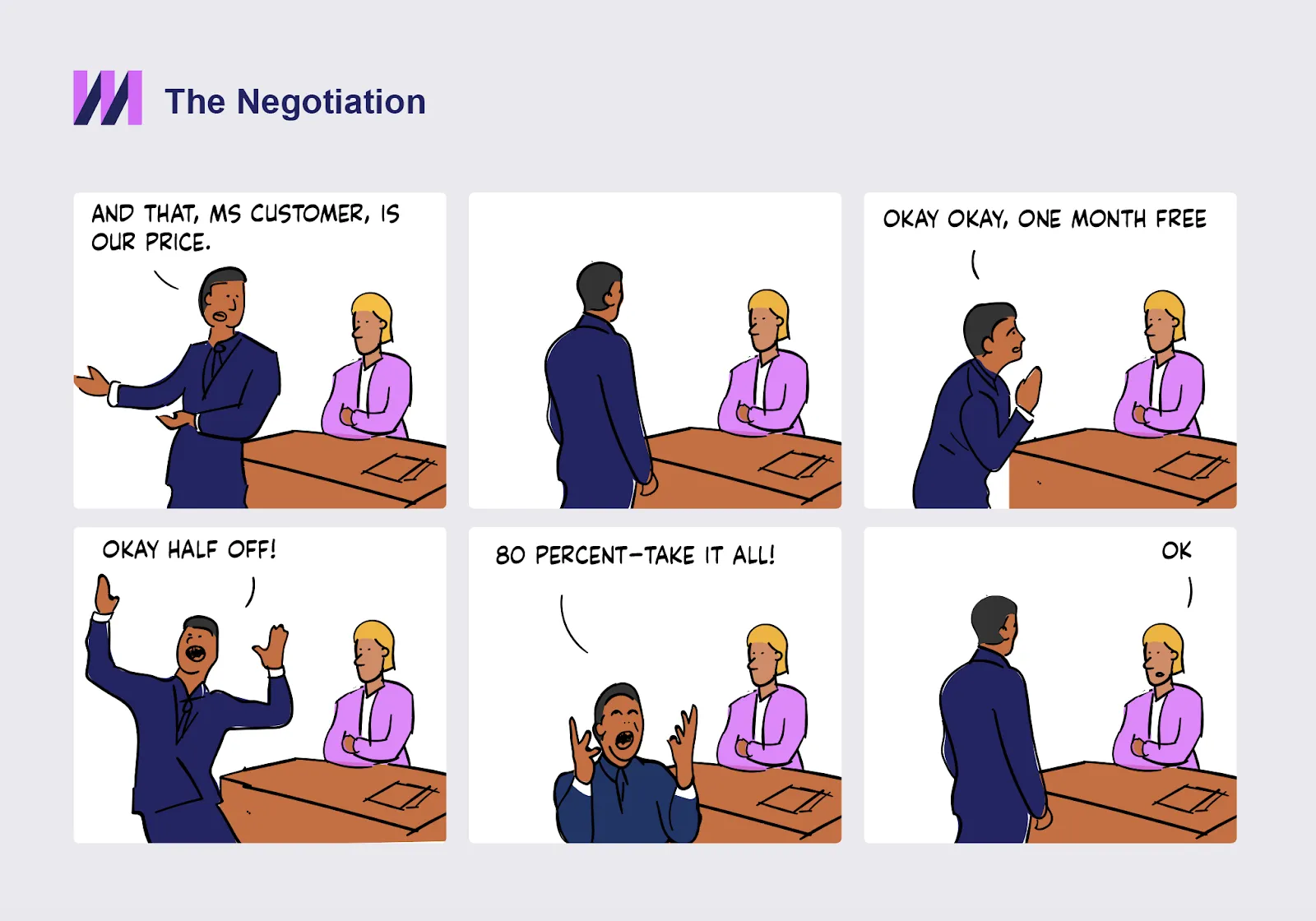
2. Stand Firm on Your Pricing
This may be the biggest error seasoned B2B reps commit: They apologize about the price before the buyer ever has an opportunity to object.
If you lead with a discount or say, “But this is negotiable,” what you’re telling them is that A) it’s too much, B) you know it’s too much, and C) they should give you grief over it.
Know the value. Stick to the value. Be surprised when they don’t understand the value.
3. Talk Value Before You Talk Price
Every time price comes up, steer the conversation back to the reason they began their evaluation. People do not purchase things because they are there. (Well, sometimes.) They enter a B2B sales cycle because they have a problem.
Often, the purchase helps them personally. They’re about to miss their marketing quota, they experienced a data breach and now their job is on the line, or they’re hoping to get certified in your software on the company’s dime to improve their future job prospects. (True story.) Anchor your conversations to that—it’s how you can continue to close B2B deals even during a pandemic.
And, here’s the kicker: It’s not their money. It’s the company’s. So don’t treat it like it’s theirs. Prospects often want to close the deal just as much as you do.
Related post: The Definitive Guide to B2B Sales Automation
4. Sell the Outcome, Not Just the Product
Don’t tell prospects that your solution is the answer to all their problems. Saying so presumes you know everything about their business, which they’ll be eager to correct you on. Instead, tell them an analogous story of an existing customer. For example:
“I’m not sure about your situation, but recruiters at one client were having trouble keeping up with prospects. With Mixmax, they put prospects on a drip and 20% more recruiters hit quota that June.”
Don’t force it—allow them to draw the conclusion. If you’re wrong, no harm done. But if you’re right, and you nailed the vertical and use case, they’ll feel compelled to point it out. They may even interrupt you: “That’s exactly like our situation!” To which you can reply, “Oh really?” And now they’re the ones selling you.
5. Create a Follow-Up System That Actually Works
Play project manager and keep your cycles on track. Buying has grown more difficult—50% of B2B buyers say they’re holding off on making a purchase because of the pandemic and 36% of prospects say researching and buying either takes too long.
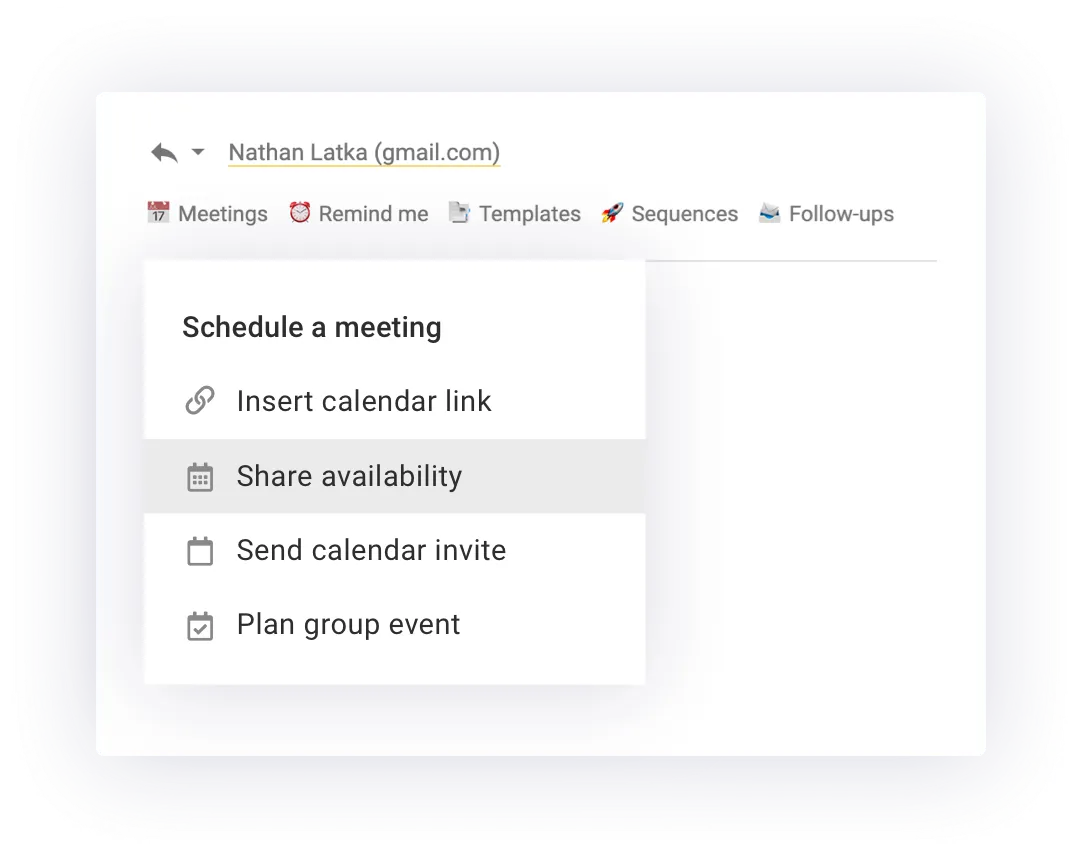
The reps who are closing the most deals right now are those that are relieving people’s work pressures with constant, helpful outreach, and giving prospects ways to book a meeting with one click.
With Mixmax, you can simplify the booking down to a click and send automatic reminders—all of the help with none of the added work.
6. Know Your Buyer’s World Inside and Out
Being an expert in your buyer’s industry gives you a way to create value and sell more than just your product. I didn’t really understand the extent of this until I reached the executive level and became a buyer myself—reps really are the purveyors of privileged information. Good ones use what they know about their customers to close the deal.
For instance, what products do their other customers buy? What’s a benchmark success rate for my particular industry? What questions should I be asking myself while evaluating? What strategy do the most successful customers adopt? If a rep has a strong B2B sales process and has seen thirty others go through this exact same motion, I need their help, and I trust them more than other vendors.
Thus, it pays to become your company’s internal expert at a handful of industries. Keep track of how your customers do post-sale. Get virtual coffee with the implementation and customer success teams to build a long list of pocket stories. Send clients research they’ll find interesting, and when they ask you a question, reply, “What other clients do is …” and follow it with a story. (See Technique #4.)
7. How to Handle Tough Talks With the “My Biggest Fear” Script
If you’re worried about something, it’s often better to just get meta and just say it. If the client exhibits zero engagement on the demo, call it out. Say, “It makes me uncomfortable to say this, but can I be candid? My biggest fear is you’re already sold on our competitor and are only price-shopping.”
Delivered in a neutral tone without judgement, this phrase often invites radical honesty. Sometimes, they’ll tell you exactly what’s happening. (Or they won’t, but they’ll wake up and participate.)
A similar B2B selling strategy is what some sales methodologies call the upfront verbal contract: You call something out before it happens, and ask them to confirm that it won’t happen. For instance, “I’m sure you’re quite busy and don’t have time for me to chase you around by email. Can we agree that at the end of this demo, you’ll give me a yes or a no?”
Paired with technique #5, the upfront verbal contract excels at helping you avoid tough situations: “Before I send an agreement, I just want to confirm that this price works. If we have to change anything later, it may have to go through Legal and we might miss the launch date.”
8. Strategically Differentiate from Your Competitors
If you don’t already have one, ask your product team for a battlecard for each major competitor’s greatest disadvantages. When prospects say they’re evaluating others, confirm that it’s a good idea, but share those questions. Say, “Excellent. I recommend it. You wouldn’t be doing your job if you didn’t. Would it help if I provide a few questions to ask?”
Similarly, if you know your competitors will lay landmines for you, call them out. “Our competitor is probably going to say we don’t have a Rest API but we do. Here’s the documentation.”
The landmine approach sets up your competitor to have an awful demo. And when the prospect comes running back to you saying, “They mentioned the Rest API just like you said!,” you can just nod calmly. This leaves you looking like a trusted consultant who’s entirely uninterested in the sale—and because you’re so disinterested, you’ll probably get it.
Leveraging Technology and Team Alignment
Individual skill and hustle are crucial, but the best B2B sales teams run on a powerful mix of smart technology and seamless internal collaboration. It’s not about working harder; it’s about building a system where every action is amplified. When you integrate the right tools and get your teams on the same page, you create a predictable engine for growth. This means using data to guide your strategy, aligning sales and marketing for a cohesive customer experience, and giving your reps everything they need to close deals efficiently. When technology and teamwork click, you spend less time on manual tasks and more time building relationships that solve real problems for your customers.
Using Data and AI to Work Smarter
Top-performing sales reps know their time is their most valuable asset. Instead of manually sifting through leads or guessing which accounts to prioritize, they use technology to make data-driven decisions. As experts at Salesforce note, using AI and machine learning helps you identify high-potential customers and even predict sales outcomes. This allows you to focus your energy where it will have the most impact. By leveraging AI, you can uncover insights about buyer intent, score leads based on their engagement, and personalize your outreach at scale, ensuring you’re always having the most relevant conversation with the right person at the right time.
With AI-powered workflows, sales teams can automate repetitive tasks and spend more time on what matters: talking to customers.
Think about all the time you spend on administrative work: logging activities in your CRM, sending follow-up reminders, or scheduling meetings. These tasks are necessary but don’t directly contribute to closing a deal. This is where automation becomes a game-changer. With AI-powered workflows, you can automate these repetitive processes, freeing you up to concentrate on strategic selling activities. Imagine a system that automatically updates Salesforce after a call, enrolls a prospect in a nurture sequence if they go quiet, or sends a reminder before a demo. This level of efficiency not only saves you hours each week but also ensures no opportunity slips through the cracks.
The Power of Social Selling
Your buyers are on social media, and you should be too—but not just as a passive observer. Social selling is about actively using platforms like LinkedIn to build relationships, establish credibility, and engage with prospects long before you ever send a cold email. As the team at Cognism advises, sales teams should use LinkedIn to connect and engage with prospects, not just for job searching. Share valuable industry content, comment thoughtfully on your prospects’ posts, and join relevant groups to participate in conversations. This approach positions you as a helpful expert rather than just another salesperson, building trust that pays off when the buyer is finally ready to talk business.
Why Sales and Marketing Alignment is Crucial
Few things can stall a deal faster than a disconnect between sales and marketing. When these two teams operate in silos, prospects receive mixed messages, lead quality suffers, and finger-pointing becomes the norm. True alignment means sales and marketing function as one unified team with shared goals and a deep understanding of the entire customer journey. This collaboration ensures a smoother buying process, provides sales with higher-quality leads, and maintains a consistent brand message from the first touchpoint to the final signature. When marketing understands what’s happening on the front lines and sales leverages the content marketing creates, everyone wins.
Investing in Sales Enablement
Sales enablement is all about making it easier for salespeople to sell. It’s a strategic process focused on giving your team the resources they need to be effective and efficient in every interaction. In essence, it means providing the right content, training, and technology to help them sell better and faster. This could include creating detailed buyer personas and battle cards, providing ongoing training on new product features or sales methodologies, and implementing tools that streamline their workflow. When you invest in sales enablement, you’re not just supporting your reps; you’re investing in a more professional, prepared, and successful sales organization.
The Importance of Lead Nurturing and Fast Response Times
When a prospect shows interest, the clock starts ticking. You should aim to connect within the first five minutes of an inquiry, as many businesses take far too long to respond. A quick response lets you engage buyers when their interest is at its peak, which dramatically increases your chances of starting a meaningful conversation. For leads who aren’t ready to buy right away, a thoughtful nurturing strategy is key. Use tools for automated email sequences to share helpful resources, case studies, and insights over time. This keeps you top-of-mind and builds your credibility, so when they are ready to make a decision, you’re the first person they call.
Use Mixmax to Build Consistent & Repeatable Pipeline
Mixmax, a leading sales engagement platform for Gmail, streamlines your workflow so you spend more time selling and less time in the CRM or calendar. From one-click meeting scheduling to email tracking, templates, and workflow rules, Mixmax’s smart automation makes it easier for prospects to choose you.
Next Step: 99 sales terms you need to know.
Frequently Asked Questions
How do I know which sales methodology is right for my situation? Think of methodologies not as rigid rules, but as different tools in your toolkit. You don’t need to commit to just one. For instance, if you’re targeting a few large, high-value companies, an Account-Based Selling approach makes sense. If you’re in a complex sale where the client doesn’t fully grasp their own problem yet, SPIN Selling is perfect for guiding them through discovery. The key is to understand the core idea behind each one and apply the framework that best fits the specific customer and deal you’re working on.
The post says to “stand firm on pricing.” What if my prospect has a genuine budget constraint? Standing firm on price isn’t about being inflexible; it’s about being confident in the value you provide. If a prospect has a real budget issue, the conversation shouldn’t immediately jump to discounts. Instead, steer it back to the value and the cost of not solving their problem. You can explore different options, like a phased rollout or a different package, that still solve their core need while fitting their budget. The goal is to avoid offering a discount out of fear before you’ve fully established the return on their investment.
Becoming a “trusted advisor” sounds great, but how do I actually start doing that on my calls this week? You can start by making one small change: lead with insight, not with your product. Instead of opening a call by listing features, share a relevant observation about their industry or a success story from a similar company. Ask questions about their business goals before you even mention your solution. This shifts the dynamic immediately. You’re no longer just a vendor pitching a product; you’re a knowledgeable partner who is genuinely interested in helping them solve a business problem.
Is it really a good idea to tell a prospect to look at my competitors? Won’t that just send them to another company? It might seem counterintuitive, but this is about building trust through confidence. When you openly encourage a prospect to do their due diligence, you interrupt the typical sales pattern they expect. It shows you’re not afraid of the competition because you’re confident in your solution’s value. This positions you as a consultant who wants what’s best for their business, not just a rep trying to close a deal. More often than not, this transparency makes them trust you more and brings them back to you.
How can I apply these techniques consistently when I’m already swamped with administrative tasks? This is a huge challenge, and it’s where your process and tools become critical. You can’t focus on being a strategic advisor if you’re buried in manual data entry and follow-up reminders. This is precisely why tools with AI-powered workflows are so valuable. By automating repetitive tasks like logging CRM activities, scheduling meetings, and sending nurture sequences, you free up the mental energy and calendar space needed to prepare for calls, research your buyer’s world, and have the high-value conversations that actually close deals.
Key Takeaways
- Shift from Pitching to Problem-Solving: Modern buyers are already informed. Position yourself as a trusted advisor who understands their business challenges, rather than a rep just selling a product, to build the credibility needed for long-term partnerships.
- Anchor Every Conversation in Value, Not Price: Stand firm on your pricing by consistently connecting it to the tangible ROI and business outcomes your solution provides. This reframes the discussion from an expense to a strategic investment.
- Proactively Guide the Sales Cycle: Use direct communication tactics and a reliable follow-up system to keep the deal moving forward. By acting as a project manager for the sale, you make the buying process easier for your prospect and maintain control.