






Mixmax works inside Gmail and syncs to Salesforce, putting daily sales execution where reps actually work — not behind a Salesforce-anchored UI that reps visit less often than the CRM team thinks.

Cadences Originate Gmail
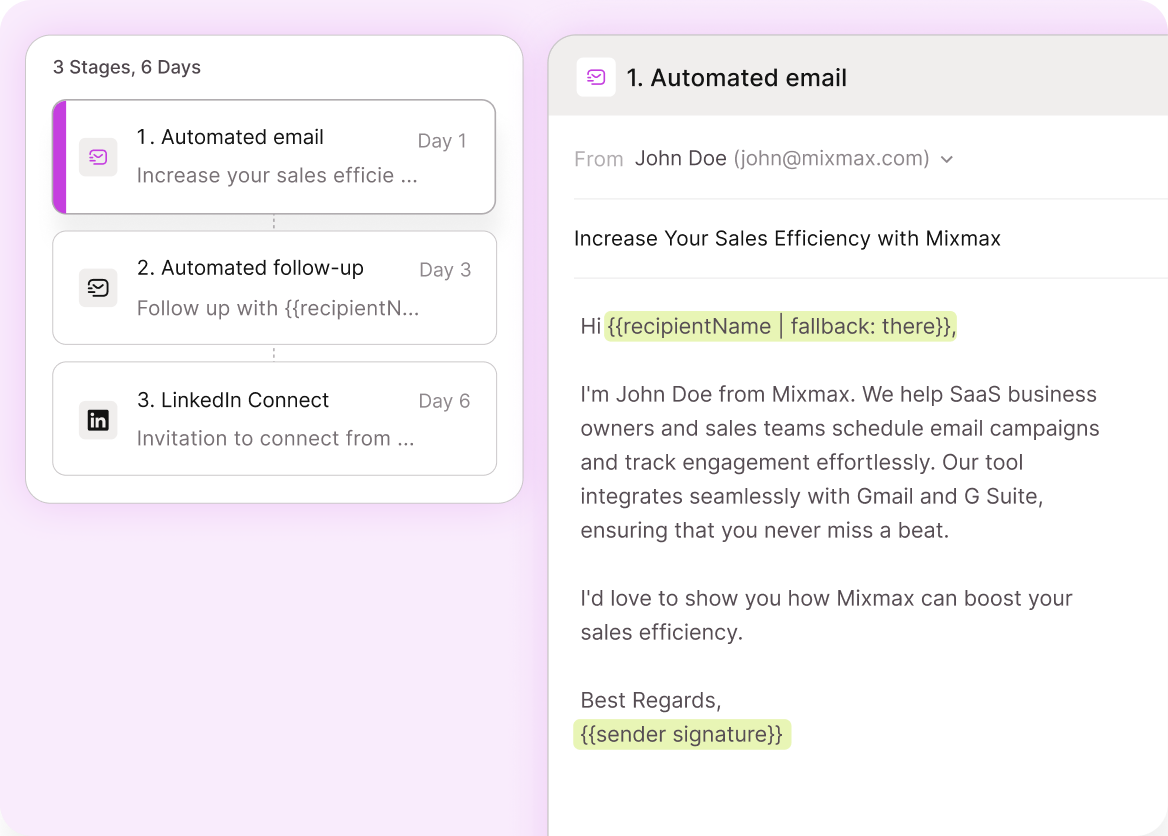
Sequences build and run from Gmail compose with personalization tokens, A/B variants, and auto-pause on reply. Reps don't pivot to Salesforce to manage cadences.

Tracking Lives Where
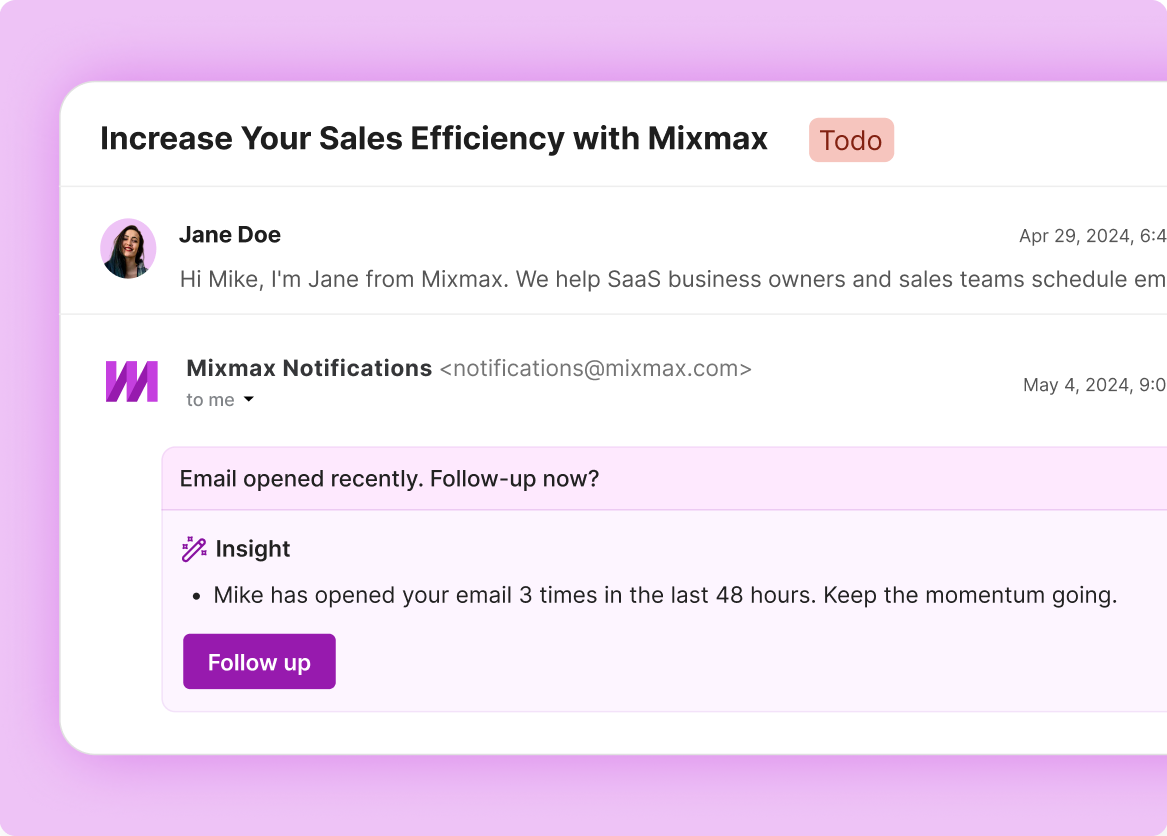
Opens, clicks, and engagement signals appear inside the Gmail thread in real time, with Smart Send timing keeping average open rates at 67%.

Meetings Book Email
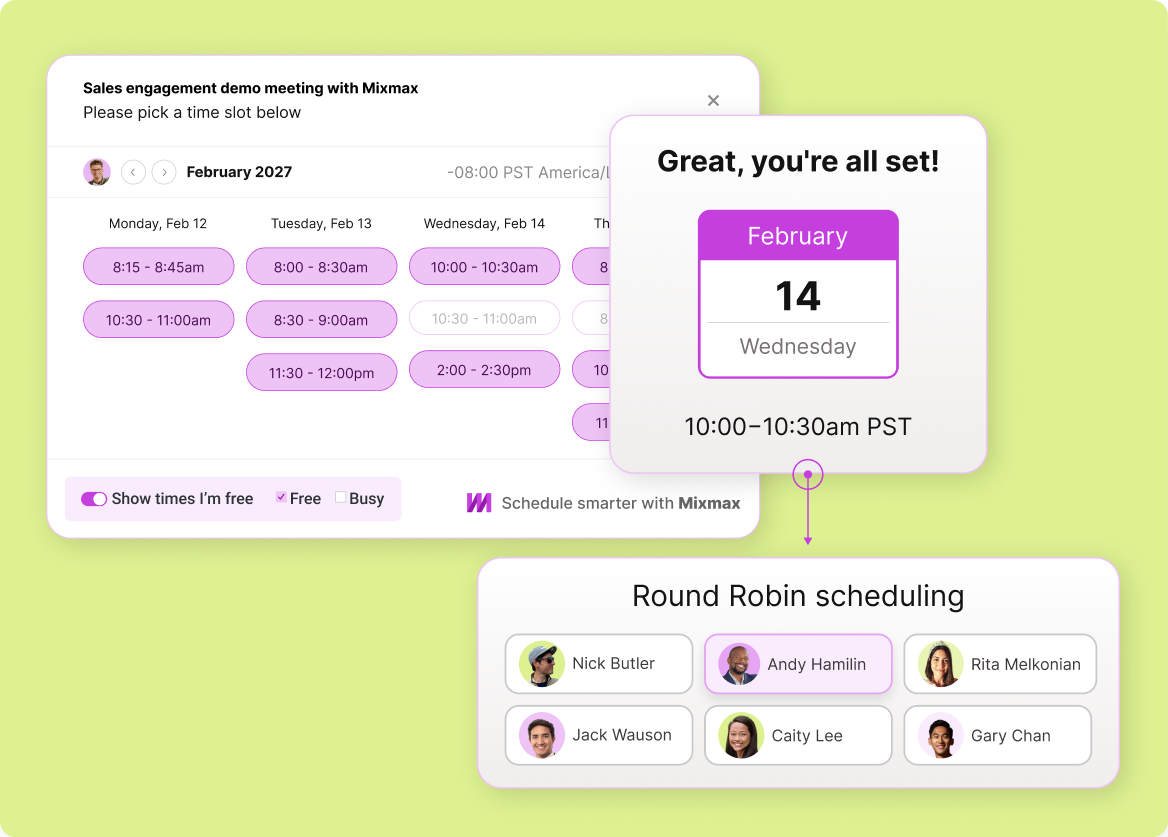
Embed availability inside any email and book in one click — no separate scheduling app, no Salesforce-anchored scheduling flow.
Sequencing from Gmail compose, real-time engagement signals, native scheduling, and bidirectional Salesforce sync — anchored in the inbox where sales reps actually work.
1 / 4 Cadences Originate Gmail
Sequences build and run from Gmail compose with personalization tokens, A/B variants, and auto-pause on reply. Reps don't pivot to Salesforce to manage cadences.
- Sequences from Gmail
- Auto-pause on reply
- A/B variants
2 / 4 Tracking Lives Where
Opens, clicks, and engagement signals appear inside the Gmail thread in real time, with Smart Send timing keeping average open rates at 67%.
- Real-time signals in Gmail
- 67% Smart Send opens
- Insight prompts
3 / 4 Meetings Book Email
Embed availability inside any email and book in one click — no separate scheduling app, no Salesforce-anchored scheduling flow.
- One-click email booking
- Round-robin built in
- No second scheduler
4 / 4 Salesforce Stays Mirror
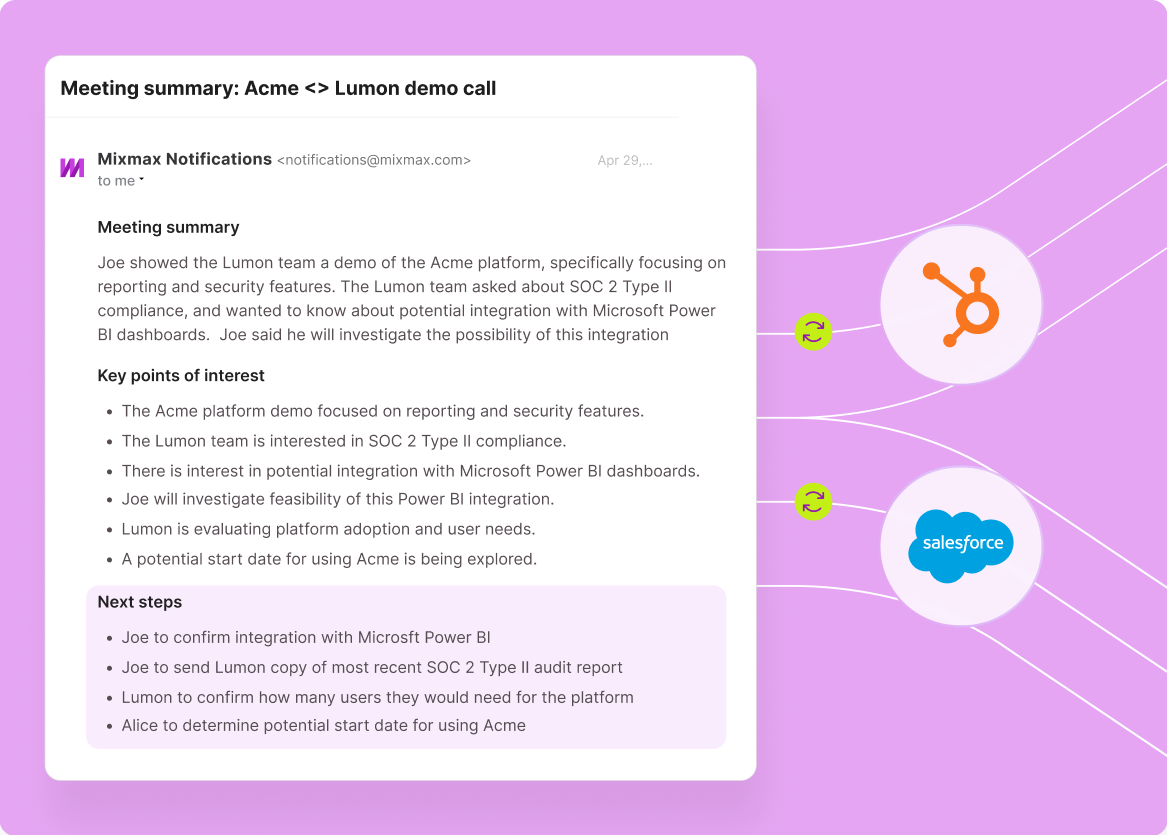
Bidirectional sync writes every email, meeting, reply, and engagement signal to Salesforce automatically — same fidelity as Groove, initiated from the inbox.
- Auto-logged activity
- Bidirectional sync
- Same fidelity

Frequently asked questions
What's the real difference between Mixmax and Groove?
Both tools serve teams that use Gmail and Salesforce, both sync activity to Salesforce, and both run sequences. The structural difference is the anchor: Groove was built Salesforce-first, with Gmail as a sidebar overlay. Mixmax is Gmail-first, with Salesforce as a synced backend. For teams whose reps spend most of their day in Gmail, the anchor point shapes adoption and daily workflow.
Does Mixmax sync to Salesforce as well as Groove does?
Yes. Mixmax syncs bidirectionally with Salesforce — every email, meeting, reply, open, click, and engagement signal writes to the matching contact and opportunity automatically. The fidelity is comparable. The user-experience difference is where reps initiate the action, not where the data lands.
Is Mixmax cheaper than Groove?
Mixmax Suite is $89 per user per month with no annual contract. Groove pricing is not public but typically runs higher and is sold annual-only at the enterprise tier. For sub-100-rep teams, Mixmax is generally lower total cost of ownership, partly because of pricing and partly because the lighter configuration overhead means RevOps doesn't need to own a tool full-time.
Can a team running on Groove switch to Mixmax without re-doing Salesforce configuration?
Yes. Salesforce is the system of record either way. The switch involves uninstalling the Groove Gmail extension, installing Mixmax, and rebuilding sequences in Mixmax. Salesforce field mappings stay intact because Salesforce is the source of truth. Most teams complete the transition in two to three weeks.
Will reps actually adopt Mixmax if Groove adoption was uneven?
Usually yes — and the reason is the same as with most Gmail-native vs. Salesforce-anchored switches. Groove adoption tends to be uneven because reps revert to working in Gmail and the Groove sidebar gets ignored. Mixmax removes that failure mode by putting everything inside the Gmail compose window where reps already work.
Does Mixmax support the team-level reporting and governance Groove customers expect?
Yes. Mixmax includes role-based permissions, team analytics, sequence-level reporting, shared template libraries, and audit logs. Where Groove pulls ahead is at large enterprise scale (200+ reps with multi-tier permission hierarchies). For sub-100-rep teams, Mixmax's governance is sufficient and ships without enterprise rollout.

Same Gmail + Salesforce stack, sharper execution
See how Mixmax keeps Salesforce as your system of record while putting daily sales execution — sequences, tracking, scheduling — inside the Gmail inbox where reps actually work.