






Gmail CRM integration that actually works the way reps work. Mixmax captures email and meeting activity from Gmail, writes it to Salesforce in real time, and surfaces CRM context back inside the inbox.

Activity Logs Itself
Every email sent, reply received, open, click, and meeting booked writes to the matching Salesforce contact and opportunity automatically. No rep manually logging activity at the end of the day.

Pipelines Stay Trustworthy
Real engagement data—opens, clicks, reply timestamps, and meeting outcomes—lands on the opportunity record, so pipeline reviews and forecasts run on facts instead of rep memory.

Meetings Sync Automatically
Meetings booked from Gmail land on the Salesforce opportunity with the calendar event, attendees, and a Mixmax-generated summary attached, so post-call context never gets lost.
Activity capture, CRM context in the inbox, automatic meeting logging, and follow-up workflows tied to deal stage—all running inside Gmail, all writing to Salesforce.
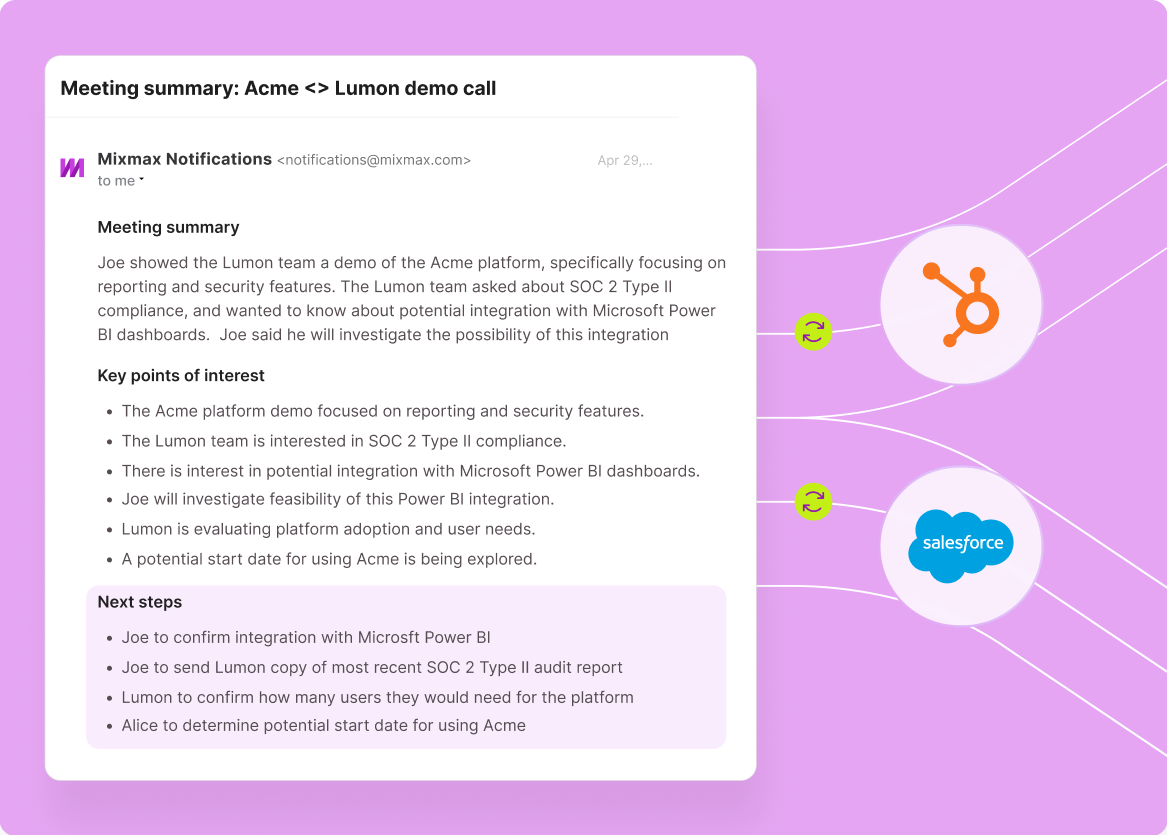
1 / 4 Activity Logs Itself
Every email sent, reply received, open, click, and meeting booked writes to the matching Salesforce contact and opportunity automatically. No rep manually logging activity at the end of the day.
- Auto-logged sent emails
- Replies tied to records
- No manual data entry
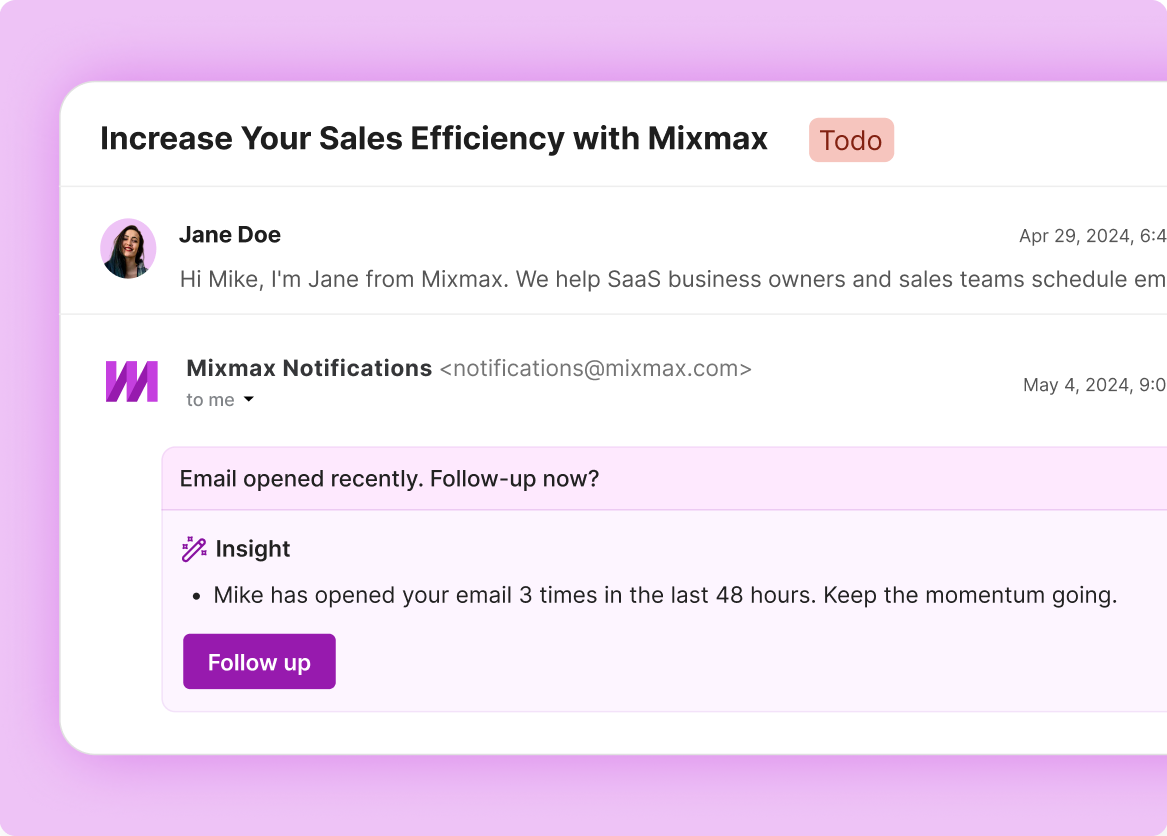
2 / 4 Pipelines Stay Trustworthy
Real engagement data—opens, clicks, reply timestamps, and meeting outcomes—lands on the opportunity record, so pipeline reviews and forecasts run on facts instead of rep memory.
- Real engagement on records
- Reliable pipeline reviews
- Forecasts based on data
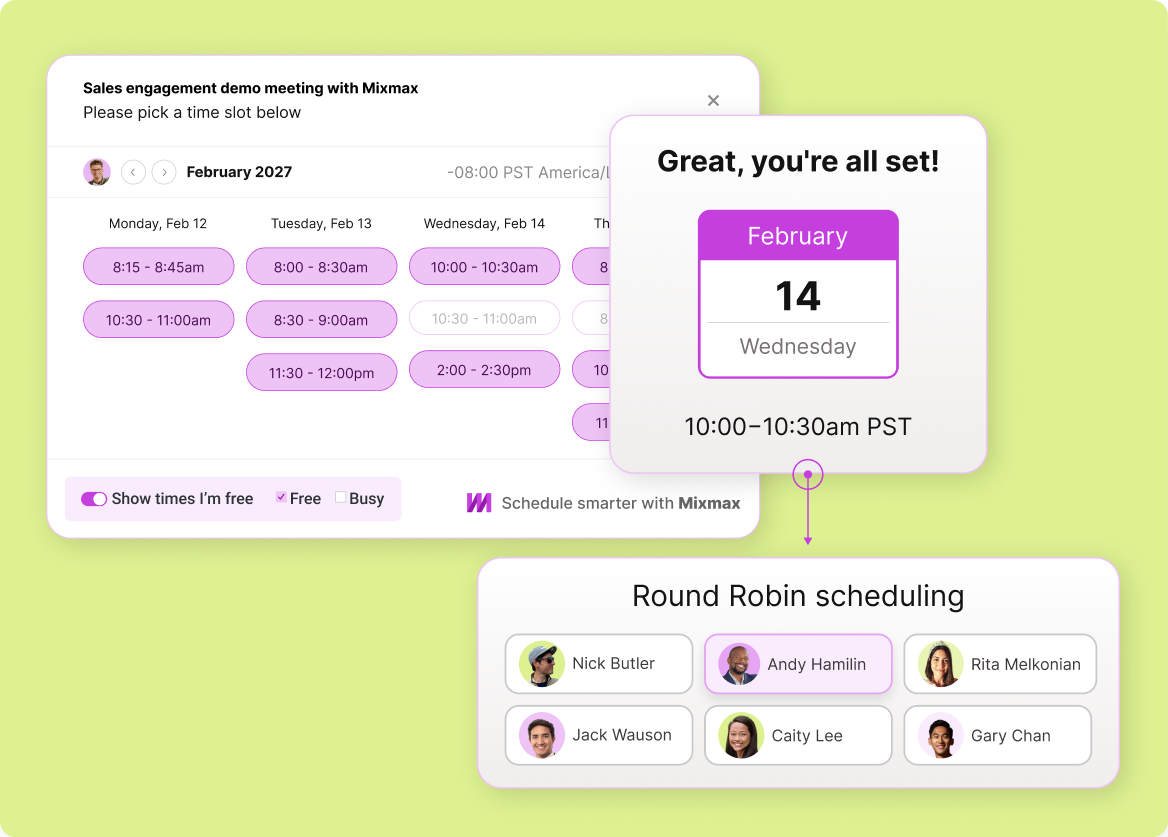
3 / 4 Meetings Sync Automatically
Meetings booked from Gmail land on the Salesforce opportunity with the calendar event, attendees, and a Mixmax-generated summary attached, so post-call context never gets lost.
- Auto-logged meetings
- Attendees on the record
- Meeting summary attached
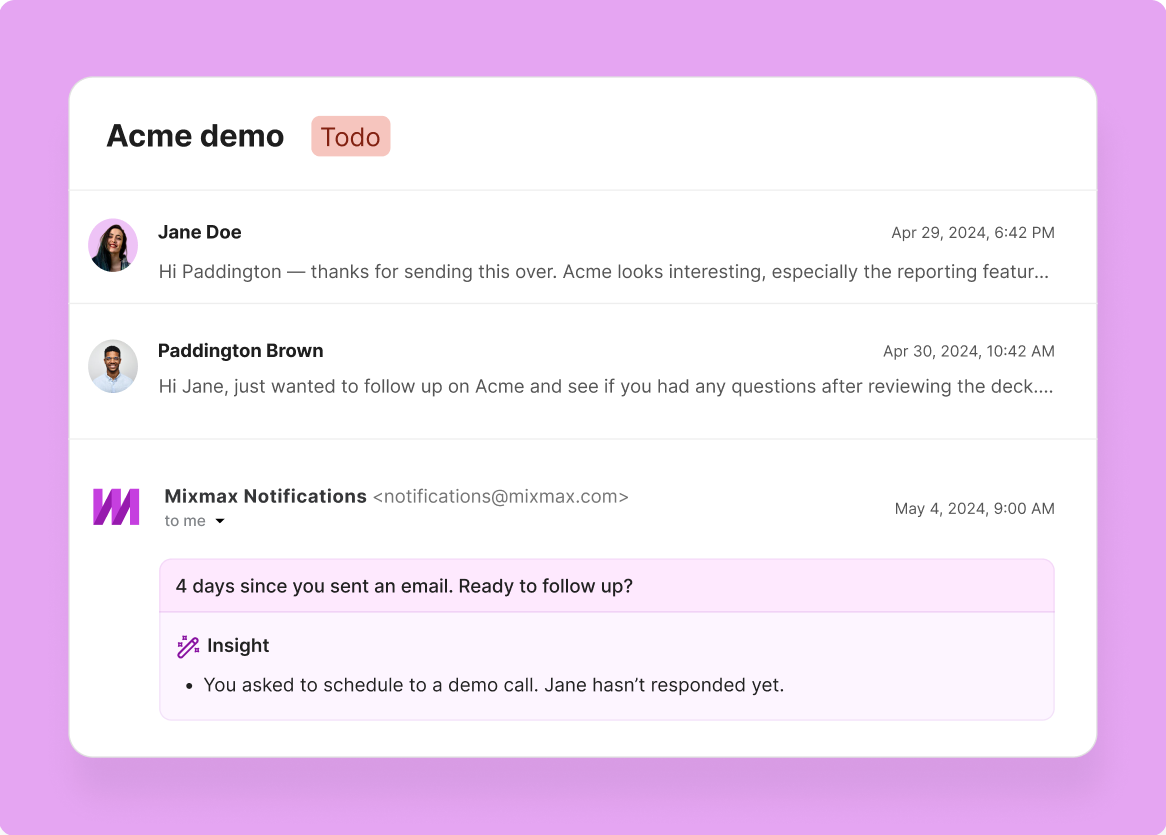
4 / 4 Follow-ups Never Drop
Sequence steps and follow-up reminders fire from Gmail tied to Salesforce stage, so the right next move happens at the right time without reps watching the CRM clock.
- Stage-triggered follow-ups
- Reminders inside Gmail
- No dropped touchpoints

Frequently asked questions
What does Gmail CRM integration mean and what should it actually do?
Gmail CRM integration connects the inbox to a CRM like Salesforce or HubSpot so that activity—emails, replies, meetings, opens, clicks—flows from Gmail into the CRM automatically and CRM context flows back into the inbox. Done well, reps never manually log activity, managers see real pipeline data, and the inbox shows account stage and history without a tab switch. Done poorly, it's a one-way activity dump that misses meetings and replies, leaving CRM records incomplete and forecasts unreliable.
How does Mixmax integrate Gmail with Salesforce?
Mixmax provides a bidirectional integration between Gmail and Salesforce. Every email sent or received, every meeting booked, and every engagement signal—opens, clicks, reply timestamps—writes to the matching Salesforce contact and opportunity in real time. CRM data flows back the other way: deal stage, account history, and recent activity surface in the Gmail sidebar so reps see context while writing the next email. Sequences and reminders can be triggered by Salesforce stage changes, keeping outreach in step with the pipeline.
Does Mixmax also work with HubSpot CRM?
Yes. Mixmax integrates bidirectionally with both Salesforce and HubSpot. The same activity capture, CRM-context-in-inbox, and stage-triggered workflow features work with either CRM. Teams running HubSpot get the same Gmail-native experience: email and meeting activity logs to HubSpot contacts and deals automatically, deal context shows up in the Gmail sidebar, and sequences can trigger off HubSpot lifecycle stages.
How much time does Gmail CRM integration actually save sales reps?
Sales reps recover roughly two hours per day when Gmail-to-CRM activity capture happens automatically. The biggest chunks come from cutting manual email logging, automatic meeting capture, and not toggling to the CRM to update records. For a 10-rep team, that's around 100 hours per week of recovered selling time. The secondary benefit—usually larger over a quarter—is that pipeline data becomes trustworthy, which lifts close rate and forecast accuracy.
Will reps actually use a Gmail CRM integration without being forced to?
Yes, when the integration runs invisibly inside the workflow they already use. Mixmax hits 90% week-one adoption because reps don't have to do anything different—they write email in Gmail and the integration captures activity in the background. The most common adoption failure with CRM integrations is asking reps to take an extra step (click a button, fill a field, log activity manually). When the integration removes work instead of adding it, adoption stops being a fight.
Does the integration handle meetings as well as email?
Yes. Mixmax captures booked meetings, attendees, calendar event details, and Mixmax-generated meeting summaries to the relevant Salesforce or HubSpot opportunity automatically. Pre-meeting prep, post-meeting summaries, and action items can also write back to the CRM. That closes the most common gap in Gmail-to-CRM integrations, where email activity is captured but meeting activity—often the most important touch on a deal—gets lost between Google Calendar, Gmail, and the CRM.

Stop logging activity by hand
See how Mixmax Gmail CRM integration captures email and meeting activity, surfaces deal context in the inbox, and keeps Salesforce records trustworthy without rep effort.