
Email Tracking for Media & AdTech Sales
When a media buyer opens your campaign performance report and immediately clicks your pricing page, they're comparing your CPMs to their current vendor. AdTech reps who see that pattern can offer a competitive proposal before the evaluation window closes. Mixmax tracks opens, clicks, and downloads in real time inside Gmail — and syncs every signal to Salesforce.
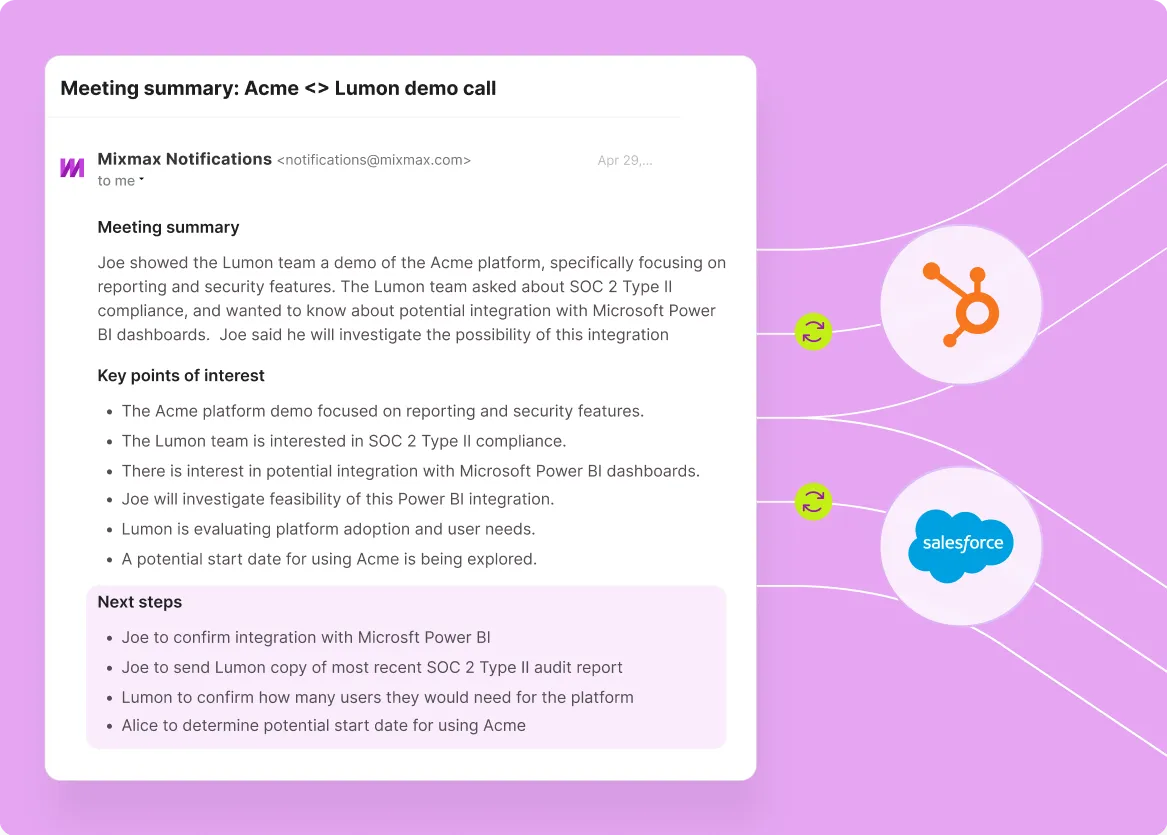
Mixmax works inside Gmail and syncs to Salesforce.
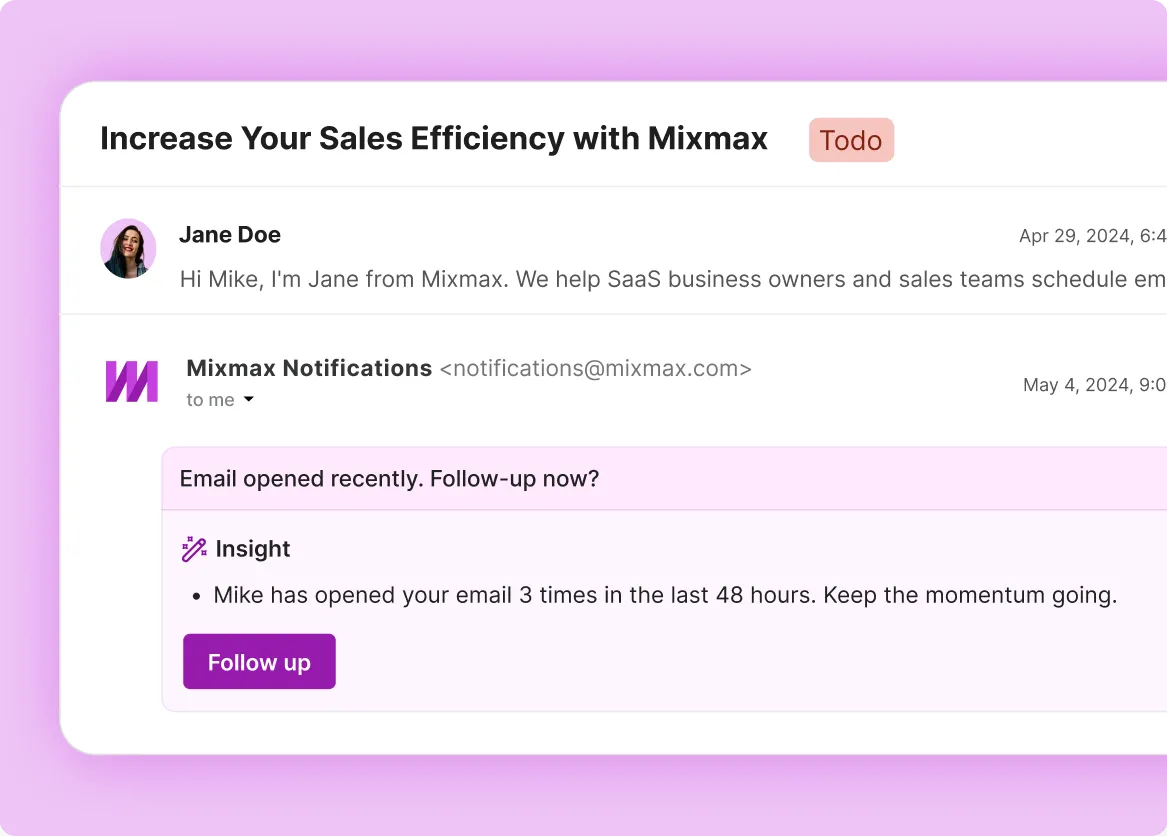
A media buyer opened your campaign performance report and clicked through to your pricing in the same session. They're comparing your CPMs to their current platform. Mixmax shows you that buying signal so you can send a competitive proposal before the review cycle closes.

Real-time open and click tracking
Track when a media buyer opens your performance report, which metrics they click into, and whether they visit your pricing page in the same session. AdTech evaluation windows are short — tracking tells you which buyers are in active comparison mode so you can prioritize them before the window closes.

Engagement-triggered follow-up
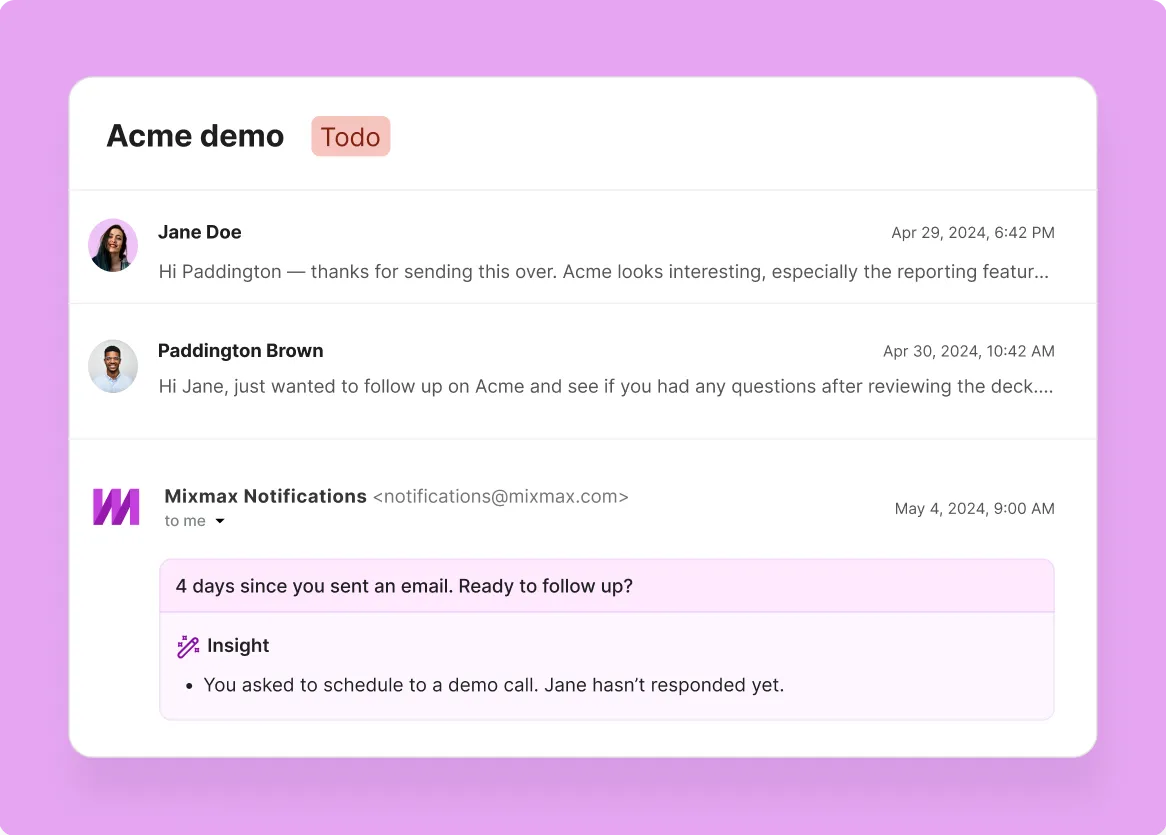
Media buyer don't schedule vendor evaluations — they do them between campaign launches when they have a gap. When Mixmax shows a buyer who's been quiet suddenly opening your last three emails and clicking your pricing page, they found that gap. Your follow-up should include a competitive proposal, not a 'just checking in.'

One-click meeting scheduling
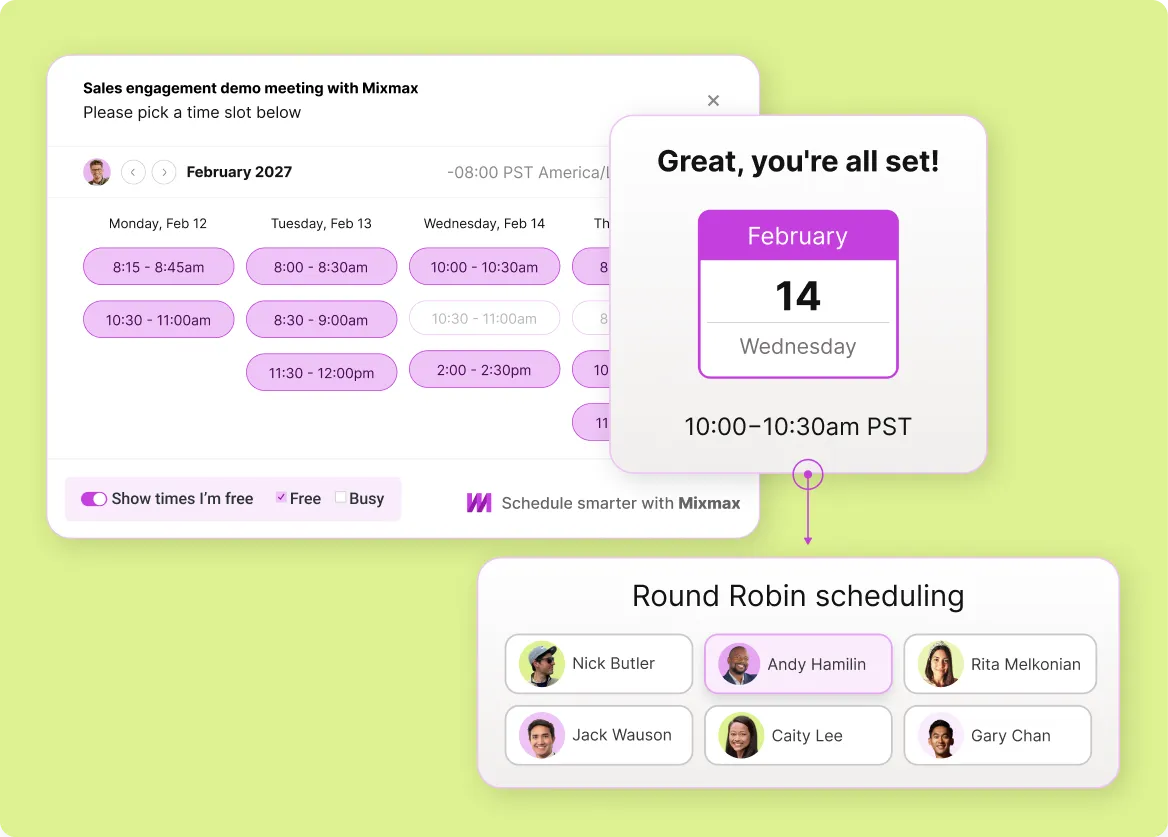
Turn tracking signals into booked meetings. When you see a media buyer is engaged, share your availability in one click. They pick a time, the meeting lands on both calendars, and the back-and-forth disappears.
Everything you need to track media and adtech email engagement
Mixmax combines real-time open and click tracking, engagement-triggered follow-up reminders, one-click scheduling, and Salesforce activity sync — so AdTech sales reps know who's interested and act before the window closes.
-
1 / 4
Real-time open and click tracking
Track when a media buyer opens your performance report, which metrics they click into, and whether they visit your pricing page in the same session. AdTech evaluation windows are short — tracking tells you which buyers are in active comparison mode so you can prioritize them before the window closes.
- Real-time open notifications in your inbox
- Link click tracking with timestamps
- Multi-open detection for buying signals

Frequently asked questions
-
How does Mixmax email tracking work for media & adtech sales?
Mixmax uses a lightweight tracking pixel for opens and redirect-based tracking for link clicks. The data appears in real time right inside Gmail — you see when a media buyer opens your email, which links they clicked, how many times they came back, and when. The engagement signals feed into follow-up nudges and sync to Salesforce automatically.
-
Can tracking show me which metrics a media buyer cares about most?
Yes — by what they click. If your email includes links to ROAS data, viewability reports, and audience demos, tracking shows you which ones the buyer engages with. A buyer who clicks the ROAS link but skips viewability is telling you what drives their decision. Tailor your follow-up accordingly.
-
How does email tracking help media & adtech sales prioritize follow-ups?
Instead of guessing which media buyer and marketing leaders to follow up with, tracking gives you a clear signal. A media buyer who opened your proposal four times this morning is a better use of your next 15 minutes than one who hasn't opened in a week. Mixmax surfaces these signals right in Gmail.
-
How does tracking help in a market where buyers evaluate 10+ vendors simultaneously?
Tracking shows you where you stand in the evaluation. A buyer who opened your email once and never returned has moved on. A buyer who opened your performance report, clicked pricing, then re-opened the report two days later is still considering you. That difference in behavior tells you where to invest your follow-up effort.
-
Will tracking still work if a media buyer blocks images?
Open tracking relies on a tracking pixel, so it won't register if images are fully blocked. But click tracking works independently — it's URL-based. If you see clicks without opens, the media buyer read your email with images blocked. You still get the buying signal.
-
How easy is it for a media and adtech team to get started with Mixmax?
Mixmax installs as a Gmail extension and connects to Salesforce in minutes. There's no migration, no new interface. Adtech sales reps keep working in Gmail — they just get tracking data, Smart Send, scheduling, and CRM sync on top. Most teams hit 90% adoption in the first week.
Know who's reading your emails — before you follow up
See when media buyer move from browsing to comparing. Performance data clicks, pricing page visits, and repeat engagement — the signals that an evaluation is happening.